I have been playing The Legend of Zelda: Ocarina of Time since I was nine years old. I still remember sitting cross-legged on the floor with an N64 controller in my hands, jaw on the carpet the first time I rode Epona across Hyrule Field. That memory does not come from the graphics. It comes from how the game made me feel. So when I hear the words “Ocarina of Time Remake on Switch 2,” I feel both excited and a little protective.
Rumors about a remake have been building for months. Nintendo has not confirmed anything. But the conversation is now deep enough that it is worth taking seriously. What could a remake actually look like? What should it look like? And what do we know about the hardware that could make it happen?
Let me walk through all of it.
Why the Ocarina of Time Remake Rumor Has So Much Weight Right Now
The rumors did not come out of nowhere. They picked up speed when reports started circulating that Nintendo was working on more than just ports for the Switch 2. According to those discussions, Nintendo appears to be planning full revivals of classic titles, not just technical upgrades. That is a meaningful difference.
A port moves a game to new hardware with minor changes. A remake rebuilds it. Ocarina of Time 3D on the Nintendo 3DS was a strong example of a respectful update. The controls were improved, the graphics were cleaned up, and the notorious Water Temple was made less painful. But it was still, at its core, the same game running on more capable hardware.
A Switch 2 remake could go much further. And the Star Fox situation has a lot of people reading the signs carefully.
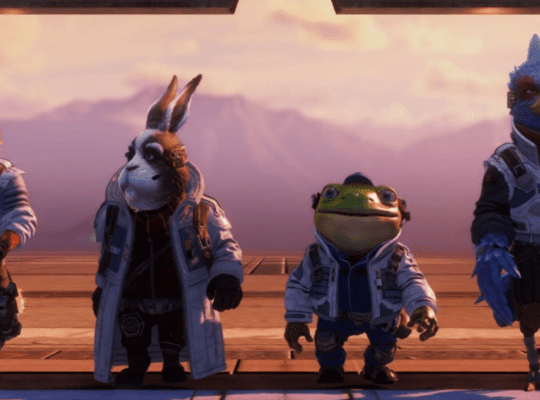
Nintendo recently released a Star Fox revival that looks nothing like the original 1997 game in terms of raw visual fidelity. But here is the interesting part: it looks exactly like how people remember the 1997 game. The characters feel more detailed and properly proportioned. The environments look richer. There is a kind of nostalgic accuracy to it that is separate from pixel-for-pixel faithfulness. Nintendo did not recreate what the game was. They recreated what players felt when they played it.
If they apply that same thinking to Ocarina of Time, we are in for something genuinely interesting.
The Switch 2 Hardware and What It Means for Zelda Graphics
The Nintendo Switch 2 is a significant step up from the original Switch. More GPU power, better memory bandwidth, improved processing speed, and support for modern rendering techniques like ray tracing and more advanced lighting systems. This is not just a modest bump. It opens real creative options that were not available before.
What does that mean practically? It means Nintendo could render Hyrule with:
- Real-time global illumination, where light bounces naturally off surfaces
- Volumetric fog and atmospheric depth that changes based on weather and time of day
- Dynamic shadow systems that shift as clouds move across the sky
- Detailed water rendering with actual refraction and reflection
- High-resolution textures on environmental surfaces like stone, bark, and sand
- Physics-based vegetation that moves with wind
- Better character models with proper facial animation and cloth simulation
None of those features require a completely realistic art style. They can work inside a stylized look just as easily. That matters because Nintendo has shown strong preferences for stylized visuals in recent Zelda titles.
The Art Style Question Is the Heart of the Whole Debate
Here is where the real conversation begins. Because Nintendo has not made a single visual choice for Zelda across the series. The franchise swings between styles more than almost any other major gaming franchise.
Ocarina of Time and Majora’s Mask had a look that was shaped by N64 hardware limits, but also by genuine artistic vision. The environments were colorful and imaginative. Characters had memorable silhouettes. But there was also something darker running underneath. Loss, death, time, loneliness. Those themes lived in every corner of Hyrule, and the visual design supported them even when the hardware struggled to express them clearly.
The Wind Waker swung hard toward a cel-shaded cartoon look. It surprised many fans at the time, but it aged beautifully. The style was so clean and expressive that it still holds up today without any updates needed. Many people feel it is the best-looking Zelda game purely from an artistic standpoint.
Twilight Princess went the opposite direction entirely. Darker, grittier, and clearly inspired by the visual language of The Lord of the Rings films. It was a response to the backlash Wind Waker received from fans who wanted something more serious. The resulting game had a weight to it that felt different from any other Zelda before it.
Skyward Sword softened that tone with a watercolor-influenced painterly aesthetic, which was beautiful in motion but slightly blurry in practice on the Wii’s limited display output.
Then Breath of the Wild and Tears of the Kingdom arrived with a cel-shaded style clearly influenced by Studio Ghibli. Think Princess Mononoke in terms of color palette and atmosphere. Open, airy, luminous, and deeply stylized. It works extremely well for open-world exploration but feels quite different from the tone of Ocarina of Time.
So where does that leave a potential remake?
What the Original Concept Art Actually Shows
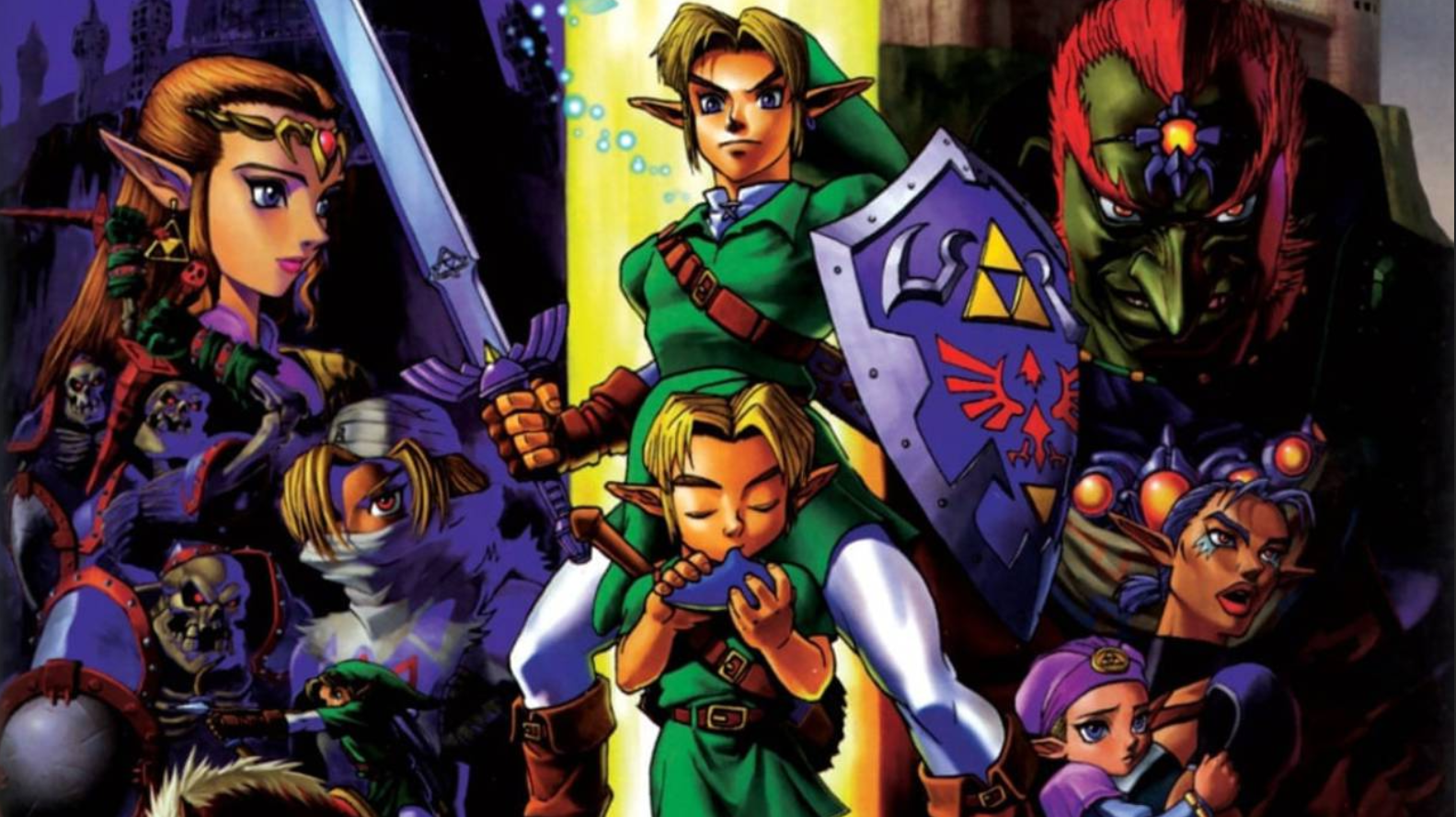
I have spent time looking at the original concept artwork for Ocarina of Time, and it tells a different story than people might expect. The art is not photorealistic. But it is also not as playful or soft as Wind Waker or Skyward Sword. There is a balance. A mix of fantasy color and genuine seriousness. Characters like Ganondorf were not designed to be cute or comedic. They were meant to feel threatening. Imposing. The kind of villain you actually believe when he threatens the world.
That combination of bright fantasy and underlying darkness is what I remember most from my time with the game. The forest felt genuinely eerie. Death Mountain felt dangerous. The Shadow Temple was not just spooky. It was genuinely unsettling for a nine-year-old. That tone came from the art direction, not just the story writing.
Xbox Player Voice Is Working: Community Demands Exclusives and Microsoft Is Actually Listening
A faithful remake, in my view, would use modern technology to fully express what that original concept art was reaching for. Not to make it photo-real. But to give it the visual depth that the N64 hardware could never fully deliver.
The Space World Demo and What It Showed Fans Was Possible
In 2000, Nintendo showed a tech demo at Space World using GameCube hardware. It featured Link and Ganondorf in a brief sword fight. The visual style was much more serious and realistic than anything Zelda had shown before. Link looked like a real warrior. Ganondorf was physically imposing. The lighting was dramatic.
Fans lost their minds. Completely. That demo planted a seed in an entire generation of Zelda players that has never fully stopped growing. When Twilight Princess was announced, many fans thought it was that demo finally becoming a real game. It was not. But Twilight Princess was still a serious, grounded visual direction.
That Space World demo is still referenced in fan discussions today. It represents a version of Zelda that fans have wanted for over two decades. A Switch 2 remake of Ocarina of Time would be the first time Nintendo has the hardware to actually deliver something close to that vision while still preserving the soul of the original game.
How Modern Games Compare and What They Can Teach Nintendo
When fans talk about visual references for a potential remake, two games come up constantly.
The first is The Elder Scrolls IV: Oblivion Remastered. It takes a classic open-world RPG and rebuilds it in modern Unreal Engine 5. The result preserves the spirit of the original while adding environmental depth, better lighting, and improved character detail. It is not trying to make Oblivion look like a different game. It is trying to make it look like the game players remember rather than the game that actually existed on disc in 2006.
The second is Demon’s Souls, the PlayStation 5 remake. This one took a dark, atmospheric original and rebuilt it with genuinely stunning environmental detail. Stone walls look like stone walls. Fog behaves like fog. Fire behaves like fire. The result is a game that feels like stepping into a painting that moves. It is not realistic in a photographic sense, but it is deeply convincing in atmosphere.
A Zelda remake probably would not go as dark as Demon’s Souls. But borrowing some of those atmospheric techniques, specifically the way light interacts with architecture, the way mist sits in low areas, the way dungeon corridors feel genuinely enclosed and heavy, would serve Ocarina of Time extremely well.
Fan-Made Recreations That Point to What Is Possible
Several independent creators have built Ocarina of Time environments in Unreal Engine 5, and some of them are remarkable.
One creator rebuilt Hyrule Castle with detailed lighting, weather systems, volumetric fog, and realistic environmental interactions. It is more influenced by Breath of the Wild than the original game, but the technical showcase is genuinely impressive. You can see how atmospheric effects like rolling clouds and shifting sunlight could transform a world that was built entirely indoors on the N64.
Another creator named CryZENx rebuilt Zora’s Domain in Unreal Engine 5. Zora’s Domain is already one of the most visually distinctive areas in the original game, with its waterfalls and blue light. In the recreation, the water behaves as water should. Light refracts through it. Reflections are sharp. The scale feels correct in a way that the original N64 version could never fully convey.
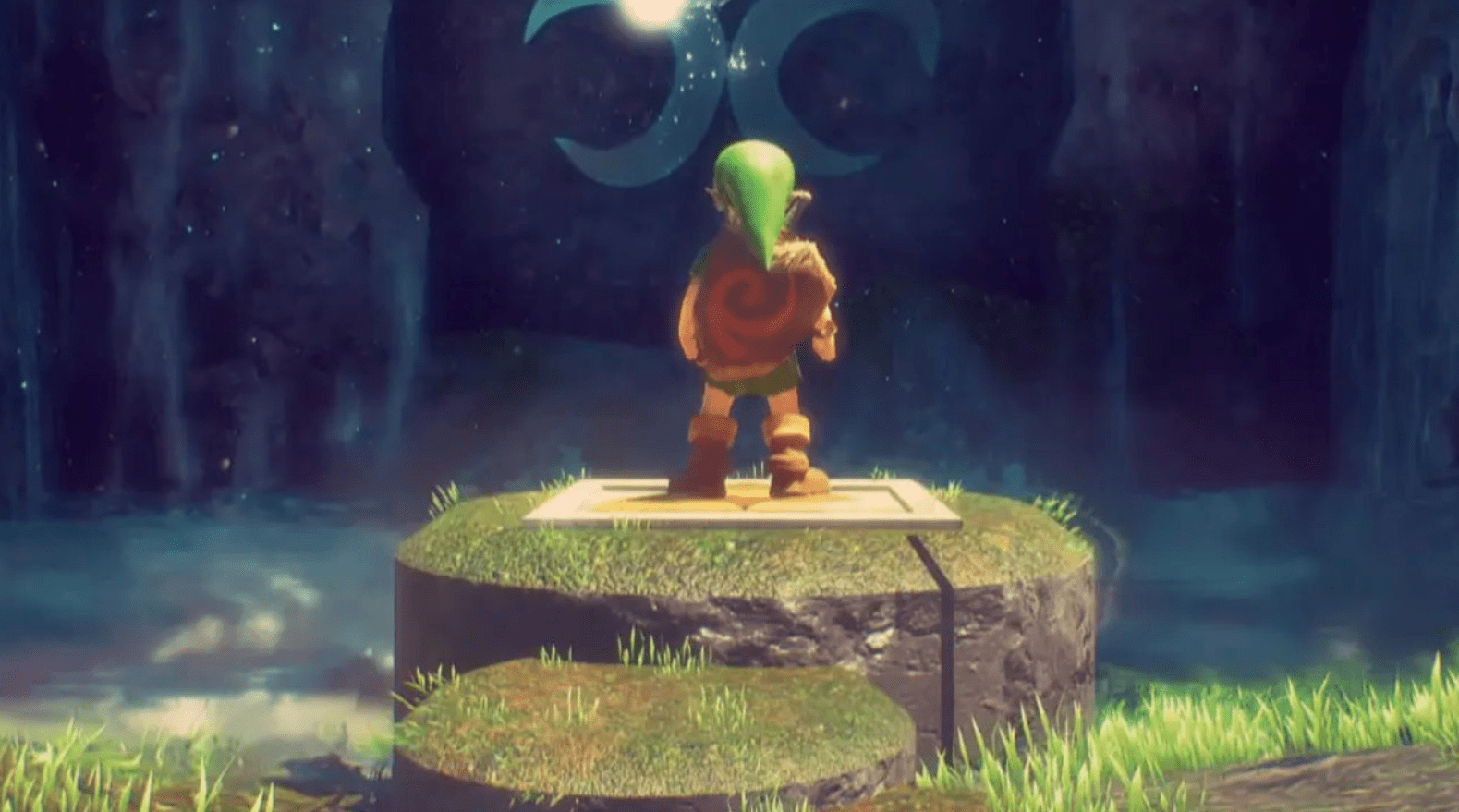
A third recreation worth mentioning comes from a creator called Curiomatic, who built the Temple of Time. This is arguably the most faithful attempt at a modern Ocarina of Time aesthetic currently available publicly. Link’s character model respects the spirit of the original while feeling natural in a three-dimensional space. The environment has weight without feeling heavy-handed. If I had to point to one piece of fan work and say “this is the direction Nintendo should study,” it would be this one.
There is also a project that recreated Forest Temple combat, specifically Link versus Stalfos enemies, using a cel-shaded style combined with darker lighting and ray tracing. The brighter areas still feel unmistakably like Zelda. The darker corridors feel tense and atmospheric in ways the original N64 version could only hint at. That balance is exactly what a good remake would need to find.
Why the Live-Action Zelda Movie Changes the Calculation
There is reportedly a live-action Legend of Zelda film in development. I find this relevant because Nintendo is not a company that makes decisions in isolation. If the film is coming, the visual identity of Zelda as a franchise needs to be consistent across platforms. A heavily stylized Studio Ghibli-influenced remake might feel disconnected from whatever aesthetic the film establishes.
A more grounded, realistic visual approach for a Switch 2 remake would give Nintendo a cleaner visual language to work across both the game and the film. This is speculation, but it is the kind of thinking Nintendo actually does. They are careful about brand coherence in a way that few other gaming companies are.
It also means that while a Studio Ghibli-inspired remake would look genuinely beautiful, it is probably not the direction Nintendo chooses. The franchise is moving toward a broader cultural presence, and a more universally readable visual style would serve that goal better.
The Dream Studio Statues as a Visual Reference
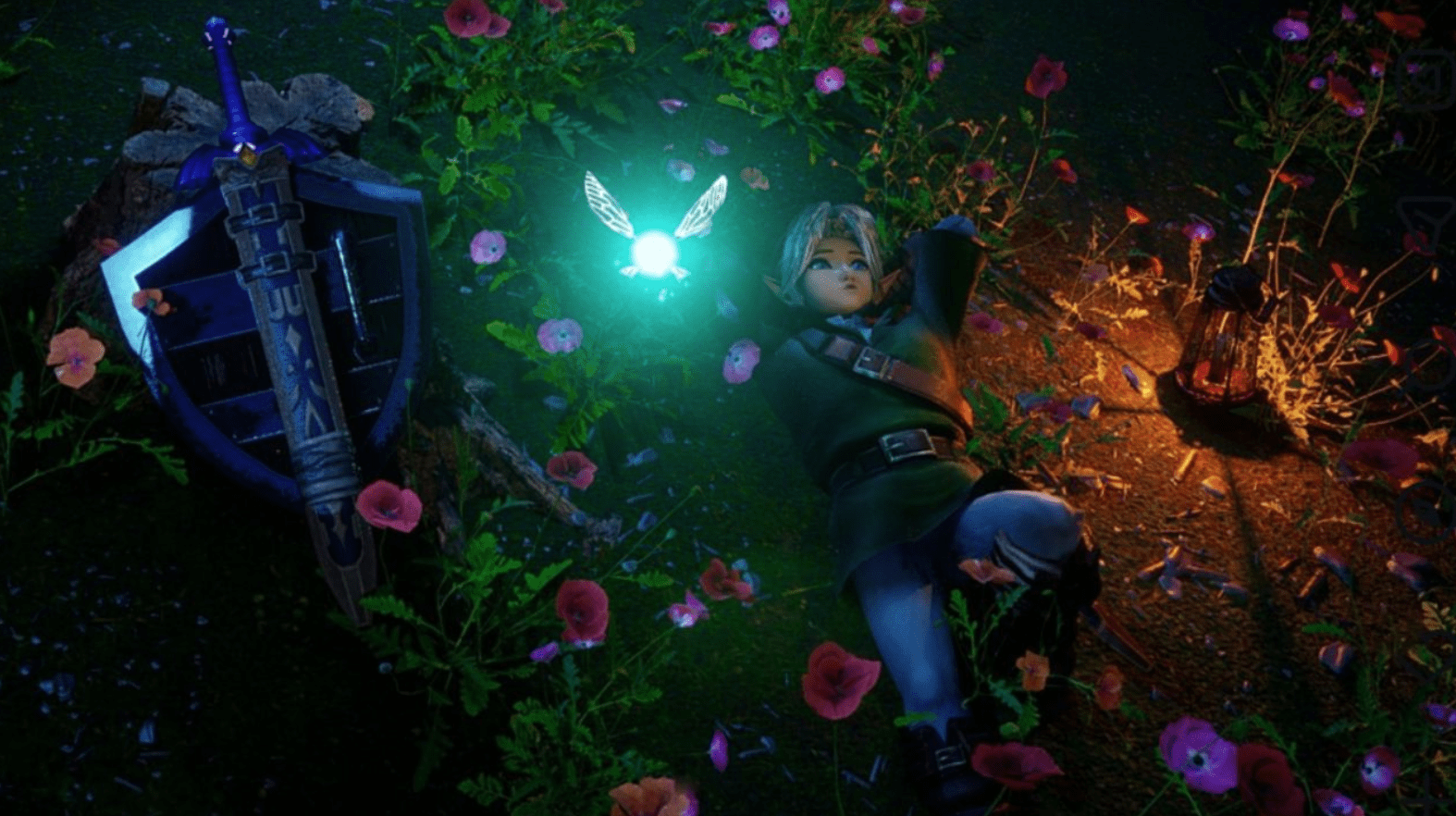
One underappreciated visual reference that fans bring up is the high-end collectible statues produced by Dream Studio. These figures depict Young Link, Adult Link, Dark Link, the Master Sword, the Hookshot, Heart Pieces, and iconic scenes from the game in extraordinary physical detail. They are not animated. They are not interactive. But they show what Ocarina of Time’s character designs look like when executed with modern artistic tools and no hardware restrictions.
Young Link in those statues looks exactly like the character players remember, not the blocky polygon version that actually existed on cartridge. Adult Link looks like a genuine hero rather than a collection of flat-shaded triangles. Ganondorf looks threatening in a way that the N64 model always implied but never fully delivered.
This is another example of the gap between what Ocarina of Time was technically and what it was emotionally. A good remake would close that gap.
Full Controller Layout Guide for Ocarina of Time on PC and Xbox
For players who want to experience Ocarina of Time right now while waiting for any remake news, the Nintendo 64 version is available through emulation, and the Ocarina of Time 3D ROM can be played on PC. Here is a full control layout guide for both Xbox controller and keyboard setups.
Xbox Controller Layout for Ocarina of Time (Emulator)
This layout maps the original N64 controls to a modern Xbox controller in a way that feels natural and covers all game functions.
| Xbox Button | N64 Function | In-Game Action |
|---|---|---|
| Left Stick | Analog Stick | Move Link / navigate menus |
| Right Stick | C-Buttons (mapped) | Use items in C-slots / camera control |
| A Button | A Button | Interact / confirm / attack / roll |
| B Button | B Button | Use equipped item (usually sword) |
| X Button | C-Left | Use item slot 1 |
| Y Button | C-Down | Use item slot 2 |
| Right Bumper (RB) | C-Up | Use item slot 3 / first-person camera |
| Left Bumper (LB) | C-Right | Use item slot 4 / target toggle |
| Right Trigger (RT) | Z Button | Z-targeting / hold to lock onto enemy |
| Left Trigger (LT) | R Button | Shield / sidestep while holding |
| Start Button | Start | Open pause menu / inventory |
| Back / Select | N/A | Map screen shortcut (emulator-specific) |
| D-Pad Up | D-Pad Up | Open map / equip toggle in some versions |
| D-Pad Down | D-Pad Down | Toggle camera mode |
| D-Pad Left / Right | D-Pad L/R | Secondary menu navigation |
| Right Stick Click (RS) | N/A | Reset camera (emulator feature) |
Key Combat Controls Explained
Z-Targeting is the most important mechanic in the game and the one that changed action-adventure games permanently. Hold Right Trigger to lock onto an enemy. Link will face that enemy and your movement becomes relative to it. Release to unlock. In multi-enemy situations, tap the trigger to cycle between targets.
Backflip and Sidestepping are only available while Z-targeting. Hold Left Trigger while tapping the movement stick away from the enemy to backflip. Tap left or right to sidestep. These are essential in later boss fights where dodging is more important than attacking.
Jump Attack is performed by pressing A while running toward an enemy without Z-targeting active. It does more damage than a standard strike but leaves you briefly open afterward.
Spin Attack charges while you hold B. Release when the visual charge effect appears for maximum damage. Essential for clearing groups of weaker enemies.
PC Keyboard Layout for Ocarina of Time (Emulator)
| Keyboard Key | N64 Function | In-Game Action |
|---|---|---|
| W / A / S / D | Analog Stick | Move Link in all directions |
| Arrow Keys | C-Buttons | Use item slots / camera control |
| Z or Space | A Button | Interact / confirm / roll |
| X | B Button | Equipped item or sword slash |
| Left Shift | Z Button | Z-targeting lock-on |
| Left Control | R Button | Shield / sidestep |
| Enter | Start | Pause / open inventory |
| Tab | N/A | Emulator-specific menu shortcut |
| 1 / 2 / 3 | C-slot items | Quick-use item slots |
| Q | C-Up | First-person view |
| E | C-Right | Alternate camera position |
| R | N/A | Camera reset (emulator-specific) |
| F1 / F2 | N/A | Save / load state |
Ocarina Song Controls
Playing the Ocarina is one of the most unique control sequences in any game from that era. On Xbox controller, the songs are played using the face buttons and the C-buttons mapped to the right stick. Here is the mapping for the core songs you need throughout the game.
| Song | Note Sequence (Xbox buttons) | Purpose |
|---|---|---|
| Saria’s Song | X, RS-Down, RS-Left, X, RS-Down, RS-Left | Talk to Saria / Skull Kids |
| Epona’s Song | Y, RS-Left, RS-Right, Y, RS-Left, RS-Right | Call Epona from anywhere in the field |
| Sun’s Song | RS-Right, RS-Up, X, RS-Right, RS-Up, X | Toggle day and night instantly |
| Song of Time | RS-Down, A, RS-Right, RS-Down, A, RS-Right | Open the Door of Time |
| Song of Storms | RS-Up, RS-Down, X, RS-Up, RS-Down, X | Start rain / unlock certain areas |
| Zelda’s Lullaby | RS-Left, Y, RS-Right, RS-Left, Y, RS-Right | Royal family activation sequence |
| Minuet of Forest | RS-Up, X, RS-Left, RS-Right, RS-Left, RS-Right | Warp to Sacred Forest Meadow |
| Bolero of Fire | RS-Down, RS-Up, RS-Down, RS-Up, RS-Right, RS-Down, RS-Right, RS-Down | Warp to Death Mountain Crater |
| Serenade of Water | RS-Down, RS-Right, RS-Right, X, RS-Down | Warp to Lake Hylia |
| Nocturne of Shadow | RS-Left, RS-Right, RS-Right, X, RS-Left, RS-Right, RS-Down | Warp to Graveyard |
| Prelude of Light | Y, RS-Right, Y, RS-Up, RS-Right, Y | Warp to Temple of Time |
| Requiem of Spirit | RS-Down, RS-Up, X, RS-Down, RS-Right, X | Warp to Desert Colossus |
These note sequences use the face buttons as musical notes rather than combat actions when the Ocarina is actively equipped. The analog stick direction abbreviations (RS-Up, RS-Down, etc.) refer to pushing the right stick in those directions. On keyboard, the Arrow keys replace those inputs.
Tips for Modern Players New to the Control Scheme
The N64 controller had a very unusual shape that modern controllers do not replicate. The three-prong design meant your thumb was always on either the analog stick or the D-pad, never both. Modern emulation setups try to compensate for this, but some habits from original play do not transfer directly.
The biggest adjustment for new players is Z-targeting. It is not optional. The game was designed around it from the ground up. Every major combat encounter becomes significantly harder without it. Train yourself to hold Z-target the moment an enemy appears on screen.
The second adjustment is that you cannot move and use the Ocarina simultaneously. When you open the instrument, Link stops in place. In areas with enemies, this can be dangerous. Learn which songs you need before entering each new area so you are not fumbling through menus under pressure.
What a Full Ocarina of Time Remake on Switch 2 Should Actually Include
Beyond graphics, a proper remake would need to address some specific issues that even Ocarina of Time 3D left unresolved.
The Water Temple. It is still the most discussed dungeon in gaming history for the wrong reasons. Ocarina of Time 3D made the iron boots equip faster and added colored markers to water gates. A full remake could redesign the dungeon flow entirely while keeping the central water-level mechanic that makes it conceptually interesting.
The trading sequence. Many side quests in the game give no indication of where to go next. A remake could add subtle environmental cues or optional hints without removing the sense of discovery that makes finding solutions feel rewarding.
The second half pacing. The adult section of the game is shorter than many players remember. The first three adult dungeons are excellent. The last two feel slightly rushed in the original. A remake has the opportunity to expand those areas with more detail and environmental storytelling.
Fishing and minigames. The fishing pond is a fan favorite. A remake with modern physics and animation could make it genuinely great rather than just nostalgically charming.
Character dialogue. The original script was written for very small text boxes and heavy localization constraints. A remake could expand character interactions without changing the story, giving Malon, Saria, Ruto, and the Sages more screen presence and personality.
The Bigger Picture for Nintendo Switch 2 Zelda Content
Even if a remake is not the first Zelda title on Switch 2, the discussion it has generated says something important about what fans want. They want Nintendo to take the original game seriously. Not to modernize it into something unrecognizable. Not to leave it unchanged in a simple port. But to rebuild it with the care and ambition that the original team showed in 1998, now applied through 2025 tools and hardware.
The 40th anniversary of the Legend of Zelda franchise fell in 2026. That is not a coincidence in terms of the timing of these rumors. Nintendo uses anniversaries strategically. They have done it with Mario, with Metroid, and with Kirby. A major Zelda anniversary release that could be the most anticipated game of the Switch 2 launch window is exactly the kind of product decision Nintendo makes.
Whether or not the remake arrives, the conversation about what it should look like has already produced something interesting. It has forced fans to think carefully about what made Ocarina of Time great and how much of that greatness came from technology versus artistry. The answer, I think, is mostly artistry. The N64 was holding the game back. A Switch 2 remake would be the first time in nearly 30 years that the hardware is finally capable of catching up to what the original team was actually trying to make.
Frequently Asked Questions About the Zelda Ocarina of Time Remake
Is Nintendo officially making an Ocarina of Time Remake for Switch 2?
No official announcement has been made as of mid-2025. The rumors are widespread and detailed, and Nintendo’s recent pattern with Star Fox has made many analysts believe a remake is in development. But until Nintendo confirms it, it remains speculation.
What is the difference between a remake and a remaster?
A remaster upgrades the technical side of an existing game. Better resolution, cleaner textures, smoother frame rate. The underlying code and structure stay mostly the same. A remake rebuilds the game from the ground up using modern tools. It can change art style, level design, controls, and story elements while keeping the spirit of the original intact.
Will an Ocarina of Time Remake keep the same story?
Almost certainly yes. The story of Link, Zelda, Ganondorf, and the Triforce is what fans love. Any significant story changes would likely generate strong negative reactions. Minor additions or expansions to side stories are more plausible and potentially welcome.
Could the remake include Master Quest?
Master Quest is the harder version of the game originally intended for the 64DD peripheral in Japan. It was included as a bonus in the GameCube Collector’s Edition and Ocarina of Time 3D. A Switch 2 remake that does not include it would feel incomplete to many fans. Expect it to be part of any full release.
Will the remake change the controls from the original?
Controls will almost certainly be updated to modern standards, similar to what Ocarina of Time 3D did with the 3DS touchscreen. Z-targeting will remain because it is central to the combat system. Movement, item management, and camera controls are the areas most likely to see meaningful improvements.
What art style should the Ocarina of Time Remake use?
This is genuinely debated. Options include a realistic approach inspired by the original concept art, a cel-shaded style continuing the modern Zelda aesthetic, something inspired by the Space World GameCube demo, or something entirely new. Most fans lean toward an approach closer to Twilight Princess in tone, with modern visual fidelity that respects the darker themes of the original game.
Will the remake be a Switch 2 exclusive?
Unknown. Nintendo often releases flagship titles as console exclusives to drive hardware sales. Given that an Ocarina of Time Remake would be a major system seller, a Switch 2 exclusive launch is entirely possible. A later release on the original Switch seems less likely given the hardware gap involved in the potential visual upgrade.
How does Ocarina of Time 3D compare to the original?
Ocarina of Time 3D is the definitive version of the original game and remains the best way to play it today. The controls are smoother, the graphics are significantly cleaner while keeping the original art direction, the Water Temple is less frustrating, and the visual design holds up extremely well for a 2011 release. A Switch 2 remake would go further than the 3DS version in nearly every area.
Are there fan-made versions of Ocarina of Time with better graphics?
Yes. Several independent projects have recreated specific areas of the game in Unreal Engine 5, including Hyrule Castle, Zora’s Domain, the Temple of Time, and the Forest Temple. These are not playable full games but tech demonstrations that show what the environments could look like with modern rendering tools. They are publicly available to view online.
What other classic Zelda games might get remakes on Switch 2?
Majora’s Mask is the most frequently mentioned alongside Ocarina of Time, largely because the two games share the same engine and era. The Legend of Zelda: A Link to the Past is another fan favorite that often comes up in remake discussions. Wind Waker and Twilight Princess already received HD remasters on Wii U, so full remakes feel less necessary for those titles in the near term.
How do I play Ocarina of Time on PC right now?
The game can be played through Nintendo 64 emulation software. RetroArch is a widely used multi-system emulator that supports N64 cores. You will need to supply your own legally obtained ROM file. The Ocarina of Time 3DS version can also be played through Citra, the 3DS emulator, which produces a noticeably cleaner image than N64 emulation.
What This All Means Going Forward
The Legend of Zelda: Ocarina of Time changed how people think about three-dimensional game design. Z-targeting, context-sensitive actions, the day and night cycle, dungeon design based on movement and observation rather than combat. These were not just good ideas. They became the template that nearly every action-adventure game released in the following decade copied to some degree.
A remake on Switch 2 would need to carry that legacy honestly. Not hide it. Not update it beyond recognition. Not bury it under layers of modern design trends. The game changed everything it touched in 1998. A good remake in 2025 or 2026 would show exactly why, to players who were not there the first time, and remind players like me why we still talk about it nearly three decades later.
For more background on the original game’s design history, Nintendo’s official game archive contains information on legacy titles. The Zelda Dungeon fansite maintains one of the most comprehensive databases of game information, lore, and timeline documentation available. For Switch 2 hardware specifications and launch information, Nintendo’s official Switch portal is the primary source.
Whether the remake comes this year, next year, or further out, one thing is clear. When it arrives, it will be one of the most watched releases in gaming history. And the art style decision Nintendo makes will tell fans everything about how the company sees one of its most beloved games and what it wants Zelda to become.