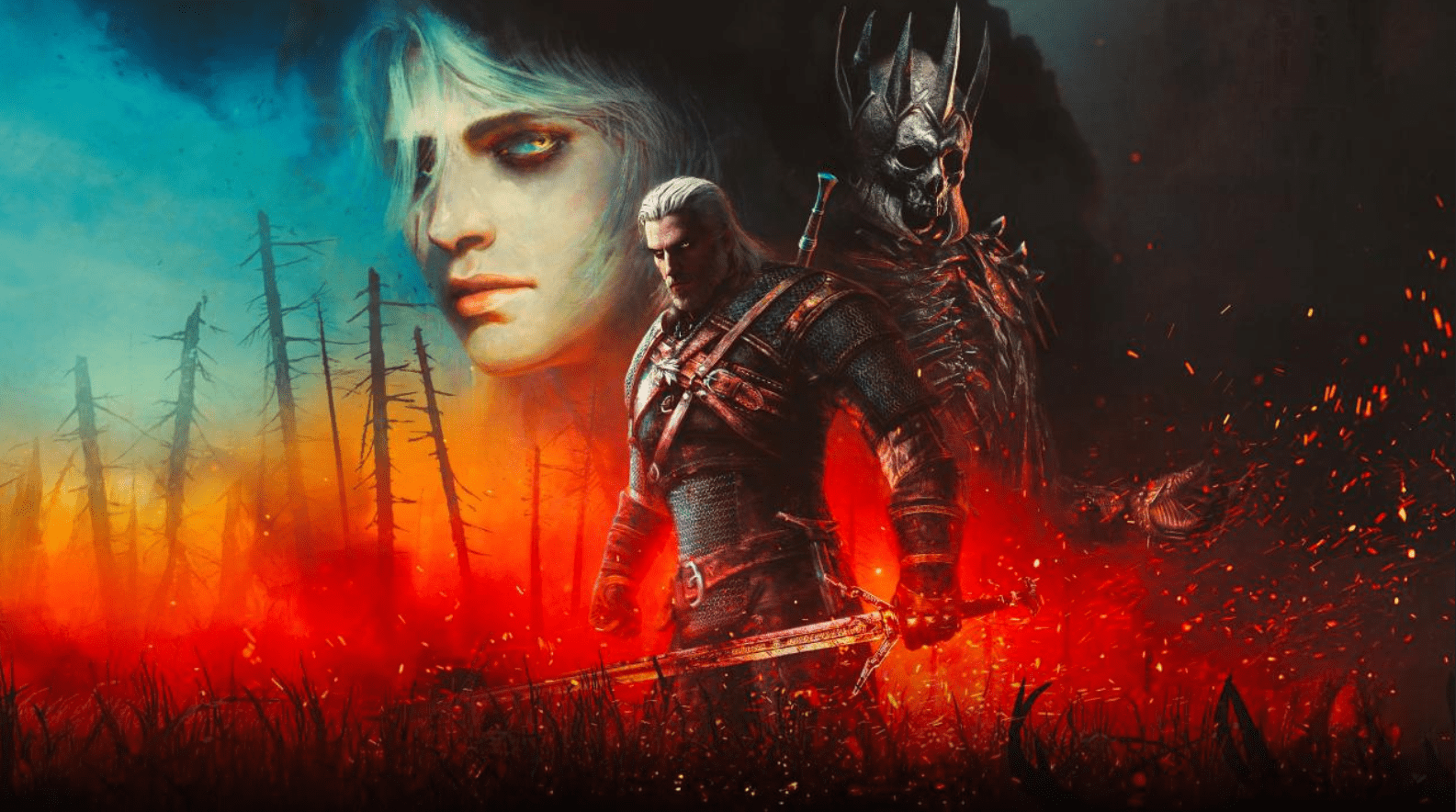
I still remember finishing Blood and Wine for the first time and sitting quietly for a few minutes after the credits rolled. It felt like a proper goodbye. So when word started spreading earlier this year that CD Projekt Red was working on another major expansion for The Witcher 3: Wild Hunt, I genuinely did not believe it at first. Then the confirmation came. Songs of the Past is real, it is coming, and it will be shown publicly for the first time at Gamescom 2026 in August.
This is not a small piece of content or a patch dressed up as an expansion. Early reports suggest Songs of the Past could match Blood and Wine in scale. If that holds true, we are talking about a full story-driven experience with new regions, new characters, and possibly a new ending arc for Geralt of Rivia. That is a significant commitment from a studio that already has The Witcher 4 in active development.
Let us break everything down. What we know. What players are hoping for. How this fits into the larger Witcher universe. And for anyone jumping back into the game, a complete controller and keyboard layout guide for both PC and Xbox.
Why Songs of the Past Matters More Than Most Announcements
The Witcher 3: Wild Hunt came out in 2015. Over a decade later, it still appears on best-of-all-time lists. It still sells. It still gets recommended to new players every single week on gaming forums. That kind of longevity does not happen by accident. CD Projekt Red built a world that felt genuinely lived in, with side quests that had more emotional weight than the main campaigns of most other games.
Blood and Wine, released in 2016, was the second and final major expansion. It introduced Toussaint, a sun-soaked region that felt completely different from the base game’s darker, war-torn atmosphere. It gave Geralt a proper home. It wrapped up storylines in a way that felt earned. Many players consider it one of the best pieces of DLC ever made, not just for the Witcher franchise but across all of gaming.
Songs of the Past is being positioned as a return to that level of quality. The name alone carries a lot of weight. It suggests something tied to memory, to the past, to unfinished stories. Whether that means returning characters, a new Geralt perspective, or an entirely separate protagonist set in the same world is still unknown as of this writing.
What makes this announcement land differently than most is the timing. CD Projekt Red is deep into development on The Witcher 4, which is reportedly built around Ciri as the central character. Choosing to revisit The Witcher 3 at this stage signals one of two things: either they found a story worth telling within that world, or Songs of the Past is meant to serve as a bridge between the old trilogy and whatever comes next.
What Gamescom 2026 Could Actually Show
Gamescom in Cologne has historically been a strong platform for European game studios, and CD Projekt Red has used it well in the past. The reveal of Songs of the Past at this event is not random. This is a deliberate choice.
Based on the pattern of how Blood and Wine was revealed, here is what the Gamescom showing could include:
- A cinematic trailer establishing tone and setting
- Brief gameplay footage showing new environments
- A rough release window or confirmed platforms
- Possibly a developer walkthrough segment during a separate panel
What is less likely at this stage is a confirmed price, a detailed breakdown of mechanics, or side quest previews. Those usually come closer to launch. The Gamescom showing is about generating interest and proving the expansion exists in a real, tangible form.
There is also the question of platforms. The Witcher 3’s Next Gen update in 2022 brought the game to current hardware with significant visual and performance improvements. Songs of the Past will almost certainly target PC, PlayStation 5, and Xbox Series X/S. Whether it comes to older hardware is something that remains to be seen.
How Songs of the Past Compares to Blood and Wine
Blood and Wine offered roughly 15 hours of main story content, with an additional 20 to 30 hours if you explored Toussaint fully and completed all secondary quests. It introduced new gameplay mechanics including a Mutation system that gave Geralt additional abilities. It also added a fully upgradeable vineyard estate as a home base.
If Songs of the Past targets similar scope, players should expect:
- A new self-contained region with its own visual identity
- At least 10 to 15 hours of main story content
- A set of new secondary quests that expand lore
- Possibly new gear, new signs, or new combat abilities
- A story that can be experienced without replaying the entire base game
One thing I personally hope for is a new Gwent card set tied to Songs of the Past. Blood and Wine added new cards that genuinely changed how you could build decks. A fresh set of cards for a new region would be a nice touch for players who spent hours on the Gwent questline.
The Story Possibilities: What Songs of the Past Could Explore
The title is doing a lot of work here. “Songs of the Past” suggests folklore, oral tradition, memory, and history. In the Witcher lore, bards play an enormous cultural role. Dandelion himself has spent most of his life turning Geralt’s adventures into stories and songs. The title could be a direct nod to that tradition.
Here are some directions the story could go:
A New Region Rooted in Witcher Lore
The base game covered Velen, Novigrad, and Skellige. Blood and Wine gave us Toussaint. There are still parts of the Continent that players have never visited. Zerrikania, Kovir, or even regions closer to Nilfgaard could offer fresh environments with unique culture and conflict.
Xbox Player Voice Is Working: Community Demands Exclusives and Microsoft Is Actually Listening
A Ciri-Focused Storyline
Given that The Witcher 4 will center on Ciri, Songs of the Past could serve as a narrative prologue. A story that follows Ciri after the events of The Witcher 3 would let CD Projekt Red test how players respond to her as the main character before committing fully in the sequel.
Geralt After the Events of Blood and Wine
Maybe Geralt gets pulled out of retirement. A new threat, a request from an old ally, or unfinished business from his past could bring him back into action. This would be the most familiar approach and probably the safest option for retaining the existing player base.
A Prequel Perspective
Songs of the Past could explore Geralt’s earlier years, his training at Kaer Morhen, or a story set before the events of the main trilogy. This would let the team tell a Witcher story without being bound by the choices players made across three games.
Full Controller Layout Guide for PC and Xbox: The Witcher 3
Whether you are jumping back into The Witcher 3 ahead of the Songs of the Past reveal or playing it for the first time, understanding the control scheme is essential. The game has a dense set of mechanics and the controls reflect that. Below is a complete breakdown for both PC keyboard and mouse, and Xbox controller.
PC Keyboard and Mouse Layout
| Action | Default Key / Mouse Button |
|---|---|
| Move Forward | W |
| Move Backward | S |
| Move Left | A |
| Move Right | D |
| Sprint | Shift (hold) |
| Dodge / Roll | Space |
| Fast Attack | Left Mouse Button |
| Strong Attack | Right Mouse Button (hold) |
| Block / Counter | Right Mouse Button (tap) |
| Cast Sign | Q (hold to select, release to cast) |
| Select Sign | Mouse Scroll or Q + Mouse Move |
| Draw / Sheathe Weapon | Tab |
| Interact / Loot | E |
| Open Inventory | I |
| Open Map | M |
| Open Character Panel | K |
| Open Quests | J |
| Open Alchemy | X |
| Meditate | N |
| Use Item (Quick Slot) | 1, 2, 3, 4 |
| Zoom Map In / Out | Mouse Scroll on Map |
| Track Quest | Right Click on Quest |
| Jump | Space (contextual) |
| Climb / Vault | Space (contextual) |
| Pause / Menu | Escape |
| Horse Call | X (while on foot) |
| Galop (Horse) | Shift (while riding) |
| Horse Calm / Stop | Space (while riding) |
| Fistfight Grapple | Left Mouse Button (in fistfight) |
| Parry in Fistfight | Right Mouse Button (in fistfight) |
| Throw in Fistfight | Hold Left Mouse Button |
| Witcher Senses | Hold Middle Mouse Button |
| Track Footprints | Follow glow while in Witcher Senses |
| Crossbow | Hold Middle Mouse Button during combat |
| Take Screenshot | F12 (Steam) |
| Quick Save | F5 |
| Quick Load | F9 |
PC Combat Tips: Getting the Most from Keyboard Controls
The fast attack and strong attack system rewards rhythm. Spamming fast attacks works on weaker enemies, but you need to mix in strong attacks and dodge timing against human fighters and larger monsters. Counterattacking with a tap of the right mouse button right as an enemy swings gives you a free hit window. Learning that timing makes fights dramatically smoother.
Signs are accessible through the quick select wheel. Hold Q, move your mouse in the direction of the sign you want, then release. Igni deals burn damage and is excellent against groups. Quen is a shield that absorbs one hit. Yrden slows enemies and is a must for wraiths. Axii can stun or even charm enemies. Aard pushes enemies back and can knock them off ledges.
Witcher Senses on PC can feel awkward because you need to hold the middle mouse button. Some players remap this to a side mouse button or a keyboard key to make exploration easier. It is worth spending two minutes in the settings menu to configure this before your first playthrough.
Xbox Controller Layout: Full Button Guide
| Action | Xbox Button |
|---|---|
| Move | Left Stick |
| Camera / Look | Right Stick |
| Sprint | Click Left Stick (L3) |
| Dodge / Roll | A |
| Fast Attack | X |
| Strong Attack | Y |
| Block / Counter | Left Trigger (LT) |
| Cast Sign | Right Trigger (RT) |
| Open Sign Wheel | Hold Left Bumper (LB) |
| Select Sign from Wheel | Left Stick (while LB held) |
| Draw / Sheathe Weapon | Hold B |
| Interact / Loot | A (contextual) |
| Open Inventory | Start > Inventory or D-Pad Up |
| Open Map | D-Pad Right |
| Open Character Panel | D-Pad Left |
| Open Quests | D-Pad Down |
| Meditate | Hold D-Pad Down |
| Use Item (Quick Slot 1) | Right Bumper (RB) |
| Cycle Quick Items | Hold RB and press D-Pad |
| Witcher Senses | Click Right Stick (R3) |
| Horse Call | Hold X (while on foot) |
| Gallop | Click Left Stick (L3) while riding |
| Horse Calm / Stop | A while riding |
| Jump / Vault / Climb | A (contextual) |
| Pause / Menu | Menu Button (Start) |
| Crossbow Aim | Hold LT during combat |
| Crossbow Fire | RT while aiming |
| Fistfight Fast Strike | X in fistfight mode |
| Fistfight Strong Strike | Y in fistfight mode |
| Fistfight Dodge | A in fistfight mode |
| Fistfight Block | LT in fistfight mode |
| Fistfight Throw / Grapple | Hold X in fistfight mode |
| Access Radial Menu | Hold View Button (Back) |
| Confirm | A |
| Cancel / Back | B |
Xbox Controller Combat Tips
On Xbox, the sign wheel is your best friend once you get comfortable with it. Holding LB and using the left stick to select a sign becomes second nature after a few hours. The key mistake most new players make is forgetting to switch signs between encounters. Heading into a fight against a wraith without Yrden slotted makes the fight far harder than it needs to be.
Blocking and parrying on controller uses LT. A well-timed LT tap right before an enemy hits you triggers a parry that staggers them. It works on human-sized enemies but not on monsters like trolls or bears. Against those, you rely on the A button dodge instead.
Witcher Senses on Xbox is bound to R3 (clicking the right stick). This is awkward during exploration because moving the camera and activating Senses at the same time requires some hand adjustment. Many experienced players simply stop moving, click R3, then look around. It feels unnatural at first but becomes routine.
The quick item system on Xbox is limited compared to keyboard shortcuts, so plan what you equip before going into a dungeon or boss fight. You can only cycle through a small set of usable items with RB. Making sure your potions and bombs are in those slots before a tough fight saves a lot of frustration.
Advanced Combat Mechanics Worth Knowing
Whether you play on keyboard or controller, these mechanics apply equally and can change how effective your combat feels:
Quen priority rule: Cast Quen before every boss fight. Always. It absorbs one hit for free and can mean the difference between surviving a powerful attack and reloading a save.
The delayed dodge: Waiting until the last possible moment to dodge triggers a slow-motion window that makes it much easier to reposition. This is not a guaranteed mechanic but it rewards patient play.
Bomb placement: Bombs in The Witcher 3 have area effects. Throwing a Dancing Star bomb (fire bomb) into a group of enemies, then hitting them with Igni while they are on fire stacks burn damage effectively.
Silver versus steel: Silver sword works on monsters and cursed creatures. Steel sword works on humans and some animals. Using the wrong sword type noticeably reduces your damage output. Switching weapons quickly is a habit worth building early.
Signs and stamina: Every sign costs stamina. If you spam signs without letting your stamina regenerate, you will run out mid-fight. The Whirl ability (fast attack spin) also drains stamina. Watch the green bar during fights.
CD Projekt Red’s Current Situation and Why This Expansion Is Surprising
To understand why Songs of the Past is such an unusual announcement, you have to look at where CD Projekt Red is as a company right now.
After the difficult launch of Cyberpunk 2077 in 2020, the studio spent the next two years rebuilding trust through patches and updates. The Phantom Liberty expansion in 2023 was a major turning point. It was well-received critically and commercially, and it showed that the studio could still deliver high-quality story content. It also showed that returning to an older game with a major expansion can be very good for business.
The Witcher 4 is in active development, with Ciri as the main character. The studio has released concept art and confirmed basic plot details, but a release date has not been announced. Developing a full expansion for The Witcher 3 simultaneously with a new mainline entry is not a small thing. It suggests CD Projekt Red either has a dedicated team working specifically on Songs of the Past, or the expansion was further along in development than anyone publicly knew.
From a business perspective, Songs of the Past makes complete sense. The Witcher 3 still generates revenue. A major expansion right before The Witcher 4 launches would serve as a reminder of what made the original so special and bring in players who missed it the first time. It is good marketing as much as it is good game development.
What the Witcher Community Is Saying
The response online has been significant. On Reddit’s r/witcher community, threads about Songs of the Past consistently hit the top of the feed within hours of new information dropping. The general sentiment breaks into three camps.
The first group is purely excited. They want more Witcher content and trust CD Projekt Red to deliver after Blood and Wine set such a high standard. The second group is cautiously optimistic but watching closely. After the Cyberpunk 2077 launch issues, some players want to see gameplay before getting too invested. The third group is concerned that a new Witcher 3 expansion dilutes focus from The Witcher 4, which they see as the more important project.
All three reactions are fair. What they share is genuine engagement with the franchise. That level of investment, over a decade after the original game launched, speaks to how deeply The Witcher 3 connected with players.
Platform Availability and Next Gen Features
The 2022 Next Gen update for The Witcher 3 added ray tracing, improved textures, faster load times, and a free upgrade path for anyone who already owned the game on PC, PS4, or Xbox One. It also added content inspired by the Netflix Witcher series, including new quests and armor sets.
Songs of the Past will almost certainly take full advantage of current hardware. Expect higher resolution assets, faster streaming of open world environments, and possibly ray traced lighting in whatever new region the expansion introduces. If you are planning to replay The Witcher 3 before the expansion launches, the Next Gen version on PC or current consoles is the version to play.
On PC, the game runs best with an NVIDIA GPU due to specific optimizations, but it performs well across a wide range of hardware. The game’s scalability means it still runs on mid-range machines, which matters for a title that continues to attract new players years after release.
How to Prepare for Songs of the Past Right Now
If you have not played The Witcher 3 in a while, or if you are starting fresh ahead of Songs of the Past, here is the order of play that makes the most sense:
- Play the base game through all three acts
- Complete Hearts of Stone before Blood and Wine
- Complete Blood and Wine last, including the epilogue
- Carry that save file forward when Songs of the Past releases, if save imports are supported
Hearts of Stone is typically recommended before Blood and Wine because it is slightly shorter and tonally darker. Blood and Wine’s more optimistic setting works better as a conclusion. Songs of the Past may follow a similar logic and pick up narrative threads from specific ending states.
For new players, the recommended difficulty settings are Story and Sword for people who want to focus on the narrative, and Blood and Broken Bones for those who want a proper challenge. Death March is the hardest difficulty and genuinely punishing. It rewards preparation and careful potion brewing before every fight.
The Witcher 3 Semantic Context: Related Topics Players Search For
To give this article its full utility for players researching Songs of the Past and The Witcher 3 in general, here is relevant context on topics that frequently come up alongside this expansion:
Witcher 3 mods in 2026: The modding community remains active. Script Merger and Vortex are the primary tools for mod management on PC. Popular mods include Enhanced Targeting, FCR3 (Friendly HUD), and various texture packs. CD Projekt Red’s modding support means many mods have been updated for the Next Gen version.
Witcher 3 builds: Griffin Sign build, Ursine Tank build, Cat School fast attack build, and Euphoria Alchemy build remain the most effective combat styles depending on your preferred approach. Songs of the Past may introduce new skill options that create additional build paths.
Witcher 3 best endings: The game has multiple endings depending on your choices throughout the story. The ending where Ciri becomes a Witcher is generally considered the most narratively satisfying. Blood and Wine has its own ending that changes based on whether you reconcile with Anna Henrietta.
Witcher 3 Gwent guide: Collecting all Gwent cards requires buying cards from merchants, winning matches, and completing specific quests. The Collect ‘Em All quest tracks your progress. A full collection requires significant time investment but is worth it for the achievement and the lore embedded in the card artwork.
Frequently Asked Questions: Songs of the Past and The Witcher 3
What is Songs of the Past?
Songs of the Past is a new expansion for The Witcher 3: Wild Hunt developed by CD Projekt Red. It is the first major expansion for the game since Blood and Wine, which released in 2016. The expansion was officially confirmed for a first public reveal at Gamescom 2026 in August.
When will Songs of the Past be released?
A release date has not been announced as of May 2026. The Gamescom reveal in August is expected to provide more details, which may include a release window. Based on CD Projekt Red’s past expansion schedules, a launch sometime in late 2026 or 2027 is plausible but not confirmed.
Is Songs of the Past as big as Blood and Wine?
Early reports suggest the expansion could be comparable in scale to Blood and Wine, which offered roughly 15 hours of main story content and 30 or more hours of total content including side quests. This has not been officially confirmed.
Do I need to finish The Witcher 3 base game to play Songs of the Past?
It is very likely that some familiarity with the base game will be needed, as Blood and Wine had a minimum level requirement and assumed knowledge of core mechanics. Whether Songs of the Past requires a completed save file from the base game or Blood and Wine is unknown at this time.
Will Songs of the Past be on PS5 and Xbox Series X?
CD Projekt Red has not confirmed platforms officially, but given that The Witcher 3 Next Gen update targeted PC, PS5, and Xbox Series X/S, Songs of the Past will almost certainly release on the same platforms.
Is Songs of the Past related to The Witcher 4?
No official connection has been confirmed. However, given that The Witcher 4 will center on Ciri, many players and analysts believe Songs of the Past could serve as a narrative bridge between the two games. This is speculation until CD Projekt Red provides more details.
Will Songs of the Past have new Gwent cards?
This has not been confirmed. Blood and Wine added new Gwent cards tied to Toussaint. If Songs of the Past introduces a new region, it is reasonable to expect new Gwent content as well, but nothing is official yet.
What is the best way to control The Witcher 3 on PC?
Many PC players prefer a controller for The Witcher 3 because combat and movement feel more fluid with analog sticks. However, keyboard and mouse offers more precise inventory management and faster sign switching. The game supports both input methods fully and allows switching between them at any time.
Can I use a PS5 DualSense controller for The Witcher 3 on PC?
Yes. The DualSense controller works with The Witcher 3 on PC via USB or Bluetooth. The button prompts will display Xbox layout by default unless you use Steam Input to configure PS5 button icons. The adaptive trigger and haptic feedback features of the DualSense are not fully supported in The Witcher 3 as the game predates those features.
How many hours is The Witcher 3 in total including all expansions?
A focused playthrough of the base game takes approximately 50 hours. Adding Hearts of Stone and Blood and Wine brings the total to around 100 hours. Completionist runs covering all quests, Gwent cards, and collectibles can reach 150 to 200 hours. Songs of the Past could add another 15 to 30 hours depending on its scope.
What difficulty should I play The Witcher 3 on?
Story and Sword is ideal for players focused on narrative. Blood and Broken Bones provides a rewarding challenge without being punishing. Death March is for experienced players who want the most demanding combat experience. Difficulty can be changed at any time in the settings menu, so there is no wrong choice to start with.
Is The Witcher 3 still worth playing in 2026?
Yes. The game holds up remarkably well. The Next Gen update improved visuals and performance significantly. The story, writing, and world design remain among the best in the RPG genre. With Songs of the Past on the horizon, now is an excellent time to play or revisit the game.