
I still remember the night I finished the first Saw game back in 2009 on my old Xbox 360. It was rough around the edges, but it scratched an itch that no other game had at the time, that feeling of being trapped in Jigsaw’s world with no easy way out. So when I heard that Bloober Team, the studio behind the Silent Hill 2 remake, was putting their name on a brand new Saw project, I got excited fast. Then I read the details and felt that small twist of disappointment a lot of fans are talking about right now. SAW: Genesis is not a single player story game. It is a 3v1 asymmetrical multiplayer horror game, the kind of format that Dead by Daylight made popular years ago.
I sat with that disappointment for about a day. Then I went back and read everything I could find about the gameplay loop, the role of the Judge, the injury system, and the time pressure mechanics, and my opinion shifted. This is not just another asymmetrical horror clone wearing a Saw skin. It actually borrows the moral weight of the films and turns it into something players have to live through together, not just watch happen to characters on a screen.
This article breaks down everything currently known about SAW: Genesis, how the game plays, the role of the Judge versus the Accused, the injury and time management systems, what early access means for this title, and a full controller button layout guide for both PC and Xbox controllers so you are ready the moment the closed alpha drops. I have also added my own thoughts from years of playing asymmetrical horror games, because I think that experience matters when judging whether a new title like this can actually hold up.
SAW: Genesis Official Details, Release Window, and Platforms
SAW: Genesis was revealed during Summer Game Fest in June 2026. The game is being developed by Broken Mirror Games and Anshar Studios, with Bloober Team publishing the title alongside Lionsgate, who owns the Saw film franchise. Tobin Bell, the actor who has played John Kramer since the very first Saw movie released in 2004, is also part of this project, which tells you that the story side of things is being taken seriously even though the core loop is multiplayer.
The game is set in the aftermath of World War I, roughly a century before the events shown in the films. Instead of playing as a victim of Jigsaw himself, players take on the role of either the Judge, a character whose philosophy on pain and rehabilitation later influenced Jigsaw, or one of three Accused who must survive his trials. According to the official SAW: Genesis Steam page, the game will launch first in Early Access for PC, with plans for two locations, two Judges, and four Accused characters available at launch.
As of now there is no confirmed Xbox Game Pass or console release date, and the early access version is PC only through Steam. That said, with a controller layout guide further down in this article, console players using a controller on PC, or anyone hoping for an Xbox version down the line, will already know exactly how the buttons should map out.
How SAW: Genesis Plays, The Judge Versus The Accused Explained
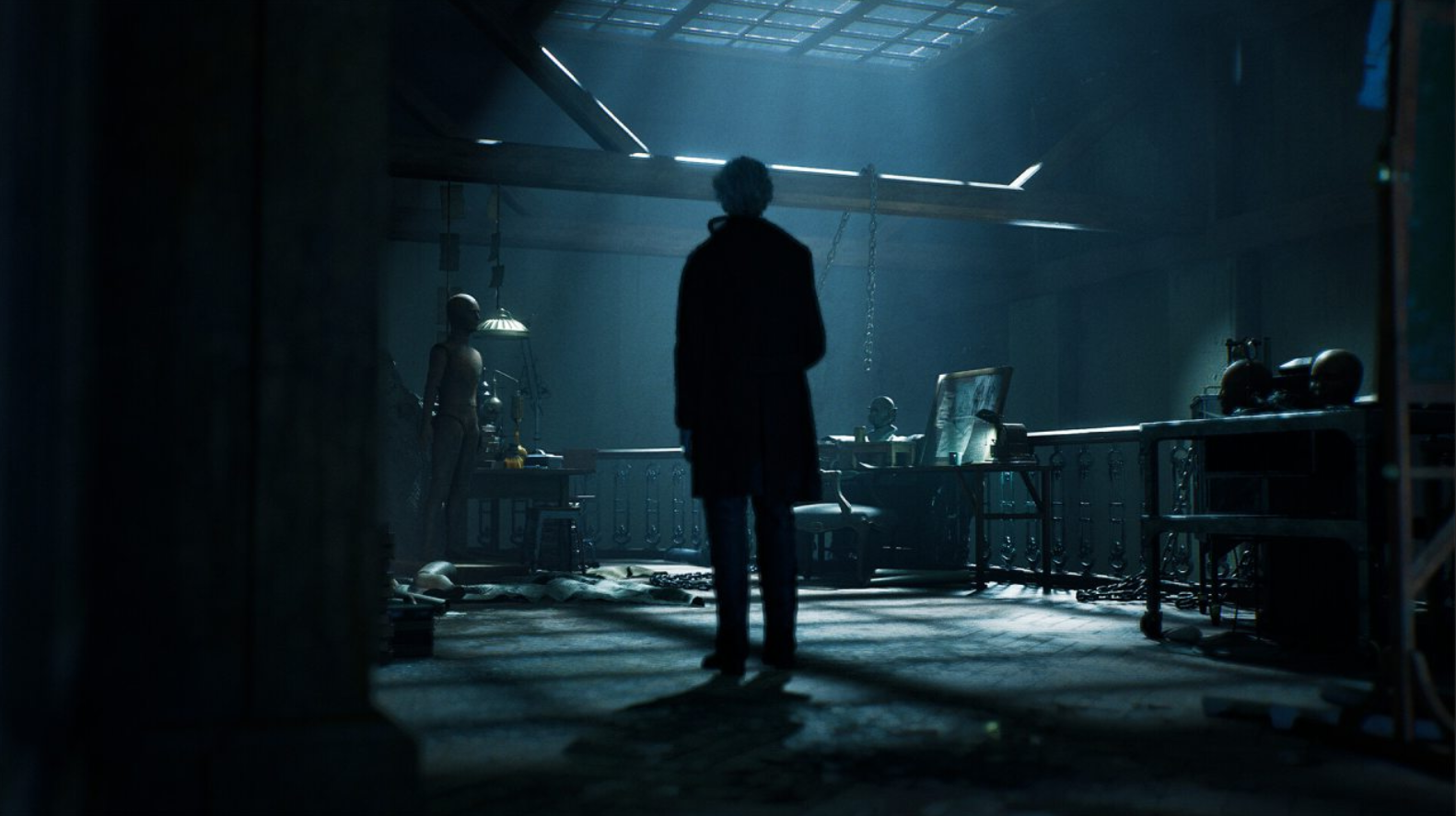
At its core, SAW: Genesis is a 3v1 game. Three players take on the role of the Accused, working together to escape a maze full of traps, puzzles, and environmental hazards. The fourth player becomes the Judge, watching the entire map from a distance and pulling levers, both literal and figurative, to make survival as difficult as possible.
What stands out to me is how the developers describe the Judge’s role. This is not a slasher who simply chases people down with a weapon. The Judge is closer to a conductor, someone shaping the flow of a match rather than hunting players directly. According to early previews of the gameplay, the Judge can lock doors, turn ordinary rooms into puzzle chambers, deploy hallucination inducing gas, and use hidden corridors to move around the map unseen.
The Accused are not defenseless either. Reports suggest the Judge is no more physically powerful than the Accused themselves, meaning if the Judge gets caught in their own trap or cornered, the tables can turn quickly. From what has been shared so far, the team only needs one Accused to escape for the group to win, though the exact victory conditions are still being finalized ahead of the closed alpha.
Matches, Procedural Maps, and the Pressure of Time
Matches in SAW: Genesis are expected to last somewhere between 10 and 15 minutes. That short window completely changes how you have to think compared to a slower survival horror game. There is no slow burn here. Every second counts, and the developers have built the entire game around that pressure.
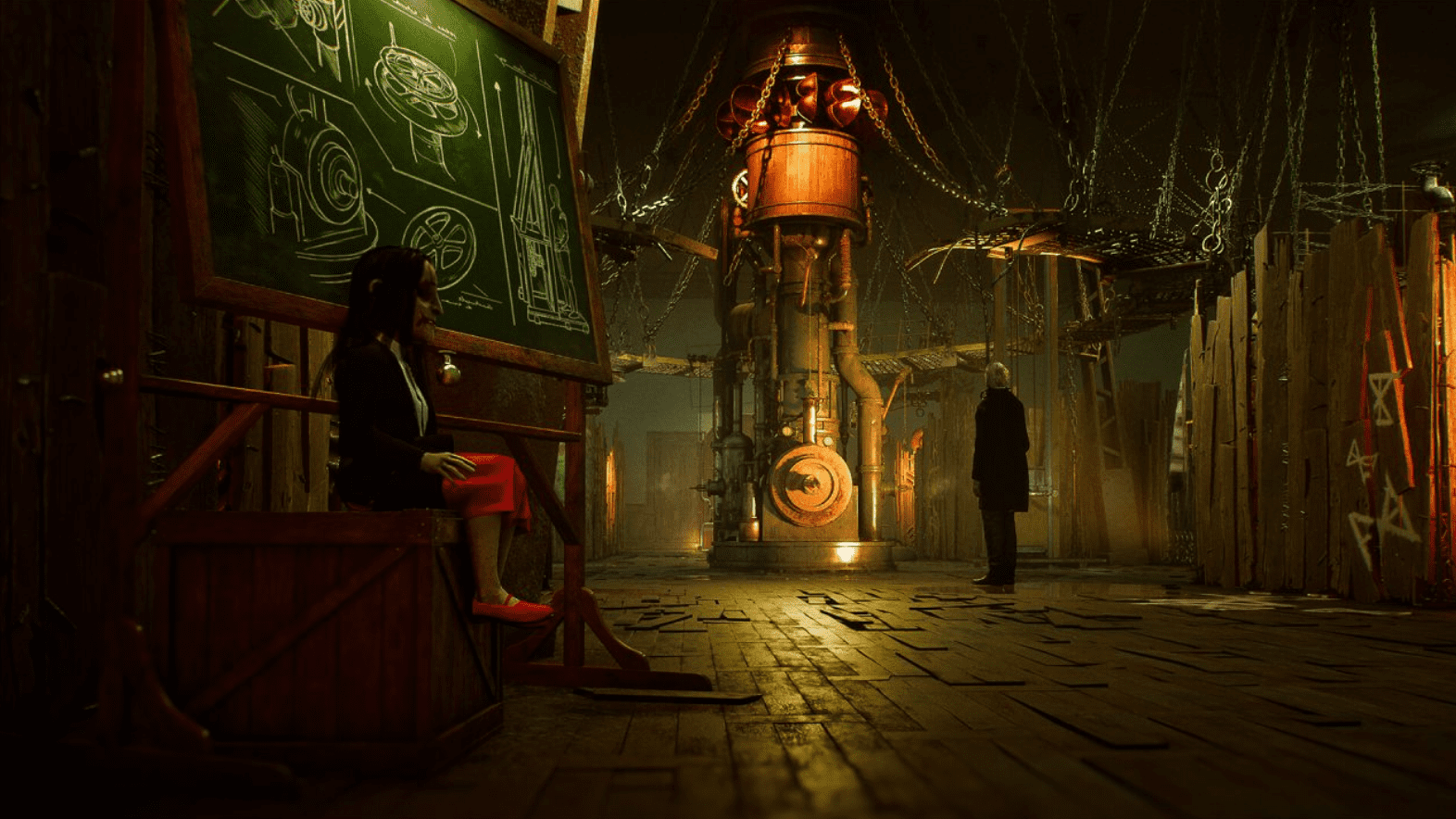
One of the smartest design choices, in my opinion, is the procedural generation of maps. Every match takes place on a layout that is partially randomized, so memorizing one path through a level will not guarantee success the next time you play. The official previews confirm this procedural approach, noting that routes and layouts shift with every match to keep sessions from feeling repetitive.
Time management is not just about beating a countdown clock either. Survivors are pushed to keep moving through challenges, because standing still and waiting out the timer is a losing strategy. If the Accused run out of time before completing their objectives, they lose, full stop. This pushes constant decision making, do you take the safer but slower route, or risk a faster path that might lead straight into one of the Judge’s traps.
The Injury System, A Mechanic That Could Define the Whole Game
This is the part of SAW: Genesis that genuinely excites me the most, and I think it is being slightly underrated in early discussions. According to reports from closed alpha sign up details, injuries in this game are not just a health bar dropping. They have lasting, specific effects.
If an Accused player takes damage to an arm, that injury can affect how well they can interact with objects, fight back, or defend themselves for the rest of the match. A leg injury, based on early information, can slow movement and make solving certain puzzles harder. This is not cosmetic damage. It changes how you play for the remainder of that round.
Here is why I think this matters so much. In the Saw films, the entire emotional core comes from impossible choices, who suffers so that someone else can live, who sacrifices a part of themselves so the group can move forward. By baking that decision making directly into the gameplay through permanent injuries during a match, SAW: Genesis is doing something that almost no other asymmetrical horror game has attempted. Dead by Daylight has hook states and bleed out timers, sure, but nothing that fundamentally changes how a specific character plays for the rest of the round based on which body part got hurt.
From a team strategy standpoint, this also forces real communication. If your teammate has an injured arm, maybe they should not be the one trying to pick a lock under pressure. If someone has a leg injury, maybe they take point on a task that requires less running. The group composition is not fixed, it shifts dynamically based on what has happened to each player during that specific match.
The Judge’s Toolkit, Traps, Hazards, and Psychological Pressure
The Judge in SAW: Genesis is described as having access to a wide range of tools to slow down and weaken the Accused. Based on information from the official Bloober Team announcement, the Judge can customize their approach using perks and traps, then control the match from the shadows using hidden passages.
One example that has circulated involves players walking into what looks like a completely normal room, only for the Judge to lock the doors and turn it into a self contained puzzle that must be solved before anyone can leave. Other reports mention enemies that act more like hallucinations than direct threats, designed to waste time, consume resources, and cause confusion rather than kill outright.
There is also mention of noise detection systems that let the Judge track where the Accused are moving, hallucinogenic gas that can disorient players, and the ability to summon what some previews call Accomplices, secondary threats that drag victims toward what are being referred to as Rehabilitation Traps. These traps reportedly force a choice, lose a body part permanently for that match, or wait and hope a teammate arrives in time to rescue you. That single mechanic alone tells you how closely this game is trying to mirror the moral dilemmas the Saw films are known for.
Why the Multiplayer Direction Makes Sense, Even If It Was Not What Fans Expected
I want to be honest here. When I first read that SAW: Genesis was multiplayer only, my gut reaction was disappointment. The original Saw games from 2009 and 2010, developed by Zombie Studios, were single player survival horror titles. They were not perfect, Metacritic scores sat around 59 and 47 for the two games, but they offered something that has not really been replicated since, a personal, story driven journey through Jigsaw’s traps.
But here is the thing. Bloober Team has talked about wanting to extend the franchise’s focus on moral choices into a shared setting, one driven by player interaction and consequence rather than scripted story beats. Lionsgate has described this as a new chapter built around traps, time pressure, and life or death choices. When you separate the multiplayer format from your personal hopes for a single player sequel, the actual design goals here line up surprisingly well with what made the Saw franchise compelling in the first place.
Asymmetrical horror games live or die based on whether both sides of the match feel meaningful. A lot of games in this genre struggle because the killer or hunter role is more popular, leading to long matchmaking queues for survivors. SAW: Genesis seems to be aware of this problem. By giving the Accused side a deeper toolkit, communication based strategy, injury management, and puzzle solving variety, the developers appear to be trying to make both roles feel equally engaging, not just the Judge.
SAW: Genesis Closed Alpha, Beta, and Early Access Timeline
If you want to get hands on with SAW: Genesis before its public release, the closed alpha playtest is the way to do it. According to the official sign up page for the closed alpha, players can register their interest, and those selected will receive an email with a link to join the game.
The closed alpha is expected to begin in early July 2026, based on current reporting from multiple outlets covering the Summer Game Fest reveal. Following that, SAW: Genesis is planned to launch into Early Access on Steam for PC sometime in Fall 2026, according to the official Steam store page.
Some fans on community forums have raised concerns about the early access model in general, and honestly, those concerns are fair. Plenty of games spend years in early access without ever feeling finished. But early access can also work really well when the core loop is fun from day one. Games like Valheim and Hades both proved that a strong foundation during early access can lead to a beloved final product. If SAW: Genesis nails the basic 3v1 loop, injury system, and map variety right out of the gate, the early access period could be used to add new Judges, new Accused characters, new maps, and refine balance based on real player data.
What Sets SAW: Genesis Apart From Dead by Daylight and Other Asymmetrical Horror Games
I have put a lot of hours into Dead by Daylight, Evil Dead The Game, and a few other titles in this space, so I want to compare SAW: Genesis fairly rather than just hype it up. Here is what I think genuinely sets it apart based on what has been revealed so far.
First, the injury system. Most asymmetrical horror games use a binary health state, you are either healthy, injured, or downed, and the injury status usually just affects your speed or your ability to be grabbed. SAW: Genesis appears to tie specific injuries to specific gameplay functions. An arm injury affecting your ability to interact or fight, a leg injury affecting movement and puzzle difficulty, this is a much more granular approach.
Second, the Judge is described as not being inherently more powerful than the Accused. In most games of this type, the killer role has a clear physical advantage, faster movement, instant down abilities, and so on. If the Judge in SAW: Genesis really is on equal physical footing and relies on environmental control and traps instead, that completely changes the power dynamic and could make the Judge role feel more like a strategist than a brute force threat.
Third, the procedural map generation paired with the room locking mechanic creates a puzzle box feeling that I have not really seen done well in this genre before. Most asymmetrical horror games have static maps that players memorize over time. If SAW: Genesis can keep its procedural systems feeling fresh after dozens of hours, that alone could be a major selling point.
My Honest Take After Researching SAW: Genesis
I think the smartest thing SAW: Genesis can do is lean fully into what makes it different rather than trying to be a Saw themed Dead by Daylight. The injury system, the moral weight of the Rehabilitation Traps, and the Judge’s role as a conductor rather than a hunter all point toward a game that wants to be its own thing.
My personal worry is balance. Asymmetrical games are notoriously hard to balance, especially when one side has four different roles to manage, injuries, communication, puzzle solving, and survival, all at once. If the closed alpha shows that the Accused side feels too punishing or too easy compared to the Judge, that imbalance could sink the game’s reputation early, and reputation matters a lot for early access titles on Steam.
That said, I am cautiously optimistic. The pedigree here is strong. Bloober Team has a track record with horror, the Silent Hill 2 remake was well received, and Lionsgate clearly wants this to be a meaningful new chapter for the Saw franchise rather than a quick cash grab. If the closed alpha in July delivers on the ideas described so far, SAW: Genesis could become one of the more interesting horror multiplayer games of 2026.
Fire Emblem Fortune’s Weave Costs $80 Physical on Switch 2 and Players Are Not Happy About It
SAW: Genesis and the Wider Saw Franchise, Lore Connections Explained
One question I see asked over and over in community threads is how SAW: Genesis actually connects to the films that started in 2004. The short answer is that this game is a prequel, but not in the way most prequels work. Rather than showing a younger John Kramer building his first traps, SAW: Genesis introduces a separate character called the Judge, someone whose methods and philosophy on pain, punishment, and rehabilitation predate and directly influence Jigsaw himself.
Setting the game in the aftermath of World War I is a smart move from a lore standpoint. The first Saw film leaned heavily on themes of guilt, addiction, and people who take their lives for granted. A post war setting carries that same weight naturally, soldiers and civilians dealing with trauma, survival, and the kind of moral exhaustion that makes Jigsaw’s twisted logic about appreciating life feel disturbingly coherent within the story. The Judge being shaped by experiences in the Great War, as described in official materials, gives the character a believable origin for why someone would start believing that suffering can be a form of teaching.
For longtime fans worried about whether this respects the established Saw timeline, the prequel approach actually sidesteps a lot of continuity problems. Since the events take place roughly a hundred years before the first film, there is plenty of room for the developers to build out new lore without contradicting anything that happens to Kramer, Amanda, Hoffman, or any of the other major characters from the movies. It also opens the door for future games or expansions to explore how the Judge’s ideas eventually trickled down and shaped Jigsaw’s own methods decades later.
Understanding the Accomplice System and Rehabilitation Traps
Among all the mechanics revealed so far, the Accomplice system and Rehabilitation Traps are probably the ones that best capture the spirit of the Saw franchise in gameplay form. From what has been described, the Judge can summon Accomplices, secondary threats that are not necessarily lethal on their own but exist to drag Accused players toward Rehabilitation Traps.
Once caught in one of these traps, the choice presented to the player is brutal in its simplicity, lose a body part for the rest of the match or hope a teammate reaches you in time to perform a rescue. This is not a quick time event you mash through alone. It is a decision that puts pressure on the entire team, because every second a teammate spends running toward a rescue is a second they are not spending on their own objectives or staying ahead of the Judge.
I think this mechanic alone could end up defining a lot of memorable moments in SAW: Genesis. Picture a scenario where two players are deep into solving a puzzle that requires precise timing, and the third player gets caught in a Rehabilitation Trap on the other side of the map. Do you abandon the puzzle to save them, knowing it might cost your team the time needed to escape, or do you let them take the permanent injury and hope your group can still make it work with one member down a limb? These are exactly the kinds of impossible choices the Saw films are built around, and seeing them play out organically between real players rather than scripted characters is genuinely a fresh idea for the genre.
How Noise Detection and Hidden Corridors Change Strategy for the Judge
A big part of what makes the Judge feel different from a typical asymmetrical horror killer is the emphasis on information gathering rather than raw chasing power. Noise detection, based on early previews, lets the Judge track where Accused players are moving without needing to be in the same room. Combined with access to hidden corridors and tunnels that let the Judge reposition across the map unseen, this creates a very different rhythm compared to games where the killer simply patrols and reacts to whatever they stumble across.
From a strategic standpoint, this means the Judge has to think ahead. If you hear footsteps clustering near a specific objective room, that is your cue to either set up a trap nearby, lock the doors to turn that space into a puzzle chamber, or reposition an Accomplice to intercept anyone who tries to leave. The Judge is playing a longer game than most asymmetrical killers, planning two or three steps ahead rather than just reacting to whoever they see first.
For the Accused side, this changes how you should think about noise. Sprinting everywhere might feel like the fastest way to complete objectives, but if the Judge can hear you coming from across the map, you are giving away your position and your team’s general plan. Balancing speed against stealth becomes one of the core tension points of every match, and I suspect skilled players will develop very different playstyles depending on whether they prioritize quiet movement or fast objective completion.
Tips for New Players Heading Into the Closed Alpha
If you manage to get into the closed alpha starting in early July 2026, here are a few things I would keep in mind based on patterns I have seen across other asymmetrical horror games during their early testing phases.
Communication is going to matter more in SAW: Genesis than in almost any comparable game. Because of the injury system and the Rehabilitation Trap mechanic, your team needs to constantly share information, who is injured, who has which item, who is closest to which objective. If you are playing with strangers rather than a coordinated group, expect a steeper learning curve simply because that communication will not happen naturally at first.
Do not panic the first time the Judge locks you in a room. Based on early descriptions, these locked rooms are designed as solvable puzzle chambers, not instant death traps. Take a breath, look around for interactive objects, and remember that the goal is usually to consume your time and resources rather than kill you outright in that moment.
Pay attention to your character’s injury status throughout the match. If you have taken an arm injury, you might want to let a healthier teammate handle any objective that requires precise interaction or combat. If you have a leg injury, focusing on tasks that do not require quick movement could help your team more than trying to push through pain on a time sensitive objective.
As the Judge, resist the urge to commit fully to chasing one player. Because the role is built around map control and pressure rather than direct power, spreading your attention across multiple threats, a trap here, a locked room there, an Accomplice cutting off an escape route, will likely be far more effective than tunneling one player the entire match.
SAW: Genesis Compared to the Original Saw Video Games From 2009 and 2010
For players who grew up with the original Saw games developed by Zombie Studios, it is worth taking a moment to compare those titles to what SAW: Genesis is attempting. The 2009 game put players in the shoes of a detective investigating Jigsaw’s traps in a third person survival horror format, with puzzle solving and combat elements. The 2010 sequel followed a similar structure with a different protagonist.
Both games received mixed to negative reviews, sitting in the high 40s to high 50s on Metacritic. Common criticisms at the time included clunky combat, repetitive puzzle design, and a story that did not always integrate well with the gameplay. These were not bad ideas executed poorly so much as an attempt to fit Saw’s themes into a fairly generic survival horror template that was already common at the time.
SAW: Genesis is approaching the franchise from a completely different angle, building gameplay systems specifically around the moral and psychological elements that made the films stand out, rather than trying to retrofit Saw into an existing genre template. Whether this approach works better remains to be seen, but at the very least, the design philosophy feels more tailored to what makes Saw unique as a property, the traps as moral tests rather than simple obstacles, the impossible choices, and the psychological pressure of being watched and manipulated by someone who sees themselves as a teacher rather than a villain.
What to Expect From Early Access Content Updates
According to the official Steam page, SAW: Genesis is planned to launch into Early Access with two locations, two Judges, and four Accused characters as a starting point. For a multiplayer game built around variety through procedural generation and character specific mechanics, this is a fairly modest starting roster, and the developers seem aware of this.
The stated plan is to keep the price consistent between Early Access launch and full release, which suggests the team is planning a content rollout over time rather than treating Early Access as a near final product with minor patches. If history with similar games is any guide, expect new locations to bring fresh trap types and room layouts, new Judges to bring different perk sets and Accomplice variations, and new Accused characters to potentially bring unique starting items or abilities that affect team composition strategy.
The bigger question is pacing. Early access communities can turn hostile quickly if updates feel too slow or too sparse, especially in a genre where player counts can drop off fast if the core loop starts to feel stale. Based on the developers stating they want to build a strong and stable community around player feedback, it seems like SAW: Genesis is positioning itself for a long term content plan rather than a quick cash grab followed by abandonment, but only time and the actual update cadence after launch will tell the real story.
Full Controller Button Layout Guide for SAW: Genesis, PC and Xbox
Since SAW: Genesis is launching first on PC via Steam, and many PC players prefer using an Xbox style controller for third person and first person horror games, having a clear button layout ready before the closed alpha goes live will help you get comfortable faster. Below is a complete breakdown of the expected and standard control mapping for both the Judge and Accused roles, based on common conventions used across asymmetrical horror titles and the control schemes typically supported on Steam for Xbox controllers.
Xbox Controller Layout for Playing as the Accused
When playing as one of the three Accused, your controls need to support fast movement, interaction with objects, combat or evasive actions, and communication with your team. Here is the expected standard layout.
Left Stick, controls character movement, walking and running through the procedurally generated map.
Right Stick, controls camera and look direction, used for scanning rooms and aiming during interactions.
A Button, primary interact button, used to open doors, pick up items, solve puzzle prompts, and interact with environmental objects.
B Button, cancel action or crouch toggle, useful for breaking line of sight from the Judge or backing out of an interaction.
X Button, secondary interact or use item, often mapped to using held items like keys, tools, or medical supplies.
Y Button, ping or mark location, used to communicate points of interest, traps, or enemy positions to teammates.
Left Bumper, LB, sprint toggle or hold to run, lets you move quickly through corridors when escaping danger.
Right Bumper, RB, push or shove action, can be used to create distance from the Judge or an Accomplice enemy.
Left Trigger, LT, aim down sights or focus view, useful for precise interactions or examining objects closely.
Right Trigger, RT, attack or struggle action, used during traps or confrontations with the Judge.
Left Stick Click, L3, crouch or stealth movement toggle, helps you move quietly through the map.
Right Stick Click, R3, melee attack or reset camera, depending on the situation.
D Pad Up, quick voice chat command or emote wheel.
D Pad Down, item wheel or inventory quick access.
D Pad Left and Right, cycle through held items or quick swap between tools.
Menu Button, opens the pause menu, settings, and match objectives screen.
View Button, opens the map overview or objective tracker.
Xbox Controller Layout for Playing as the Judge
The Judge role focuses less on direct movement speed and more on map control, trap deployment, and surveillance. Here is the expected layout for this role.
Left Stick, controls movement through hidden corridors and tunnels across the map.
Right Stick, controls the camera, used to monitor different rooms and survivor positions.
A Button, confirm trap placement or interact with the environment to trigger hazards.
B Button, cancel current action or exit a camera view.
X Button, deploy hallucinogenic gas or secondary hazard, depending on equipped perks.
Y Button, switch between map cameras or surveillance points.
Left Bumper, LB, cycle through available traps or perks.
Right Bumper, RB, lock or unlock doors remotely, the core room control mechanic.
Left Trigger, LT, activate noise detection or tracking ability.
Right Trigger, RT, trigger selected trap or hazard in the targeted area.
Left Stick Click, L3, toggle movement speed between normal and cautious pacing through hidden paths.
Right Stick Click, R3, reset camera view to default overview map.
D Pad Up, Down, Left, Right, quick select between different traps, Accomplices, or hazard types currently available.
Menu Button, opens pause menu and settings.
View Button, opens full map overview showing all current Accused positions if tracking is active.
PC Keyboard and Mouse Layout for Playing as the Accused
For players who prefer keyboard and mouse, here is the standard layout you can expect, based on common conventions for first person horror titles on Steam.
W, A, S, D, movement controls, forward, left, backward, right.
Mouse Movement, controls camera and look direction.
Left Mouse Button, primary interact, used for opening doors, picking up items, and solving puzzles.
Right Mouse Button, secondary interact or use held item.
Shift, sprint, hold to run through the map.
Xbox Chief Confirms He Watched Elder Scrolls 6 Running, And Fans Think A Reveal Is Coming Soon
Ctrl, crouch toggle, used for stealth movement.
Space, jump or vault over obstacles.
E, interact with environmental objects and pick up items.
Q, ping or mark location for teammates.
F, push or shove to create distance.
1, 2, 3, 4, quick item slots for tools, keys, and consumables.
Tab, open inventory or item wheel.
M, open map overview.
Esc, pause menu and settings.
T or V, push to talk for voice chat with teammates.
PC Keyboard and Mouse Layout for Playing as the Judge
The Judge role on keyboard and mouse focuses heavily on camera control and quick trap activation.
W, A, S, D, movement through hidden corridors and tunnels.
Mouse Movement, camera control across surveillance points and hidden paths.
Left Mouse Button, place or confirm trap, interact with environment to trigger hazards.
Right Mouse Button, deploy secondary hazard or hallucination effect.
E, lock or unlock doors remotely, the primary room control action.
Q, activate noise detection or tracking ability.
1, 2, 3, 4, 5, quick select between different traps, perks, and Accomplices.
Tab, open full map overview with surveillance camera access.
Shift, toggle movement pacing through hidden corridors.
Space, switch between active camera views.
Esc, pause menu and settings.
One tip from my own experience with similar games, take ten minutes before your first real match to just sit in the settings menu and remap anything that does not feel natural to your hand position. Asymmetrical horror games move fast once a chase or a trap sequence starts, and fumbling for the wrong button at the wrong moment is often the difference between escaping and ending up in a Rehabilitation Trap.
Frequently Asked Questions About SAW: Genesis
Is SAW: Genesis a single player game? No. SAW: Genesis is a 3v1 asymmetrical multiplayer horror game. There is currently no confirmed single player mode.
When does SAW: Genesis release? The closed alpha playtest is expected to begin in early July 2026, with Early Access launching on Steam for PC in Fall 2026, according to the official Steam page.
Is SAW: Genesis coming to Xbox or PlayStation? As of now, only a PC release through Steam Early Access has been confirmed. No console release date has been announced.
How many players are in a match? Each match supports four players total, three taking on the role of the Accused and one taking on the role of the Judge.
Can the Accused fight back against the Judge? Based on early information, the Judge is not inherently more powerful than the Accused physically, and if the Judge becomes trapped or cornered, the Accused may be able to turn the situation in their favor.
Where can I sign up for the closed alpha? Players can register on the official SAW: Genesis playtest sign up page to be considered for the closed alpha starting in early July 2026.
My Closing Note on SAW: Genesis
SAW: Genesis is shaping up to be one of the more thoughtful entries in the asymmetrical horror genre, even if it was not the single player sequel some fans hoped for. The combination of permanent injury effects, a Judge role built around manipulation rather than raw power, procedurally generated maps, and the moral weight baked into mechanics like the Rehabilitation Traps gives this game a real chance to carve out its own identity. Whether it lives up to that potential will come down to how the closed alpha plays in July 2026, and how the team handles balance and content updates throughout Early Access. For now, getting your controller layout dialed in and signing up for early access is the best way to be ready when the trial begins.