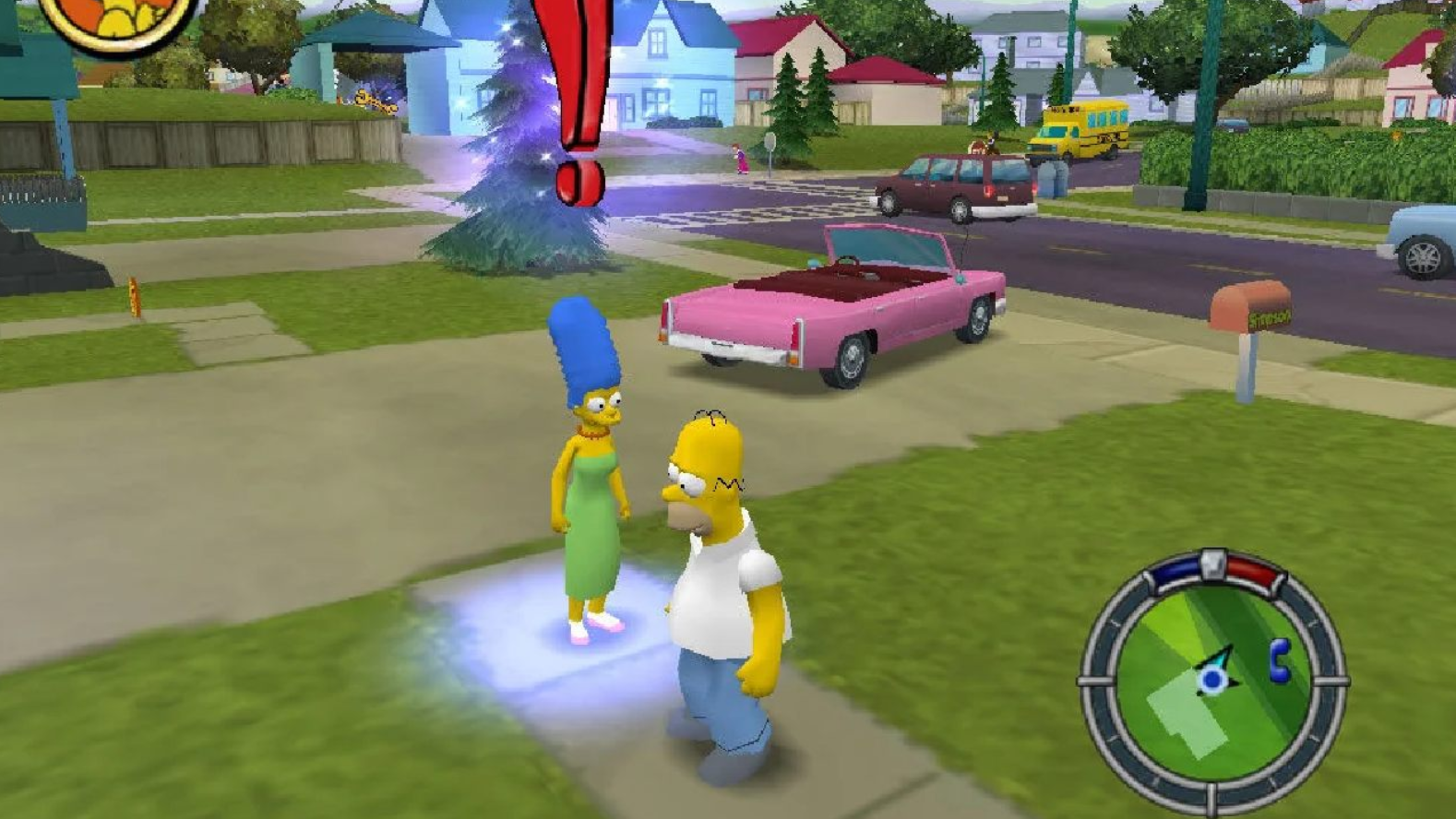
I still remember the day I first drove Homer’s Family Sedan through Springfield. It was 2003, the GameCube disc was barely out of its case, and within ten minutes I had already crashed into a mailbox, collected three wasp cameras, and triggered a chase scene by accident. That game never left me. And based on everything circulating right now, it seems like it never left the industry either.
The Simpsons Hit and Run remake conversation has moved well beyond fan wishlist territory. We are now at a point where credible insiders are hinting, a connected studio has quietly resurfaced, and two of the biggest companies in entertainment are both involved in the rights picture. That is a lot of pieces moving at once.
This article covers everything we know, what still needs to happen, what a proper remake should include, and a complete controller layout guide for both PC and Xbox so you are ready when the moment comes.
Where the Remake Rumor Actually Comes From
This did not start with a Reddit post or a YouTube theory video. The rumor gained real traction through Jordan Middler at Video Games Chronicle, a journalist with a consistent record covering Xbox, Activision, and classic franchise revivals. During a podcast discussion about Activision’s older catalog and what Microsoft might do with it, Middler pointed toward one specific game that fans have wanted back for years as something that is actually happening.
He did not say the name outright. He did not need to. The Activision connection, the era of the game, and the fan demand surrounding it made The Simpsons Hit and Run the obvious target. People who follow these conversations closely understood immediately what he was referencing.
What separates this from the usual noise is that Middler has a track record. He does not casually drop hints without something to back them up. When someone at that level of credibility points at a specific unnamed title connected to a specific company and says it is happening, that carries weight.
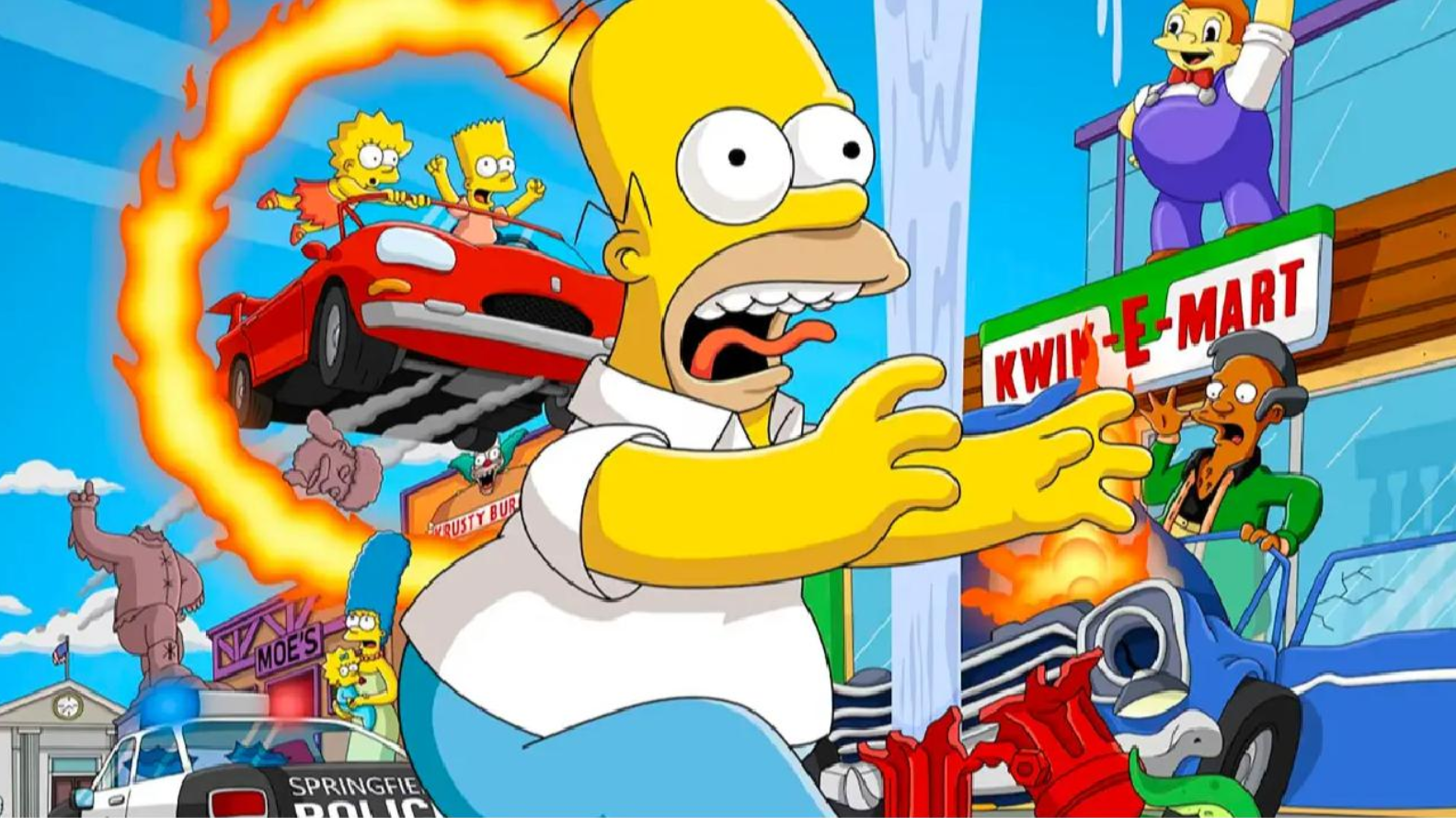
New Radical Games: The Studio Detail Nobody Should Ignore
A few months before Middler’s comments, something unusual happened in the background. Radical Entertainment, the Canadian studio that originally built The Simpsons Hit and Run back in 2003, effectively came back to life under a new name: New Radical Games.
Studios do not revive names with that kind of history without a plan. Radical Entertainment was also responsible for Prototype and The Incredible Hulk: Ultimate Destruction, both strong titles. But when people hear that name, they think of Springfield. That association is not accidental.
New Radical Games registering and becoming active at the same time an industry insider starts hinting about a Hit and Run remake is not a coincidence you can comfortably dismiss. These two events happening close together is the strongest piece of circumstantial evidence we have that something real is in motion.
The studio has not made any announcements. There is no official project page, no job listings that confirm a specific title. But the timing lines up in a way that is very hard to explain otherwise.
The Rights Situation: Why This Took So Long
Understanding why this game has not come back sooner requires understanding how complicated its ownership history actually is.
Radical Entertainment developed the game. Vivendi Universal Games published it. Vivendi was later absorbed through corporate mergers that eventually brought the publishing rights into Activision’s control. Then in 2023, Microsoft completed its acquisition of Activision Blizzard in a deal valued at around 69 billion dollars, making Xbox the new home of the Activision catalog.
That covers the game side. The property side is entirely separate.
The Simpsons is owned by Disney following the Fox acquisition. That means any remake requires both Microsoft and Disney to agree on terms, licensing, creative direction, revenue splits, and a dozen other details that take time even when both parties are interested. This is not a straightforward first-party revival like Crash Bandicoot or Spyro. Those were properties Activision owned outright. The Simpsons is Disney’s and will remain Disney’s.
This explains why even people connected to the show have been careful with their words. Matt Selman, an executive producer on The Simpsons who was involved with the original game, responded to a fan question about a possible revival with the phrase “never say never.” That is not a confirmation. But from someone in his position, it is also not nothing. He is aware the conversation is happening and he is leaving the door open.
What Microsoft Has to Gain From This
Since the Activision acquisition closed, the public conversation about what Xbox actually plans to do with that catalog has been ongoing. Call of Duty is the obvious centerpiece. But Microsoft paid an enormous amount of money for a library that includes far more than shooters.
Crash Bandicoot came back. Spyro came back. Tony Hawk came back twice. Each of those revivals proved that dormant Activision franchises can generate real commercial momentum when handled properly. The audience is there. The nostalgia is strong. And the original games hold up well enough that a remake with modern production values sells itself.
The Simpsons Hit and Run sits at the top of that conversation every time it comes up. It is the most requested game in Activision’s catalog by a significant margin. Bringing it back would accomplish something none of the other revivals could: it would cut across multiple generations simultaneously, pull in Simpsons fans who may not identify primarily as gamers, and generate the kind of broad cultural moment that drives sales beyond the traditional audience.
For Xbox, which has faced ongoing pressure to demonstrate the value of the Activision deal beyond Call of Duty, this would be a strong statement. It would show that the acquisition benefits players across different genres and generations, not just first-person shooter fans.
Why This Game Has Lasted 20 Years in People’s Memory
Licensed games from that era have a reputation for being rushed, thin, and forgettable. The tie-in obligation was usually the whole point. Publishers wanted something on shelves near a film release or a season premiere. Quality was secondary.
The Simpsons Hit and Run was different. The people who built it clearly watched the show, understood what made it work, and built the game around that knowledge rather than around a checklist of characters and locations. The result was something that felt like an interactive episode rather than a promotional product.
The GTA structure gave the game a familiar framework, but Springfield made it something unique. Racing past the Nuclear Power Plant, parking outside Moe’s Tavern, collecting items around Springfield Elementary, switching between Homer, Bart, Lisa, Marge, and Apu across seven chapters, each tied to a specific location in town. The world felt lived in because the show had already spent years making it feel that way.
The writing matched the show at a quality level that most tie-in games never reached. The jokes landed. The voice cast was involved. The references were specific enough to reward fans without confusing newcomers. The game trusted players to enjoy Springfield for what it was rather than explaining everything.
That combination is rare. It is why the game still gets streamed, still gets modded, and still generates conversation every time remake discussions come up. The structure was good and the setting was great. Those two things together create something that holds up even when the technology around it dates.
What a Modern Remake Needs to Get Right
This section matters a lot. A remake announced and then executed poorly would be worse than no remake at all. The expectations around this game are specific. People know exactly what they loved and they will notice immediately if a modern version misses the point.
The World Has to Feel Like Springfield
A rebuilt Springfield in 2025 or 2026 hardware has the potential to be genuinely extraordinary. The original map was impressive for 2003. Modern hardware can make it feel truly alive in a way that was not possible then.
Evergreen Terrace needs to be walkable and feel like a real neighborhood. The Kwik-E-Mart should have interior detail. Springfield Elementary, Krusty Studios, the Nuclear Power Plant, Moe’s Tavern, Burns’ Mansion, the Springfield Dam, Stonecutter’s Tunnel, and the downtown area all need to feel like places rather than backdrops. Lighting cycles, ambient audio, NPCs going about their routines, small details visible through windows. The technology exists to do all of this and the audience will notice if the team takes shortcuts.
What the remake should not do is turn Springfield into a generic open world cluttered with icons, side activities, and progression systems that have nothing to do with why people loved the original. The map should be dense and rewarding to explore, not enormous and thin.
Mission Design Needs Serious Expansion
The original game leaned heavily on timed races and chase sequences. Those missions were fun but they got repetitive by the third chapter. A remake has the opportunity to expand the mission variety significantly without changing the core tone.
Stealth sections make sense in a Simpsons context. Delivery missions with actual problem-solving built in. Environmental destruction objectives. Episode-inspired side quests that let players revisit specific moments from the show’s history. More creative use of each character’s personality in how their missions are structured.
Homer’s chapter should feel different from Lisa’s chapter in ways beyond just the map section. That kind of character-specific design would make the replay value much stronger and give the game a depth that the original was only beginning to explore.
The Writing Has to Stay Sharp
This is the hardest part to get right and the most important. The original game came from a specific era of the show when the writing was at a particular kind of cultural sharpness. Those jokes worked because of the timing, the delivery, and the fact that the writers understood the characters deeply.
A remake should preserve as much of the original dialogue as possible. Where new writing comes in, it needs to pull from the full run of the show rather than defaulting to the most recent seasons. The humor has to stay dry and specific. If the remake sanitizes the writing or makes it too broad, the audience will notice and the reaction will be harsh.
The voice cast involvement is also critical. The original had most of the main cast. A remake should pursue the same level of involvement. The characters are inseparable from the voices that have defined them for decades.
Driving and Controls Need to Feel Modern
The driving in the original was functional but loose in ways that were partly a product of the era. A remake should tighten the vehicle handling while keeping enough personality that driving still feels fun rather than clinical. The cars in Springfield should each handle distinctly. The Family Sedan drives like a tired American car from the 80s. That personality matters.
Camera control also needs attention. The original camera was a common frustration during timed missions. A modern solution with better camera tracking and smarter behavior during chases would remove one of the few genuine friction points in the original experience.
The Futurama Mod: Proof the Structure Still Works
If you need evidence that the foundation of Hit and Run is still compelling in 2024, look at the fan-made Futurama conversion mod. A community team rebuilt the game using Planet Express and New New York in place of Springfield, kept the core mechanics intact, and the reception was enormous. People who had not touched Hit and Run in years came back specifically for that mod.
That response tells you something important. The enthusiasm is not purely about The Simpsons. It is about what Hit and Run as a game structure offers. An open world built around a specific creative universe, accessible driving gameplay, collectible objectives, character switching, and a consistent tone throughout. That formula works. It worked in 2003 and the mod proved it still works now.
A proper remake with real production values, modern graphics, expanded content, and full voice cast involvement would generate a response well beyond what any fan project could produce.
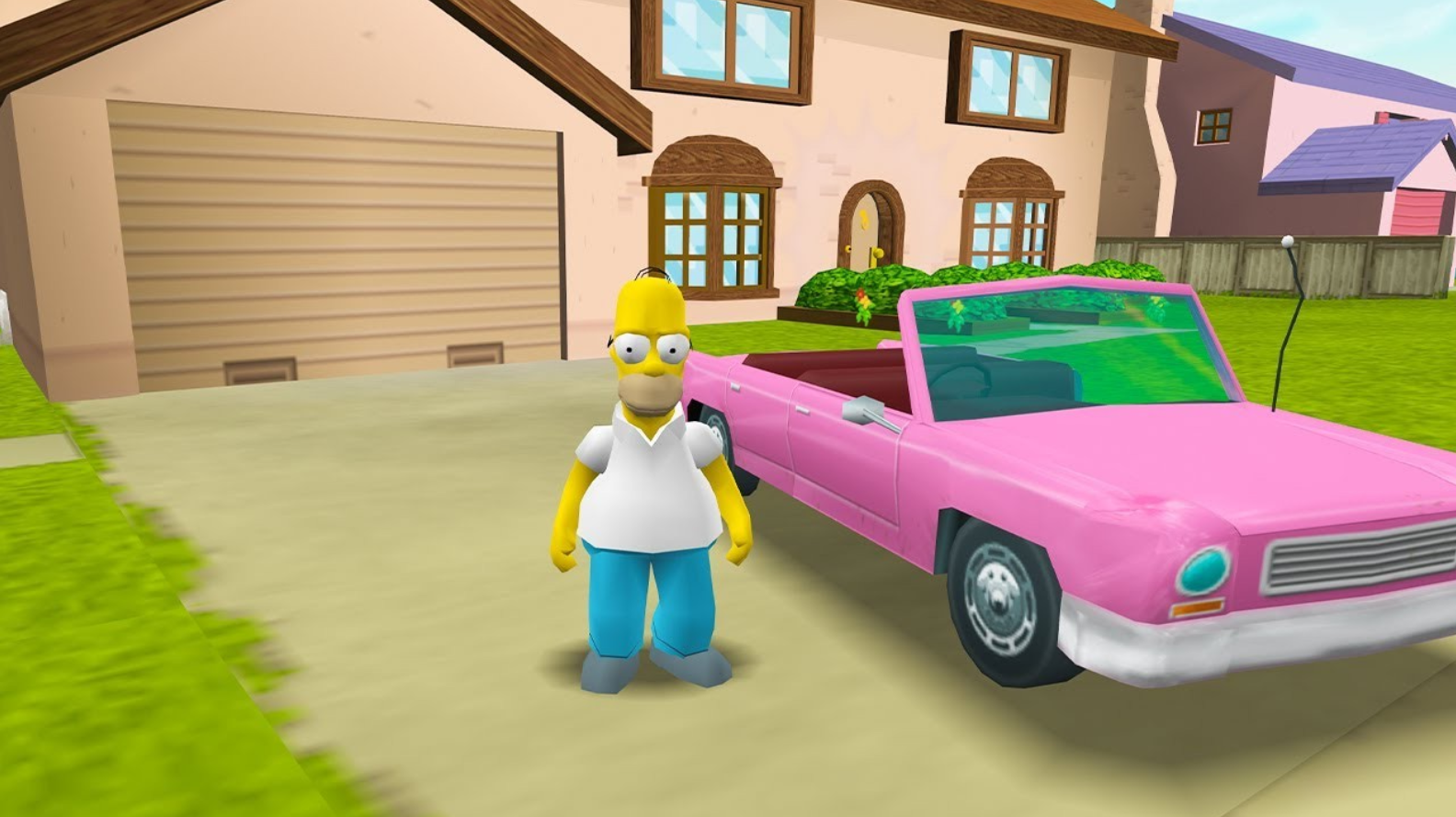
Complete Controller Button Layout Guide: PC and Xbox
Whether you are playing the original through an emulator or preparing for what a remake might bring, knowing the controls thoroughly makes a significant difference in how smoothly you get through the timed missions. Here is the full layout for both platforms.
PC Keyboard Controls
| Action | Default Key | Notes |
|---|---|---|
| Accelerate | W or Up Arrow | Hold for sustained speed |
| Reverse / Brake | S or Down Arrow | Tap for brake, hold for reverse |
| Steer Left | A or Left Arrow | Combined with accelerate for tight turns |
| Steer Right | D or Right Arrow | Combined with accelerate for tight turns |
| Handbrake | Space Bar | Essential for 180 degree turns in chase missions |
| Horn | H | Clears pedestrian paths, triggers dialogue |
| Enter / Exit Vehicle | E | Walk up to vehicle first |
| Attack on Foot | Left Mouse Button | Basic strike against targets |
| Jump on Foot | Space Bar | Context switches from handbrake when on foot |
| Sprint | Left Shift | Hold while moving to run |
| Interact / Talk | E | Same key as vehicle entry, context sensitive |
| Pause Menu | Escape | Opens mission objectives and map |
| Camera Rotate Left | Q | Useful during on-foot exploration |
| Camera Rotate Right | R | Useful during on-foot exploration |
| Look Behind | C | Check wasp cameras during chase missions |
| Map | Tab | Full Springfield overview |
PC Gamepad Controls (Xbox Controller on PC)
| Action | Button | Notes |
|---|---|---|
| Accelerate | Right Trigger (RT) | Analog input gives speed control |
| Brake / Reverse | Left Trigger (LT) | Analog input for controlled braking |
| Steer | Left Stick | Full analog steering, more precise than keyboard |
| Handbrake | A Button | Critical for timed turns and avoiding obstacles |
| Horn | B Button | Also used to cancel some interactions |
| Enter / Exit Vehicle | Y Button | Press when near any driveable vehicle |
| Attack on Foot | X Button | Basic strike, can combo against groups |
| Jump | A Button | Context dependent, switches from handbrake on foot |
| Sprint | Left Stick Click (L3) | Hold direction while pressing |
| Camera Control | Right Stick | Full 360 camera rotation on foot and in vehicle |
| Look Behind | Right Stick Down | Quick glance for chase awareness |
| Pause Menu | Start / Menu Button | Objectives, map, and quit mission options |
| Map | Select / View Button | Full Springfield layout overview |
| Interact / Talk | X Button | Context sensitive, same as attack on foot |
Xbox Console Controls (Original and Remake Reference)
| Action | Button | Additional Detail |
|---|---|---|
| Accelerate | Right Trigger (RT) | Graduated analog input rewards gentle acceleration |
| Brake and Reverse | Left Trigger (LT) | Tap for brake, hold through stop for reverse |
| Steering | Left Analog Stick | Preferred over D-pad for precision turns |
| Handbrake | A Button | Combined with RT and left stick for power slides |
| Horn | B Button | Triggers character-specific horn lines |
| Enter or Exit Vehicle | Y Button | Works within a short range of any vehicle |
| Attack | X Button | Standard strike on foot, vehicle ram when driving |
| Jump | A Button | On foot mode only |
| Sprint | L3 (Left Stick Press) | Hold while moving in any direction |
| Camera | Right Analog Stick | Full rotation, useful for locating collectibles |
| Rear View | Right Stick Click (R3) | Momentary look behind during pursuit missions |
| Pause | Start / Menu | Full pause with mission details |
| Map | Back / View | Opens full Springfield map with collectible markers |
| D-Pad Up | D-Pad Up | Cycle through mission objectives |
| D-Pad Down | D-Pad Down | Reset camera to behind-vehicle position |
| D-Pad Left and Right | D-Pad Left / Right | Radio station toggle if available in remake |
Tips for Using the Controls More Effectively
The handbrake is the single most important input in this game. In timed missions where you need to reach a destination within 60 to 90 seconds, learning to throw the car sideways around corners using handbrake combined with steering cuts several seconds off every turn. That difference is often what separates a pass from a fail on the harder missions.
On PC with a keyboard, the on-foot combat feels clunky compared to a controller. If you are playing through an emulator and you own any USB controller, the experience on foot improves noticeably with analog stick movement for positioning and the face buttons for attacks and jumps.
Camera control on foot is something many players overlook. The right stick or the Q and R keys on keyboard let you rotate the view fully while standing still. In areas dense with collectibles like the wasp cameras and cards, using the camera to scan your immediate surroundings before moving saves a lot of backtracking.
For chase missions specifically, use the look-behind function early and often. Knowing how far back a pursuer is tells you whether you need to take the fastest route or whether you have room to cut corners with the handbrake. Many failed attempts happen because players guess instead of checking.
When driving at high speed toward a collectible, start braking slightly earlier than feels natural. The vehicles carry momentum longer than they appear to, especially Homer’s cars which are consistently heavier than the others. Bart’s vehicles tend to be lighter and more responsive, which is why his missions are generally easier to get clean times on.
Every Area in Springfield and Why Each One Matters
The original game divided Springfield into distinct zones across seven chapters. Each one had its own feel and set of objectives. Here is a breakdown of every major area and what made it work.
Evergreen Terrace is where the game opens with Homer in Chapter One. The residential feel, the familiar layout of the Simpson home, and the immediate recognition factor made it a strong starting point. Marge’s chapter also returns here and adds a different emotional tone to the same environment.
The Nuclear Power Plant features prominently in Homer’s missions across multiple chapters. The industrial setting, Mr. Burns’ presence, and the security systems made it one of the most memorable locations in the game. A remake could add interior sections that were only implied in the original.
Downtown Springfield served as a hub for vehicle variety and mission density. The number of recognizable landmarks packed into a small area made exploration consistently rewarding. City Hall, the courthouse, and the central square all appeared here.
Springfield Elementary shaped most of Bart’s chapter and gave the game some of its sharper comedic moments. Skinner as an antagonist across those missions worked well and a remake with expanded mission design could push that dynamic further.
The Kwik-E-Mart and Apu’s chapter brought a different pace to the game. The missions tied to that area leaned more on delivery mechanics and area knowledge than raw driving speed. That variety helped the overall pacing.
Krusty Studios, the Springfield Dam, Burns’ Mansion, Stonecutter’s Tunnel, and the outskirts of town filled in the map and gave each chapter its own flavor. A remake that expands the interiors of these locations and adds underground areas, rooftop paths, and new districts would make Springfield feel significantly more complete without losing the original’s clarity of layout.
The Broader Context: Why Now Feels Different
Remake culture has reached a specific maturity point. Publishers have figured out that the formula works when executed honestly. Take a game people already love, rebuild it with modern production values, do not fundamentally change what made it work, and the audience responds.
Resident Evil 2, the Tony Hawk remasters, Crash Bandicoot N. Sane Trilogy, Spyro Reignited, Mafia Definitive Edition. The pattern is consistent. When the remake respects the source material and brings genuine craft to the production, it sells well and reviews well. When it does not, people notice immediately and the backlash is proportional to how much people cared about the original.
The Simpsons Hit and Run sits at the top of the demand list by such a wide margin that an announcement would generate instant attention across gaming media, entertainment media, and general pop culture coverage. This is one of those games where even people who do not follow gaming news would hear about it and know exactly what it is.
The timing is also good for The Simpsons itself. The show is still running. Disney is actively managing the franchise across multiple platforms. A game with modern production values that reintroduces the property to a new generation of players while satisfying longtime fans is exactly the kind of project that benefits both sides of the rights agreement.
What Still Needs to Happen
For all the positive signals, this is still a rumor. An insider hint and a studio resurfacing are meaningful evidence. They are not an announcement.
The rights agreement between Microsoft and Disney needs to be finalized and signed if it is not already. That process involves legal teams, business affairs departments, creative approvals, and revenue structures that take time regardless of how willing both parties might be.
New Radical Games, if they are building this, needs to be staffed for a project of this scale. An open world game with this level of expected detail requires a significant team. Studios do not build those teams instantly even with the resources of a large publisher behind them.
A platform strategy needs to be established. Will this be an Xbox and PC exclusive to leverage the Microsoft ownership angle, or will it come to PlayStation as well? Given that The Simpsons audience is not platform specific and Disney would presumably want maximum reach, an exclusive seems unlikely but is not impossible given Microsoft’s current incentives.
An official announcement, when it comes, will be the moment that makes all of this real. Until then, what we have is credible evidence pointing in a promising direction.
What the Announcement Would Look Like
Gaming announcements for properties like this tend to follow a recognizable structure. A teaser that establishes the property, a gameplay reveal a few months later, and a release window that gives the audience something to hold. The Xbox showcase events are a natural home for something like this, given Microsoft’s ownership of the game side.
The moment a rebuilt Springfield appears on screen with Homer behind the wheel of the Family Sedan, the reaction will be immediate and very loud. The concept requires zero explanation. Anyone who sees that image understands what the game is and what it represents.
That kind of clarity is valuable. Most game announcements require a minute of setup before the audience knows what they are watching. A Simpsons Hit and Run remake communicates everything it needs to in seconds. That is a marketing advantage that publishers understand well.
Final Thoughts
I have been following this situation closely for a while now. The combination of a credible industry source, a connected studio resurfacing, a rights landscape that has finally simplified somewhat through the Microsoft acquisition, and an entertainment property that Disney actively wants to grow across multiple platforms creates conditions that did not exist even two or three years ago.
Nothing is confirmed. The caution that a responsible reader applies to insider hints is appropriate here as well. But the dots are connecting in a way that feels genuinely different from previous rounds of fan speculation.
If this remake happens and gets made with the care the original deserves, it will be one of the most satisfying gaming announcements in years. Not because the gaming industry needs another remake, but because this specific game has earned that conversation through two decades of continued relevance, active fan communities, and the persistent memory of an experience that got something right that very few licensed games ever managed.
Springfield is still there in people’s heads. It just needs someone to rebuild it properly.
Sources and Further Reading:
Video Games Chronicle covers the original insider reporting on Activision catalog revivals.
IGN’s coverage of the Microsoft Activision acquisition provides context on the catalog ownership structure.
Eurogamer’s retrospective on Hit and Run documents the game’s lasting cultural footprint.
PC Gamer’s licensed game history feature places Hit and Run in the broader context of the era.