I have been sitting with this one for a few days because I wanted to make sure I was not just hyping up another game that looked good in a trailer. Terminal War feels different. After watching all the footage that came out of the Future Games Show 2026, I kept coming back to it. Not because it had the loudest booth or the biggest budget. Because it was doing something I have not seen done properly in years.
Slow it down. Make every bullet count. Let the tension breathe.
That is exactly what this game is going for, and for people who remember what The Last of Us Factions felt like before it was quietly shelved, that description is going to hit differently.
What Is Terminal War and Why People Are Talking About It
Terminal War is a 4 versus 4 tactical multiplayer shooter being developed by Albatross Interactive, an independent studio that is fully self-funding the project without publisher backing. The game takes place in an alternate version of the late 1990s where a catastrophic war has left the United States fractured. You are not fighting off a virus or supernatural threat. You are playing as one of three rival factions battling for control over territory, limited resources, and regional influence in a country that is still trying to hold itself together.
It stood out at Future Games Show 2026 without a massive marketing push behind it. Word spread organically. Players who watched the footage started sharing clips and tagging communities that had basically been in mourning since Naughty Dog officially confirmed The Last of Us Online was no longer happening.
That comparison keeps coming up, and it is worth explaining why, because it is not just about aesthetics or perspective.
Why Everyone Keeps Comparing It to The Last of Us Factions
The original Factions mode in The Last of Us Part I had something most multiplayer games do not bother with anymore. It made you feel like losing a fight actually meant something. Ammo was not abundant. Rushing into a fight without thinking got you eliminated fast. The pacing was slower and more deliberate, and the tension that created was something players have been chasing in other games ever since.
Terminal War is not a copy of that system. The setting is different. The story is different. The factions are different. But the design philosophy behind the combat feels like it was built by people who understood exactly what made Factions feel special and what went wrong when similar games tried to be too fast, too generous, or too forgiving.
The comparisons are not about nostalgia. They are about a gap in the market that has been sitting open for years and a game that looks like it might actually be able to fill it.
The Combat Design Is the Whole Point
Everything I have seen from Terminal War puts the combat philosophy at the center of the experience. This is not a game where you respawn and immediately run back into the action. Resources are limited. Ammunition does not just appear. Making a bad decision in an engagement can cost your team a round, and that weight is built into every element of how the game is designed.
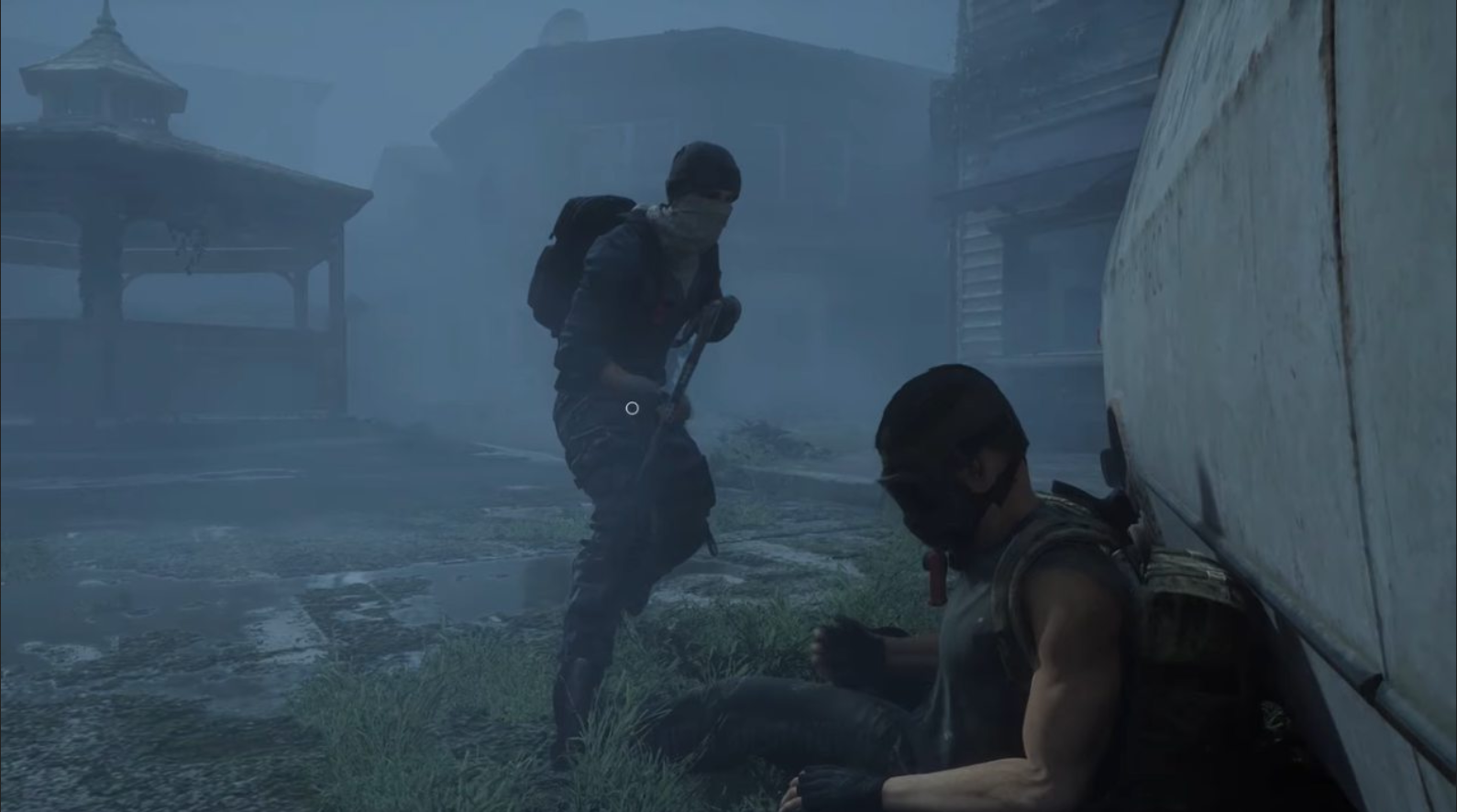
The developers have said repeatedly that they want players to think before they engage. That is easy to say. Most studios say something like that during development. But looking at the footage, it actually holds up. Players move carefully. Flanking routes matter. Map awareness is not optional. You can see the team communication happening in real time even without hearing voice chat, because the positioning alone tells a story.
That is harder to design than it looks. A lot of games accidentally become fast and chaotic even when they start with slower intentions, because the upgrade paths, respawn timers, or weapon balancing end up incentivizing aggressive play. Terminal War appears to be building its systems from the ground up to prevent that from happening.
The Takedown System Changes the Close Combat Conversation
One of the most talked-about reveals from the recent footage is the close combat system. The takedowns look clean, fast, and powerful in a way that does not feel like a gimmick. In most multiplayer shooters, melee is something you use when you run out of bullets or panic in close range. It rarely has any strategic value beyond desperation.
Terminal War seems to be treating close combat as a real part of the combat loop. The takedown animations look purposeful, not like an afterthought. I watched one clip where a player waited at the edge of a doorway, did not fire a single bullet, and came out of a chaotic hallway situation with an elimination and resources recovered from the downed enemy. That is the kind of play the game appears to be encouraging.
If the final release keeps that balance, it is going to create a very different kind of multiplayer moment than what most people are used to.
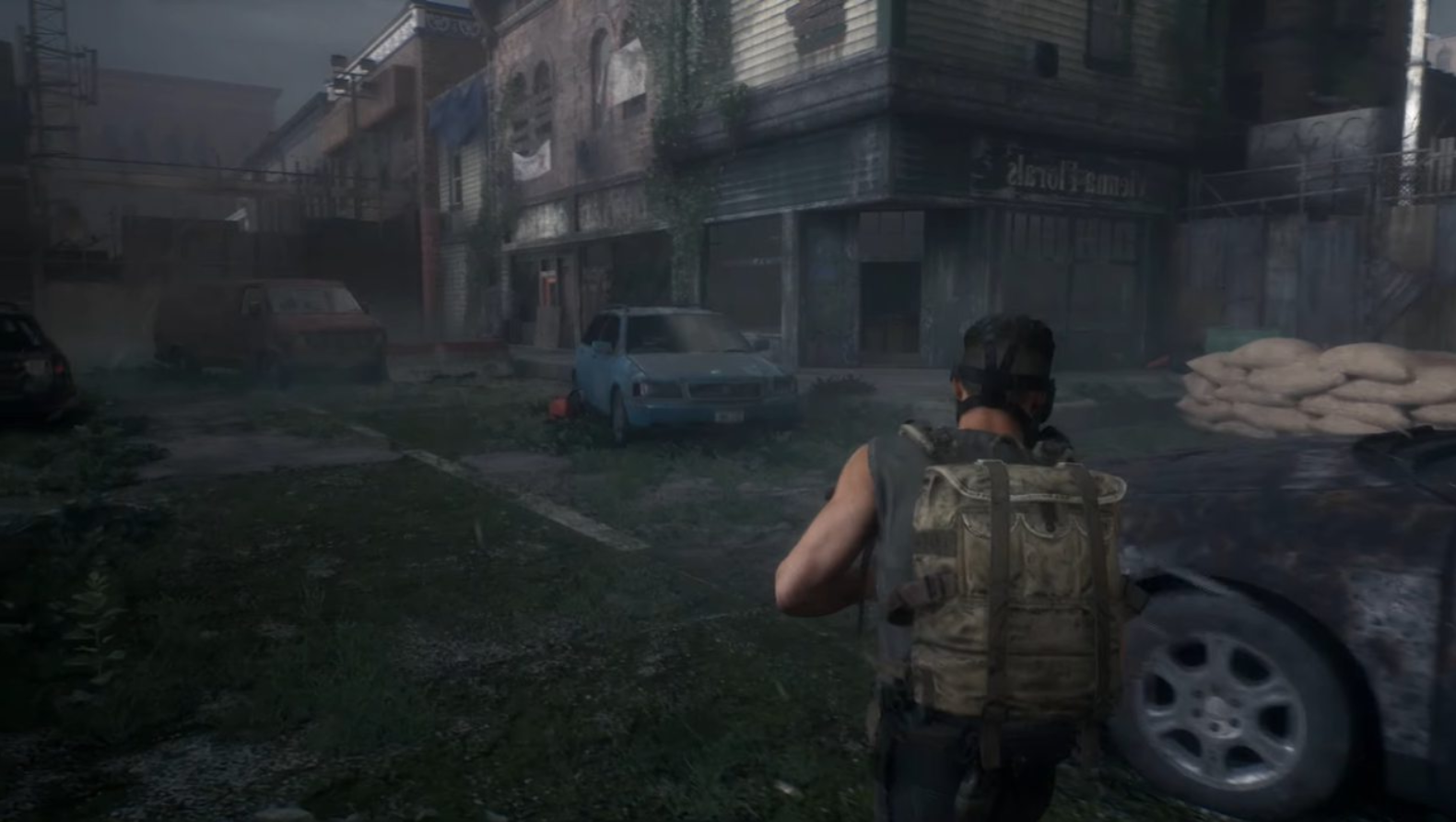
The Setting Does More Work Than You Might Expect
Alternate history settings in games often feel like decoration. The 1990s aesthetic is there, a few period-appropriate details are sprinkled in, and then the gameplay ignores the premise entirely. Terminal War is using its setting differently.
A fractured America with broken infrastructure, scarce supplies, and competing factions fighting over what is left creates a natural reason for all of the design decisions the developers are making. Ammunition is limited because there are no factories mass-producing it anymore. Resources are difficult to come by because the supply chains collapsed. Factions are fighting because the central authority no longer exists to maintain order.
That context makes the resource scarcity feel earned rather than artificial. When you run low on bullets, it is not because the game is arbitrarily punishing you. It is because that is the world the game is set in. That kind of environmental storytelling does a lot of quiet work in building immersion even in a multiplayer context where there is no traditional campaign to deliver exposition.
The three factions you can choose from each have their own goals and identities. The developers have been clear that none of them are based on real-world political groups or ideologies. They exist within the logic of the alternate timeline, shaped by the specific events that caused the country to fracture. That approach should let players engage with the setting without it becoming a controversy magnet, which is a smart decision for an indie studio without a PR department behind it.
Albatross Interactive and What Makes This Studio Different
Albatross Interactive is not a household name. They are not a studio with a decade of released titles behind them and a publisher writing checks. The current leadership team came together in 2024 to restart and restructure Terminal War, which had originally been in development for several years before that restructuring happened.
Self-funding a multiplayer game is a significant commitment. Multiplayer titles require ongoing server costs, community management, balance updates, and the kind of long-term support that drains resources quickly. Doing that without a publisher means every decision about scope and priority carries real financial weight.
What I find encouraging is that the studio’s response to that pressure has been to narrow their focus rather than inflate promises. They are not launching with ten modes and a battle pass and seasonal content from day one. They are building a focused four versus four experience with multiple maps, strong animations, and gameplay that works before anything else gets added. That discipline is rare and it matters.
The Early Access Plan and What It Means for Players
Terminal War is targeting an Early Access release in 2026. The developers have been open about the fact that the launch build will not be the complete vision for the game. It is a foundation. From there, the plan is to add more maps, additional weapons, progression systems, and possibly new modes as the game grows and community feedback shapes the direction.
Early Access has a complicated reputation. There are plenty of games that entered Early Access with the best intentions and never made it to a full launch. But there are also strong examples of tactical and survival games that used the model well, built loyal communities during development, and shipped something genuinely worth playing.
The key indicator I look at is whether the Early Access build is actually playable and whether the developer communicates honestly about the roadmap. Based on everything Albatross Interactive has shared publicly, they are saying the right things. The test will be whether the core loop holds up once real players get their hands on it.
For anyone interested in tracking development, the studio has been sharing regular updates through their official channels, and community discussion has been growing steadily since the Future Games Show reveal.
What the Multiplayer Gap Actually Looks Like Right Now
To understand why Terminal War is generating this level of interest for a small indie project, it helps to think about what the current multiplayer shooter landscape actually offers.
The dominant games in the space right now are built around fast time-to-kill, constant action, generous respawn systems, and a reward loop designed to keep you engaged through cosmetics and seasonal content. Those games are successful for a reason. Millions of people enjoy them. That model works.
But there is a segment of players who find that style exhausting. They want engagements that feel meaningful. They want a situation where positioning and patience win out over pure reaction speed. They want to finish a match and feel like the outcome reflected actual team strategy rather than who had the better aim assist settings.
That audience has had very few options in recent years. Rainbow Six Siege scratches part of that itch but has its own learning curve and community issues. Escape from Tarkov goes further than most people want in the other direction. Hunt: Showdown gets close in some ways but is a different structure entirely.
The slow, grounded, third-person tactical multiplayer space that The Last of Us Factions occupied is genuinely empty right now. That is the gap Terminal War is walking into.
Full Controller Button Layout Guide for PC and Xbox
Based on the footage shown and the standard conventions for this style of tactical shooter, here is a practical controller layout guide for Terminal War on both PC and Xbox. Note that these mappings reflect what has been shown in developer footage and standard genre conventions. Official confirmed bindings may vary at Early Access launch.
Xbox Controller Layout
| Button | Action | Notes |
|---|---|---|
| Left Stick | Move character | Push forward to walk, hold for jog |
| Right Stick | Aim and camera | Sensitivity adjustable in settings |
| Left Stick Click (L3) | Sprint or stealth toggle | Expected based on genre standard |
| Right Stick Click (R3) | Melee or takedown | Context-sensitive near enemies |
| RT (Right Trigger) | Fire weapon | Full press to fire |
| LT (Left Trigger) | Aim down sights | Hold to stay in ADS |
| RB (Right Bumper) | Throw grenade or use consumable | Hold to cook grenade |
| LB (Left Bumper) | Lean or cover action | Lean direction tied to stick input |
| A Button | Jump or vault | Context-sensitive for obstacles |
| B Button | Crouch or prone toggle | Hold for prone in some cover systems |
| X Button | Reload | Tactical reload preserves remaining rounds |
| Y Button | Interact or pick up item | Also used for reviving teammates |
| D-Pad Up | Swap weapon or tool | Cycle available loadout items |
| D-Pad Down | Use health or medical item | Hold for full heal animation |
| D-Pad Left | Faction communication ping | Quick signal to teammates |
| D-Pad Right | Mark enemy or location | Tactical callout system |
| Start or Menu | Pause and settings | Mid-match access to settings |
| Back or View | Map or scoreboard | Hold for full team status |
PC Keyboard and Mouse Default Layout
| Key or Input | Action | Notes |
|---|---|---|
| W A S D | Move character | Standard WASD movement |
| Left Mouse Button | Fire weapon | Hold for sustained fire |
| Right Mouse Button | Aim down sights | Toggle or hold in settings |
| Left Shift | Sprint | Hold to run |
| Left Control | Crouch | Toggle or hold |
| Z | Prone | Full prone position for concealment |
| Space Bar | Jump or vault | Context-sensitive for obstacles |
| R | Reload | Tactical reload keeps partial mag |
| F | Interact or pick up | Also revives downed teammates |
| G | Throw grenade | Hold G to cook before throwing |
| E | Use health or consumable | Hold for full heal animation |
| Q | Lean left | Hold to maintain lean |
| E (secondary context) | Lean right | Context-dependent when not interacting |
| V | Melee or takedown | Context-sensitive near enemies |
| 1 / 2 / 3 | Weapon slot select | Primary, secondary, melee or tool |
| Mouse Scroll Wheel | Cycle inventory or weapon | Quick swap during action |
| X | Faction communication ping | Quick signal to teammates |
| C | Mark enemy or location | Tactical callout for teammates |
| Tab | Map and scoreboard | Hold for detailed team status screen |
| Escape | Pause and settings | Access mid-match options |
Controller Tips for Tactical Play in Terminal War
If you are coming from fast-paced shooters, the biggest adjustment with a controller in Terminal War will be resisting the urge to rush. The right stick sensitivity should be lowered compared to what you might use in a run-and-gun game. You want precision over speed here. A lower sensitivity gives you better micro-adjustments when holding angles or waiting for an enemy to move.
The LB lean mechanic is going to be one of the most important skills to develop. Getting comfortable with leaning around cover without exposing your full body is what separates players who survive in tactical shooters from those who take unnecessary damage. Practice leaning out, lining up a shot, and returning to cover as a deliberate motion rather than a panic reaction.
The D-Pad communication system is there for a reason. In a four versus four format where communication determines outcomes, pinging locations and marking threats is not optional. Get into the habit of using the left and right D-Pad inputs during every engagement. Even in solo queue situations, those callouts make a difference.
The takedown mapped to R3 is something to drill on. If you can learn the range at which it activates reliably and incorporate it into flanking plays, you will save ammunition in situations where bullets matter most. A takedown that gets you a free elimination and recovered resources from a downed enemy is almost always worth the risk if you have the positioning to execute it.
PC Mouse Settings Recommendation for Terminal War
For PC players using mouse and keyboard, the approach is a bit different. You have a natural precision advantage over controller for long range engagements, so the bigger adjustment is learning patience rather than technical input.
A DPI setting between 800 and 1200 works well for tactical games that reward deliberate movement. You do not need extremely fast flicks here. You need consistency and control. Set your in-game sensitivity so that a full arm swipe covers roughly 180 degrees of horizontal rotation. That gives you enough range for snap turns when you get flanked without making regular aiming feel twitchy.
Raw input should be enabled if the option is available. Mouse acceleration off. Those two settings should be the first things you check in any tactical shooter because they ensure your physical mouse movement maps directly to in-game camera movement without any software interpretation in between.
The lean keys on Q and the secondary lean context on E are going to feel awkward at first, especially if E is also your interact key. Most experienced tactical shooter players on PC remap lean to keys further from the home row to avoid accidental inputs. Middle mouse button for one lean direction is a common solution.
What the Three Factions Actually Mean for Gameplay
The faction system in Terminal War is more than a cosmetic choice. Each faction has its own goals, identity, and presumably its own playstyle or equipment access. The developers have not revealed everything about how faction differentiation works in practice, but based on the footage and design philosophy, a few things are clear.
Your faction choice is going to influence what you are fighting over and why. In a setting where territory and resources are the currency of survival, different factions will have different priorities. One group might be focused on securing specific infrastructure. Another might be primarily interested in expanding territorial control. A third might be operating more like a scavenging and resistance network than a traditional military force.
That kind of differentiation, if handled properly, could make faction choice a genuine strategic decision rather than a skin selection screen. It could also create interesting asymmetric match structures where factions with different objectives are playing the same map in fundamentally different ways.
The developers have committed to keeping these factions grounded in the alternate timeline logic of the game rather than mapping them to real-world ideologies. That is a smart line to walk for an indie studio trying to build a community rather than a controversy.
Resource Management as a Core Skill
One area that deserves more attention in discussions about Terminal War is how resource management is going to work in practice. The footage shows ammunition scarcity and limited supplies, but the actual systems behind those mechanics will determine whether it creates interesting decisions or just frustration.
The best tactical games make resource management feel like a skill you improve over time. Early in your experience with the game, you run out of bullets at the wrong moment, take an engagement you should have avoided, or waste medical supplies on minor damage. As you get better, those decisions become intuitive. You start conserving. You start thinking three engagements ahead about what you will need and whether you can afford the cost of a current fight.
If Terminal War can design that learning curve well, the resource system will be one of its strongest features. Players will feel genuine progression in how they manage scarcity, not just in how quickly they can aim.
The recovery of resources from downed enemies ties directly into this. If taking a risk on a takedown or a close-range elimination gives you back enough ammunition to stay in the fight, those decisions carry real weight. Every engagement becomes a calculation rather than a reflex.
The Map Design Question
We have not seen enough of Terminal War’s map design to make definitive statements, but the combat philosophy gives us strong hints about what to expect. A game built around patience, flanking routes, and positional awareness needs maps that reward those behaviors.
That means multiple paths through every area, enough verticality to create interesting angles, chokepoints that are dangerous to rush through without coordination, and enough open space that camping in one spot becomes a liability rather than a reliable strategy. The best tactical shooter maps have a flow to them that feels designed rather than random. Players learn them over dozens of hours and start to see the geometry of the fight before it happens.
The developers have mentioned launching with multiple maps and expanding over time through Early Access. The quality of those initial maps is going to do a lot of work in establishing whether the tactical experience holds up in real matches or whether the philosophy only works in controlled demo conditions.
Community Expectations and Where the Conversation Is Happening
One of the more interesting parts of following Terminal War at this stage is watching the community that is forming around it. The discussion is not happening in a vacuum. It is happening in forums and communities that were built around Factions, in tactical shooter subreddits, and in spaces where players have been openly frustrated with the direction of mainstream multiplayer for years.
The things people are asking about tell you a lot about what they want. Questions about ammo balance. Questions about how the takedown system will scale in competitive play. Questions about whether the faction system will create enough differentiation to matter. Those are not casual questions from players who saw a cool trailer. Those are the questions of people who have thought seriously about what they want from a multiplayer game and are genuinely evaluating whether Terminal War can deliver it.
That kind of engaged early community is valuable for an indie studio. It also creates pressure. Players who arrive with specific expectations and strong opinions are going to have loud reactions when something does not work as hoped. Managing that relationship through Early Access is going to be one of Albatross Interactive’s most important challenges alongside the actual game development.
What Needs to Go Right for Terminal War to Succeed
Being honest about this is important. There are several things that need to come together for Terminal War to realize its potential.
The core loop has to feel good on the first day of Early Access. Players will not stick around long enough to give the game time to improve if the initial experience does not deliver on the tactical promise. The ammunition scarcity, the close combat system, the map awareness mechanics, all of it has to work and feel balanced from the start.
Server stability and matchmaking quality matter enormously for tactical games. A match where lag causes you to lose an engagement you played correctly is not just frustrating. It actively destroys the design philosophy. If the game is supposed to reward patience and positioning, then technical issues that punish good play feel like betrayals of the core promise.
The studio needs to communicate clearly and consistently through Early Access. Players who invest time in a game that is still being built are investing trust. That trust gets maintained through honest developer updates, transparency about what is changing and why, and a visible commitment to the long-term vision.
None of that is easy. All of it is achievable for a team that is focused and realistic about their scope. Based on what Albatross Interactive has shown so far, they seem to understand what they need to do.
My Honest Take After Following This for a While
I have been let down by games like this before. A tactical multiplayer project arrives with a design philosophy that sounds exactly right, generates significant early interest from players who are tired of mainstream shooters, enters Early Access, and then quietly fades because the execution did not match the vision or the studio ran out of resources before the game reached its potential.
Terminal War does not have a guaranteed path to success. No game does. But the things that usually cause a project like this to fail are things Albatross Interactive seems to be actively working against. Narrow scope. Realistic promises. Self-funded without publisher pressure distorting the creative vision. A community that arrived already knowing what they want and why they want it.
The game still has to prove itself in actual play. The footage is encouraging. The philosophy is right. The timing is right in the sense that the gap it is walking into has not been filled by anything else. Whether the execution lands is a question that only the Early Access launch can answer.
What I know is that I am watching this one closely. And based on the conversations I have seen happening around it, a lot of other players are doing exactly the same thing.
Frequently Asked Questions About Terminal War
When is Terminal War releasing?
Terminal War is targeting an Early Access release in 2026. An exact date has not been confirmed as of the Future Games Show 2026 reveal period. Following Albatross Interactive’s official channels is the best way to stay updated on a specific launch window.
What platforms will Terminal War be available on?
Based on available information, Terminal War is being developed for PC. Xbox compatibility has been discussed in the context of controller support. Platform confirmation for console releases beyond PC has not been officially confirmed for the Early Access window.
How many players does Terminal War support per match?
Terminal War is built around a four versus four format. The developers have said this is the core experience they are building and balancing first before considering other modes or player counts.
Is Terminal War free to play?
Pricing for Terminal War has not been officially announced. Given that it is self-funded by an independent studio targeting Early Access, a premium price point is more likely than a free to play model, but this has not been confirmed.
What happened to The Last of Us Online?
Naughty Dog officially confirmed that The Last of Us Online, which had been in development as a standalone multiplayer game, was canceled. The studio shared that the scale required to deliver and maintain the game long-term conflicted with their focus on single-player narrative experiences. More information is available through Naughty Dog’s official website.
Does Terminal War have a single-player mode?
Terminal War is being developed as a multiplayer-focused experience. No single-player campaign has been announced or discussed in any of the available developer footage or statements.
Who is developing Terminal War?
Terminal War is being developed by Albatross Interactive, an independent studio that restructured its leadership team in 2024 to restart the project. The studio is self-funding development without publisher support.