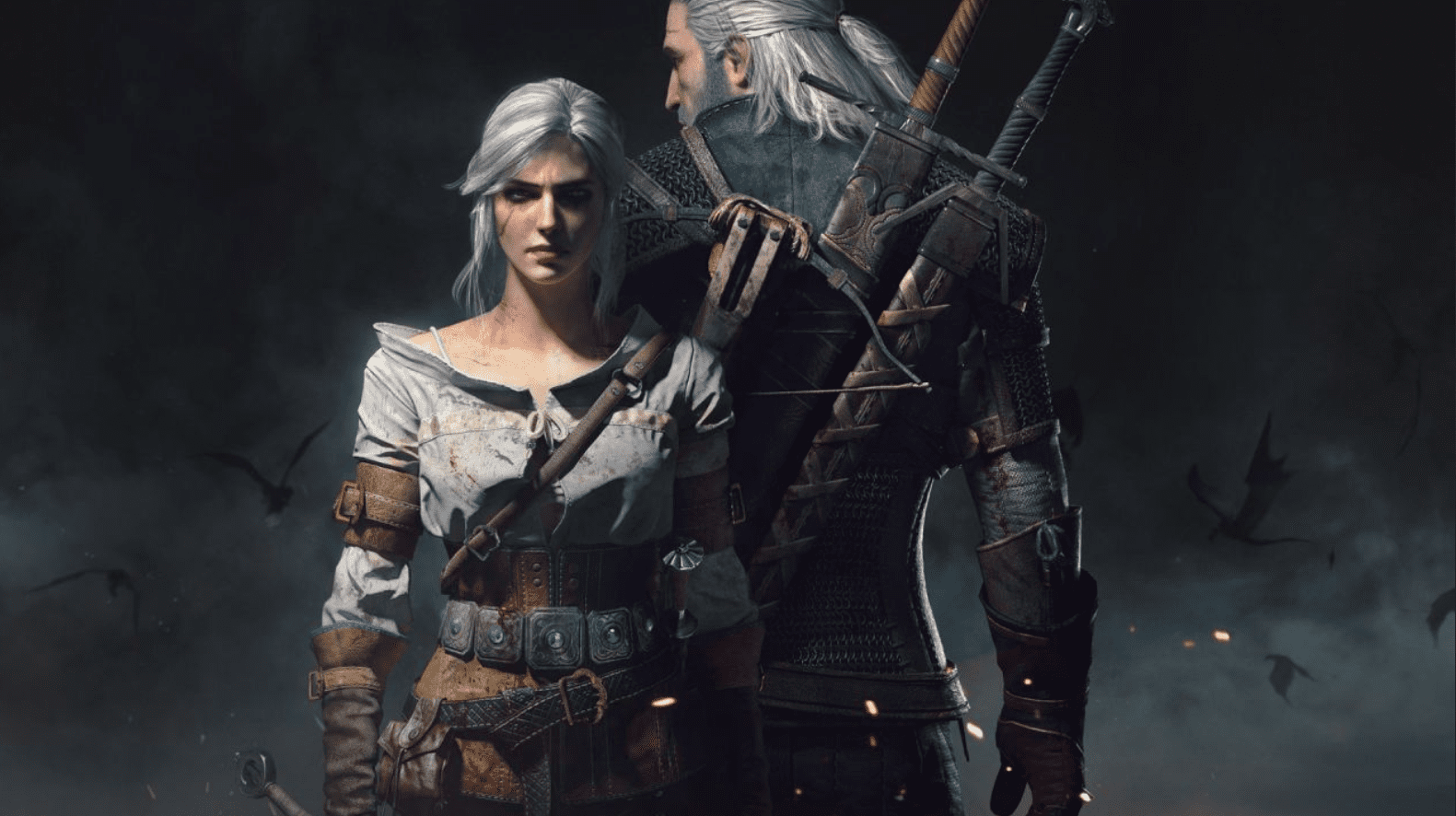
I have been following CD Projekt Red’s moves closely for years, and I can tell you honestly, something feels different right now. The Witcher 3 expansion rumors used to feel like wishful thinking. In 2026, they no longer feel that way. Too many credible voices are saying similar things, too many technical traces have surfaced online, and the timing simply lines up too well to dismiss.
This article breaks down everything we currently know, what the insider reports are actually claiming, why longtime fans should care, and what a final expansion could realistically look like if CD Projekt Red truly commits to it. I also cover the full PC and Xbox controller layout for The Witcher 3 because if this expansion does arrive, a lot of returning players will need a refresher.
Why These Rumors Matter Right Now
The Witcher 3: Wild Hunt came out in 2015. It received two expansions, Hearts of Stone and Blood and Wine, both of which are still talked about as benchmarks for what story DLC should look like in an RPG. After that, CD Projekt Red moved on. The studio began working on Cyberpunk 2077, then its own next generation engine, and publicly committed to Unreal Engine 5 for all future Witcher titles including Witcher 4.
So when rumors of a brand new Witcher 3 expansion started circulating again in late 2025 and into 2026, a lot of people brushed them off. The skepticism made sense. Why would CD Projekt Red return to a ten year old game built on a retired engine while simultaneously managing Witcher 4, Cyberpunk 2, and Project Hadar?
The answer, when you look at it from a business and creative strategy standpoint, actually makes quite a bit of sense.
Witcher 4 is still at least two to three years from launch. The Witcher 3 still moves hundreds of thousands of copies every year thanks to new console generations, PC upgrades, and a steady flow of new players coming in from the Netflix series. A major expansion would reactivate one of gaming’s most loyal fanbases, generate enormous media coverage, and give CD Projekt Red a high visibility marketing moment tied directly to Witcher 4 hype.
From a creative standpoint, it also gives the studio a way to close out Geralt’s arc properly, revisit unfinished narrative threads, and begin seeding story elements that feed directly into Witcher 4’s world. I have played through The Witcher 3 multiple times, and even after all these years there are storylines that feel incomplete. The Nilfgaard political situation, Roche and Iorveth’s relationship, the Catriona plague subplot, and dozens of smaller story threads were clearly designed to go further than they did.
Now there are real signals suggesting CD Projekt Red might finally revisit all of that.
What Insiders Are Actually Saying
The most consistent claim across multiple insider sources is that CD Projekt Red is preparing a significant story expansion for The Witcher 3 that functions as a narrative bridge leading into Witcher 4. This is not one anonymous source on a gaming forum. Multiple Polish gaming journalists, industry analysts, and podcast personalities have all reported similar information independently over a period of several months.
The core of what insiders claim includes the following points. The expansion is a full story DLC rather than a small content patch or anniversary update. It involves major characters including Geralt and Ciri. It ties directly into narrative threads that Witcher 4 will build upon. The project has been in some form of development since at least early 2024. And Fool’s Theory, the studio behind the Witcher 1 remake, has been quietly assisting with development.
Some sources go further and suggest the expansion could launch as early as summer 2026, potentially timed close to a major reveal or gameplay showing for Witcher 4. Others are more cautious and say the announcement is coming but the actual release window remains unclear.
What I find most convincing is the consistency. When multiple people who have no reason to coordinate are saying the same things across different platforms and different countries over a long stretch of time, the pattern is hard to dismiss as coincidence. The rumors around Cyberpunk expansions were far less consistent, and CD Projekt Red ultimately denied them directly. The Witcher 3 rumors have received no such denial.
One detail that shows up repeatedly in reports is that the expansion revisits regions and storylines that were reduced or removed during the original development of The Witcher 3. This fits with what fans already suspected. The game shipped with clear narrative gaps in certain areas, and the development team at the time confirmed that a large amount of content was cut before the 2015 release.
The REDengine Developer Discovery
Technical evidence entered the conversation when people began noticing something unusual on professional developer profiles. A developer’s work history mentioned active gameplay systems and UI development on a Witcher project using REDengine and WitcherScript, with a start date in January 2026.
This immediately stood out because CD Projekt Red officially transitioned away from REDengine years ago. The studio now uses Unreal Engine 5 as its primary development platform, and Witcher 4 is being built on UE5. So why would anyone be doing active Witcher work on REDengine in 2026?
The only logical answer that fits is a Witcher 3 project. Witcher 4 runs on Unreal Engine 5, not REDengine. If someone is actively doing WitcherScript work in early 2026, they are working on something built in The Witcher 3’s original engine. That narrows the possibilities considerably.
Could it be maintenance or a patch update? Technically yes. But UI systems work and gameplay systems development sounds like active content creation, not backend maintenance. Patch work and bug fixes do not typically require the level of development activity described in that profile entry.
The discovery spread quickly across gaming communities and reignited speculation that had been building for months. For many people, this was the first piece of concrete technical evidence that something was actually being built rather than just discussed in rumor circles.
CD Projekt Red did not respond to questions about it. The profile was eventually updated or made less specific, which itself struck many observers as significant. Studios do not typically ask developers to scrub their profile entries unless there is something worth protecting from public view.
Why Fool’s Theory Changes Everything
Fool’s Theory is not a generic support studio. The team is made up of former CD Projekt Red developers who worked on earlier Witcher titles before forming their own independent studio. They are currently leading development on the Witcher 1 remake, which means they are actively working within the Witcher universe, understanding its design language, its storytelling approach, and its technical requirements.
Multiple insider reports have consistently named Fool’s Theory as a collaborator on this rumored expansion. That detail is important for several reasons.
First, it explains how a project this large could exist alongside Witcher 4, Cyberpunk 2, and Project Hadar. CD Projekt Red does not have unlimited resources. If a major Witcher 3 expansion is happening, it needs external support to make sense from a production standpoint. Fool’s Theory provides exactly the kind of support that would make this feasible. They understand REDengine workflows, they know the Witcher lore deeply, and their team has a personal connection to the franchise going back to the original games.
Second, it suggests the expansion would maintain creative authenticity. A Witcher 3 DLC built by a random external studio would feel different. A DLC built in close collaboration with people who spent years working on Witcher games is a very different proposition. The creative DNA would carry over in a way that a purely outsourced project could never achieve.
Third, the pairing makes strategic sense for Fool’s Theory as well. Working closely with CD Projekt Red on a high visibility Witcher 3 expansion while also developing the Witcher 1 remake positions the studio as the primary creative partner for the franchise’s legacy projects. That is a valuable relationship for a studio of their size.
I have seen plenty of expansion rumors over the years that fell apart once you examined the practical development questions. This one actually holds up better than most when you look at who reportedly has the capacity and capability to help build it.
The Cut Content Nobody Forgot About
The Witcher 3’s cut content is one of gaming’s most discussed topics among dedicated fans. When the game shipped in 2015, it was already enormous. But developers and community researchers eventually pieced together a picture of how much more material existed during production that never made it into the final release.
The most significant cut areas involve the southern regions of the game’s world. The Continent stretches far beyond what players can actually visit in the base game, and storylines tied to those regions were clearly developed before being reduced or removed entirely.
The Nilfgaard arc is probably the biggest example. Witcher 3 builds up Emhyr var Emreis and the Nilfgaardian political situation throughout the main story, but the actual exploration of Nilfgaard, its internal conflicts, its southern territories, and its relationship with various factions was mostly stripped out. You hear about it. You never really experience it. For a game that otherwise does exceptional world building, this gap is noticeable.
Roche and Iorveth represent another major loss. Both characters carry enormous weight from The Witcher 2, which split its entire second act depending on which path players chose. In Witcher 3, Roche appears briefly. Iorveth, despite being one of the most compelling characters in the series, does not appear at all. His absence was never fully explained, and data mining over the years revealed traces of his intended involvement.
The Catriona plague storyline is perhaps the most intriguing cut element. This plague was woven into the game’s lore as a serious historical event with enormous consequences for the Continent’s population. The storyline that was meant to involve it more directly was significantly reduced during development, leaving only fragments in dialogue and environmental storytelling.
If the expansion truly aims to restore and revisit this cut material, it would not feel like new content bolted onto an old game. It would feel like the completion of something that was always supposed to exist. That distinction matters enormously to longtime players. It is the difference between fan service and genuine storytelling.
Zerrikania and New Region Speculation
Zerrikania is one of the most talked about locations in Witcher lore that players have never actually visited in any of the main games. It sits far to the south and east of the Northern Kingdoms, described in the books and referenced in games as a land of warrior women, ancient desert kingdoms, exotic creatures, and cultural traditions completely unlike anything players have seen in the existing game world.
The speculation around Zerrikania as a potential expansion destination has been building in the community for years. Now, with a new DLC reportedly in development, the idea has taken on new energy.
Some insider sources claim the expansion introduces a completely new explorable region. Others suggest it mainly expands and deepens existing locations rather than adding an entirely new map area. The truth might fall somewhere between these two descriptions, with the expansion perhaps offering a limited but substantial new territory alongside expanded content in existing regions.
What makes Zerrikania appealing as a setting is how different it would feel from everything in the base game and its existing expansions. Hearts of Stone kept players within familiar territory. Blood and Wine brought them to Toussaint, a visually distinct but still culturally European inspired region. A journey into the deeper south, into a world of deserts, unfamiliar magic systems, new monster types, and political structures completely foreign to the Northern Kingdoms, would give the expansion a genuinely fresh identity.
From a storytelling perspective, it could also serve the bridge narrative well. If Witcher 4 expands the world’s geography and introduces new cultures and factions, an expansion that plants seeds in Zerrikanian territory would give returning players a head start on understanding the world Witcher 4 inhabits.
I should be clear that Zerrikania as a destination is still in the speculation category. No insider has confirmed it definitively. But the consistency of its appearance in fan theories and community discussions suggests it represents what players most want, and studios sometimes do pay attention to that signal.
Ciri as a Fully Playable Character
Ciri appears as a playable character in several sections of the base Witcher 3. Those sections are limited in length and scope, but they are extremely well received. Her movement feels different from Geralt’s, her combat abilities draw on Elder Blood powers rather than the witcher school training Geralt uses, and her storyline carries emotional weight equal to anything in the main campaign.
The question that has never fully gone away is why her playable sections were so brief. The community’s answer, largely confirmed by what we know about development priorities, is that a fully playable Ciri with expanded abilities and longer story sequences was planned and then scaled back for the main game.
Witcher 4 is almost certainly going to feature Ciri as the main protagonist. Trailer content and studio statements have pointed in this direction, and it represents a natural evolution of the series after spending three games with Geralt. If a Witcher 3 expansion functions as a narrative bridge into that new era, giving players extended time playing as Ciri makes enormous sense both creatively and commercially.
Extended Ciri gameplay would let players get comfortable with her as a protagonist before Witcher 4 demands that adjustment. It would deepen her character arc in ways the base game could not. And it would raise excitement for Witcher 4 by showing players a more complete version of who she has become since the events of the main game.
Whether the expansion makes Ciri fully playable for a majority of its runtime or offers extended but still secondary playable sections is not confirmed. But the connection between her role in this rumored DLC and her role in Witcher 4 is one of the most logically compelling arguments for why this expansion could be built the way insiders describe it.
The PlayStation Showcase Connection
Sony’s rumored June 2026 State of Play became a focal point for Witcher 3 expansion speculation for several reasons. PlayStation showcases carry enormous reach. Publishers use them to announce projects they want the entire industry talking about immediately. A Witcher 3 expansion reveal at a PlayStation event would receive global coverage within hours of the announcement.
The reported scale of Sony’s preparation for this particular showcase added fuel to the speculation. Reports suggested Sony was inviting an unusually large number of content creators to cover the event, a signal that the company expected significant announcements worth that level of promotional support. CD Projekt Red and Sony have a longstanding marketing partnership. The studio has used PlayStation showcases for major reveals before.
Whether the June 2026 showcase ends up being the reveal platform or not, the logic of using a major PlayStation event for this announcement is sound. A cinematic trailer featuring Geralt returning to the Continent, or Ciri setting out on a new path, would be exactly the kind of moment PlayStation events are designed to amplify.
Some insiders suggested the expansion could even release relatively close to its announcement rather than following a traditional long marketing window. That would be a bold strategy, but CD Projekt Red has shown willingness to make bold announcements before. A short gap between reveal and release would also fit the summer launch window that some sources have mentioned.
How This Bridges to Witcher 4
The most strategically interesting thing about this rumored expansion is the reported purpose behind it. Insiders are not describing it as a standalone story that exists just to give Witcher 3 fans more content. They are describing it as a deliberate narrative bridge between Witcher 3 and Witcher 4.
That framing changes how you think about the expansion’s potential content. A bridge story would need to accomplish specific things. It would need to resolve lingering threads from Geralt’s era that Witcher 4 cannot address directly. It would need to establish new factions, locations, or political situations that Witcher 4’s world builds upon. And it would need to reposition Ciri as someone ready to take on a protagonist role in the next game.
Think about what The Last of Us Part 1 did for The Last of Us Part 2, or what an interquel story can accomplish between major chapters of a franchise. Done well, a bridge narrative adds meaning to both the story that came before and the story that follows. It rewards players who experienced the original while ensuring they are not lost when the new chapter begins.
For CD Projekt Red, the timing also serves a practical purpose. Witcher 4 is still years away. A major expansion in 2026 reactivates the community, generates press coverage, reminds players why they love this world, and builds momentum that the studio can carry forward into Witcher 4 marketing. From a business standpoint, it is close to a perfect setup if executed well.
The expansion could also introduce characters, factions, or story threads that appear in Witcher 4 as established parts of the world rather than new introductions. Players who completed the expansion would enter Witcher 4 with knowledge and context that enriches their experience. Players who skipped it could still enjoy Witcher 4 fully, but expansion players would feel that extra layer of connection.
CD Projekt Red’s Silence Speaks Volumes
One of the most telling details in this entire story is how CD Projekt Red has responded to the Witcher 3 expansion rumors compared to how it responded to Cyberpunk expansion rumors.
When rumors circulated about further Cyberpunk 2077 expansions following Phantom Liberty, CD Projekt Red addressed them directly and clearly. The studio confirmed that Phantom Liberty was the only planned expansion and that the team had moved on. Clear, public, unambiguous denial.
The Witcher 3 expansion rumors have received no such denial. Despite months of consistent insider reports, technical evidence appearing online, and a growing volume of community speculation, CD Projekt Red has said nothing definitive. The studio has not confirmed the expansion exists, but it has also not said it does not exist.
I have followed enough game announcements to know that studios operating in good faith will usually deny false rumors when those rumors are specific enough to cause real confusion in the community. The silence from CD Projekt Red on a topic this specific, running this long, with this much consistent insider support, is not nothing.
It could mean the studio is protecting an announcement. It could mean the project exists in a state not ready for official acknowledgment. It could mean the studio does not want to manage community expectations before a specific reveal window. What it almost certainly does not mean is that there is nothing to discuss.
Hearts of Stone and Blood and Wine Set the Bar
Any conversation about a third Witcher 3 expansion has to acknowledge the standard already set by the first two.
Hearts of Stone released in October 2015. Despite running roughly ten hours for a focused playthrough, it told one of the most emotionally complex stories in the entire franchise. The antagonist Gaunter O’Dimm is still considered one of gaming’s best villain characters. The Olgierd von Everec storyline explored themes of regret, love, and the cost of ambition with a maturity that exceeded most full price games from that year. It introduced new mechanics, a compelling questline format, and an ending that lingered.
Blood and Wine arrived in May 2016. Where Hearts of Stone was compact and intense, Blood and Wine was expansive. The Toussaint region alone contains more content than many standalone games. New monster contracts, a fully realized political storyline, an entire French wine country aesthetic that still looks remarkable today, and a story centered on knightly ideals, friendship, and betrayal. It felt like a complete game rather than an add-on. Many players still consider it a better experience than some of the games it competed with that year.
These two expansions define what players expect from CD Projekt Red when it comes to DLC. They are the reason a third expansion announcement would immediately generate global attention rather than cautious optimism. The studio has already demonstrated that it knows how to make DLC feel essential rather than optional, and that reputation is one of the most valuable things CD Projekt Red owns.
A third expansion that meets or approaches that standard would be genuinely extraordinary given how long after launch it is arriving. It would also potentially reach an even larger audience than the original expansions, given how many new players have discovered The Witcher 3 through the next generation update and the ongoing success of the Netflix series.
Full PC and Xbox Controller Button Layout Guide for The Witcher 3
If a new expansion launches, a lot of players will be returning to The Witcher 3 after years away, and many new players will be picking it up for the first time. The control system is not complicated once you have it memorized, but the first few hours can feel clunky if you are guessing what buttons do what. Here is a complete breakdown for both PC keyboard and Xbox controller.
Xbox Controller Layout
Movement and Camera
- Left Stick moves Geralt. Push gently for walking and fully for running. While on Roach, the left stick steers your horse.
- Right Stick controls the camera. Moving it left and right rotates your view. Clicking the right stick in activates the alternative movement mode toggle depending on your settings.
- Left Stick Click (L3) activates sprinting when you push it in while running.
Combat Controls
- X Button performs a fast attack. These are quick, low damage strikes good for chaining combos and staggering lighter enemies.
- Y Button performs a strong attack. Slower and heavier, strong attacks break through enemy blocks and deal significantly more damage per hit.
- B Button dodges. Tapping B makes Geralt sidestep in the direction you are pushing the left stick. Short dodges use almost no stamina and let you reposition quickly mid-combat.
- A Button rolls. Holding the dodge input longer or pressing A during combat makes Geralt perform a full roll across a larger distance. Rolls are better for escaping powerful attacks and AoE strikes.
- Right Trigger (RT) blocks and parries. Holding RT puts Geralt into a guard stance. Timing your block precisely as an enemy strikes causes a parry that staggers them and opens a counterattack window.
- Left Trigger (LT) locks onto enemies, centering the camera on a target. Useful when fighting multiple enemies to keep your focus on the most dangerous one.
- Right Bumper (RB) casts the currently selected Sign. Your active Sign appears in the HUD near the bottom center of the screen.
- Left Bumper (LB) draws or sheathes your sword. When enemies are nearby, holding LB also lets you switch between your steel sword for humans and your silver sword for monsters and certain supernatural enemies.
Signs and Magic
- To switch Signs, hold the left bumper and then use the directional pad or rotate through the Sign wheel using the right stick. The Sign wheel pauses the game allowing you to pick the one you need.
- Aard sends a telekinetic blast that knocks enemies back, staggers groups, and destroys environmental objects.
- Igni projects fire in a cone, excellent for burning enemies and dealing sustained damage to clustered groups.
- Yrden places a magical trap on the ground that slows enemies who walk through it and anchors certain supernatural creatures in place.
- Quen creates a protective shield around Geralt that absorbs damage from one hit before breaking. An upgraded Quen can even heal Geralt when it shatters.
- Axii can be used in combat to stun and briefly control an enemy, or in dialogue to persuade certain characters with a moderate success chance.
Items and Inventory
- Directional Pad Up uses your currently equipped food item, which slowly regenerates health.
- Directional Pad Down uses a potion from your quick slot selection. Set potions in the inventory menu before a tough fight.
- Directional Pad Left and Right switches between your equipped crossbow or bomb type depending on your quick slot setup.
- Menu Button (Start equivalent) opens the main menu for inventory, character, map, journal, and crafting screens.
- View Button (Back equivalent) opens the world map directly without going through the full menu.
Exploration and Interaction
- A Button interacts with objects, people, and loot when outside of combat.
- Right Stick Click (R3) activates Witcher Senses, highlighting interactive objects, footprints, clues, and items of interest in yellow or red. Essential for investigation quests.
- B Button cancels actions and backs out of menus when not in combat.
- Left Bumper while mounted switches your horse Roach’s gait between walk, canter, and gallop.
Meditation and Rest
You cannot meditate using a simple button press. Open the main menu, navigate to the meditation option, and choose a time amount. Meditating in lower difficulties regenerates health automatically. In higher difficulties, health regeneration comes only from food and potions.
PC Keyboard and Mouse Layout
Movement
- W, A, S, D move Geralt forward, left, backward, and right respectively. Double tapping W while moving can activate a sprint depending on your control settings.
- Left Shift runs when held while pressing a direction key.
- Left Ctrl makes Geralt walk at a slower pace, useful during exploration and in crowded town areas.
- Space jumps when pressing toward a climbable ledge, vaults over low obstacles, and rolls in combat directions.
Combat Controls
- Left Mouse Button performs a fast attack.
- Right Mouse Button performs a strong attack.
- Space dodges when pressed quickly during combat.
- Q casts the active Sign. The Sign you have selected appears at the bottom of your screen.
- Mouse Wheel or dedicated hotkeys scroll through Signs. You can also hold a key to open the Sign radial wheel for deliberate selection.
- R parries and blocks incoming attacks when held before an enemy strikes.
- Alt locks onto a nearby enemy target.
- Tab draws your steel sword for human enemies.
- 1 Key draws your silver sword for monsters.
- 2 Key draws your steel sword alternatively depending on configuration.
Item Usage on PC
- F uses the currently equipped food item to begin health regeneration.
- 3, 4, 5 Keys activate quick slot items such as potions, bombs, or the crossbow depending on what you have assigned.
- Z opens the quick item radial menu for slower but deliberate item selection.
Exploration on PC
- Left Ctrl held activates Witcher Senses to highlight clues and interactive objects nearby.
- E interacts with objects, starts conversations, and picks up items from the ground.
- I opens the Inventory screen.
- K opens the Character skills and ability tree.
- J opens the Quest Journal.
- M opens the world map.
- Escape opens the main game menu and pauses the game.
Advanced Combat Tips for PC Players
Mouse sensitivity significantly affects your combat rhythm in The Witcher 3. The game rewards deliberate precise movements rather than frantic mouse spinning. Keep your sensitivity at a level where you can make controlled dodges in a specific direction without overshooting. The parry timing window is generous compared to many action games, so holding the block key slightly before each expected attack lands is usually enough to trigger a proper parry.
Combining Signs with sword attacks is where The Witcher 3’s combat system shows its depth. Casting Yrden to slow a group of enemies and then following up with Igni while they are held in place deals substantially more damage than either approach alone. Quen into a strong attack chain remains the most reliable method for fighting enemies significantly above your level because the shield absorbs the punishing damage while you land counterattacks.
Crossbow Use on Both Platforms
The crossbow is one of the most underused tools in The Witcher 3. Many players forget about it entirely after the opening hours. On controller, it fires by pressing the corresponding quick item button after equipping it from inventory. On PC, the default key activates it from your quick slot. The crossbow is not powerful against land enemies in general combat, but it is specifically strong against flying creatures like harpies and wyverns, and it can knock a diving enemy out of the air for a follow up attack. Underwater, the crossbow becomes your only reliable weapon since swords do not function in aquatic combat sections.
Horse Combat on Both Platforms
Fighting from horseback uses a simplified version of the main combat system. On controller, fast attacks and strong attacks use the same buttons as on foot. The horse’s momentum adds to your attack arc, making riding through a group of weaker enemies an effective way to clear them quickly. On PC, mouse buttons function the same way during horse combat. The main challenge is controlling Roach’s direction while landing attacks, which takes some practice because the horse does not always respond to direction changes as quickly as Geralt does on foot.
Frequently Asked Questions
Is there confirmed news of a new Witcher 3 expansion in 2026?
As of now, CD Projekt Red has not officially confirmed any new expansion for The Witcher 3. However, the volume and consistency of insider reports, combined with technical evidence pointing toward active REDengine development and the reported involvement of Fool’s Theory, make the rumors more credible than typical speculation. The studio’s continued silence on the topic rather than an outright denial also keeps the conversation open.
What would the Witcher 3 expansion be about?
Based on insider claims, the expansion functions as a narrative bridge between The Witcher 3 and The Witcher 4. It reportedly involves major characters including Geralt and Ciri, revisits storylines and regions cut from the original game, and begins setting up story threads and world building elements that Witcher 4 will continue. Some sources suggest a new region such as Zerrikanian territory, while others believe it mainly expands existing locations.
Will Ciri be fully playable in the new expansion?
This has not been confirmed. Insiders and community analysis suggest expanded Ciri gameplay makes logical sense given her role in Witcher 4 as the apparent main protagonist. The base game featured limited but well received Ciri sections, and a bridge expansion focused partly on her would serve both narrative and marketing purposes. Nothing has been officially verified on this point.
Is Fool’s Theory involved in developing the expansion?
Multiple insider reports claim Fool’s Theory is assisting CD Projekt Red with the expansion. The studio is made up of former Witcher developers and is also handling the Witcher 1 remake, making them a logical and well equipped partner for this kind of project. CD Projekt Red has not confirmed or denied this collaboration.
Could the expansion restore cut content from the original Witcher 3?
This is one of the most consistent claims across insider reports. Storylines involving southern regions of the Continent, the Nilfgaard political situation, characters like Iorveth, and the Catriona plague subplot were all significantly reduced before the original 2015 release. The expansion reportedly revisits some of this cut material with modern resources and a completed vision of where those story threads were always meant to go.
What is Zerrikania and why does it matter for the expansion?
Zerrikania is a region far to the south and east in the Witcher universe, described in the source books and referenced in the games. It features a completely different culture, architecture, and mythology compared to the Northern Kingdoms where The Witcher 3 takes place. Fans have wanted to visit it for years, and some insiders suggest it may appear in the expansion as either an explorable area or a narrative destination. Nothing is confirmed, but its popularity in community discussions makes it a frequent point of speculation.
When could the Witcher 3 expansion be announced?
Rumors pointed toward a reveal at Sony’s June 2026 State of Play event. That timing has not been confirmed, and no announcement had taken place as of the writing of this article. If the expansion exists in the state insiders describe, a summer 2026 reveal would align with the reported development timeline and CD Projekt Red’s interest in building momentum for Witcher 4.
How does the Witcher 3 expansion connect to Witcher 4?
The reported purpose is to serve as a narrative bridge. The expansion would close out Geralt’s era, advance Ciri’s story toward her protagonist role in Witcher 4, establish new world building elements, and reactivate the community’s investment in the franchise before the next major chapter arrives. Strategically, it also gives CD Projekt Red a high visibility marketing moment while Witcher 4 continues production.
Is the Witcher 3 expansion using Unreal Engine 5 or REDengine?
Evidence from a developer profile entry pointed toward active WitcherScript and REDengine work starting in early 2026. Since Witcher 4 uses Unreal Engine 5, any REDengine project in active development almost certainly relates to The Witcher 3. This is one of the strongest pieces of indirect technical evidence supporting the expansion’s existence.
What makes the Witcher 3 expansion different from a simple DLC update?
Insiders specifically describe it as a full story expansion rather than a content update, anniversary pack, or small questline addition. The reported scope includes new narrative content, restored cut storylines, potentially new regions, significant character development, and direct story connections to Witcher 4. That description puts it in the category of Hearts of Stone and Blood and Wine rather than a patch or minor content drop.
Will the expansion work with the next generation version of The Witcher 3?
The next generation update released in 2022 significantly improved the visual and technical quality of The Witcher 3 across PC and modern consoles. Any new expansion would almost certainly be built to work with this updated version. Whether it also supports older console versions is not known, but given the development cost of a project this large, targeting current generation platforms makes more financial sense.
How does the controller layout change with the next generation update?
The core button layout remains the same across both the standard and next generation versions. The update added DualSense haptic feedback for PlayStation 5 players, which means certain attacks, weather effects, and environmental interactions produce distinct vibration patterns. Xbox Series X players received improved frame rates and loading speeds but no changes to the button layout itself. PC players using the updated version see the same keyboard bindings as before with improved visual performance and quality of life interface improvements.
What is the best way to prepare for the expansion if it releases?
Completing the base game’s main questline and both existing expansions will give you the fullest narrative context. Pay specific attention to storylines involving the political state of Nilfgaard, Ciri’s journey and powers, the fate of characters like Triss and Yennefer, and any quests that involve the broader conflict between the Northern Kingdoms and the Empire. If the expansion truly bridges into Witcher 4 territory, players with a complete understanding of where the story currently stands will get the most out of it.