Square Enix released The Adventures of Elliot: The Millennium Tales on June 18, 2026, and I spent the last few days splitting my time between a PC build with an Xbox controller plugged in and a borrowed Switch 2 to see how the game holds up across setups. This is Team Asano’s first real time action RPG. The same internal group that built Octopath Traveler and Bravely Default usually hands you a menu and lets you pick a command. Here they hand you a sword and tell you to move. Working alongside them is Claytechworks, the Tokyo studio that helped shape the field design on Bravely Default II, and together the two teams built something that looks like a classic top down adventure but plays closer to a modern action game.
I want to get one thing out of the way early. If you came here only for the controls, the full Xbox and PC button layout sits further down this page with two complete tables. If you want the fuller picture first, including what the Magicite system actually does and why the writing drags in places, keep reading from here.
Quick Facts Before You Buy
Here is the short version for anyone who just wants the basics before diving into the rest of the review.
| Detail | Information |
|---|---|
| Developer | Square Enix (Team Asano) and Claytechworks |
| Publisher | Square Enix |
| Release Date | June 18, 2026 |
| Platforms | Nintendo Switch 2, PlayStation 5, Xbox Series X|S, PC (Steam and Microsoft Store) |
| Genre | Real time action RPG, HD-2D art style |
| Engine | Unreal Engine 5 |
| Standard Price | 59.99 USD, with Digital Deluxe and Collector’s editions available |
| Multiplayer | Local co-op, second player controls the fairy companion Faie |
You can read more about the game directly from Square Enix on the official Adventures of Elliot game page, which also lists demo availability and platform details.
The World of Philabieldia and Why Elliot Leaves Huther
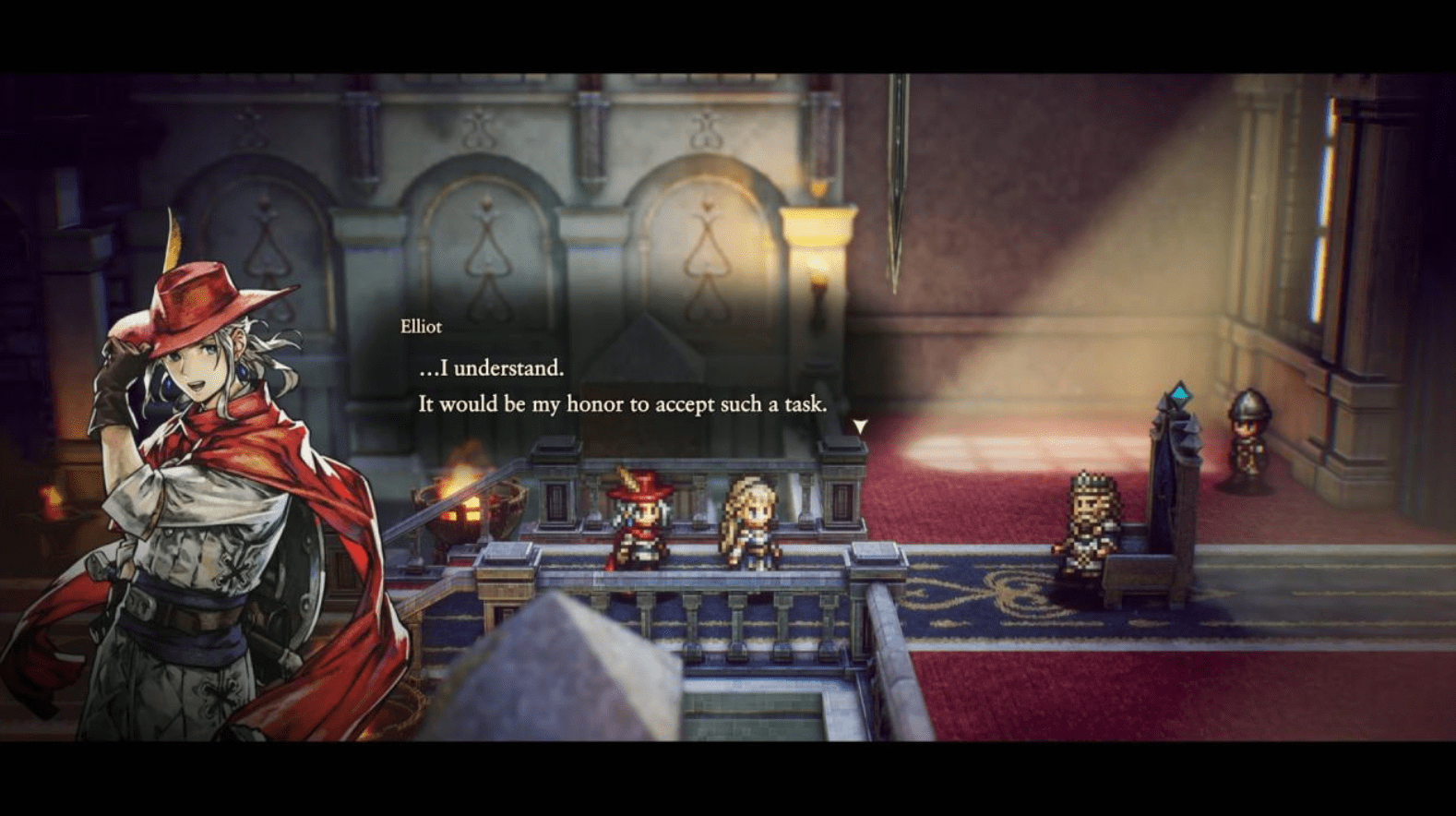
The story sets up something familiar on the surface. Humanity lives on the continent of Philabieldia, a place overrun with hostile beast tribes that make travel outside city walls genuinely dangerous. The one safe spot is the Kingdom of Huther, kept protected by a barrier called the Spell of Safekeeping. Princess Heuria casts and maintains that spell around the clock, which ties her to the castle in a way that matters more to the plot than it first appears.
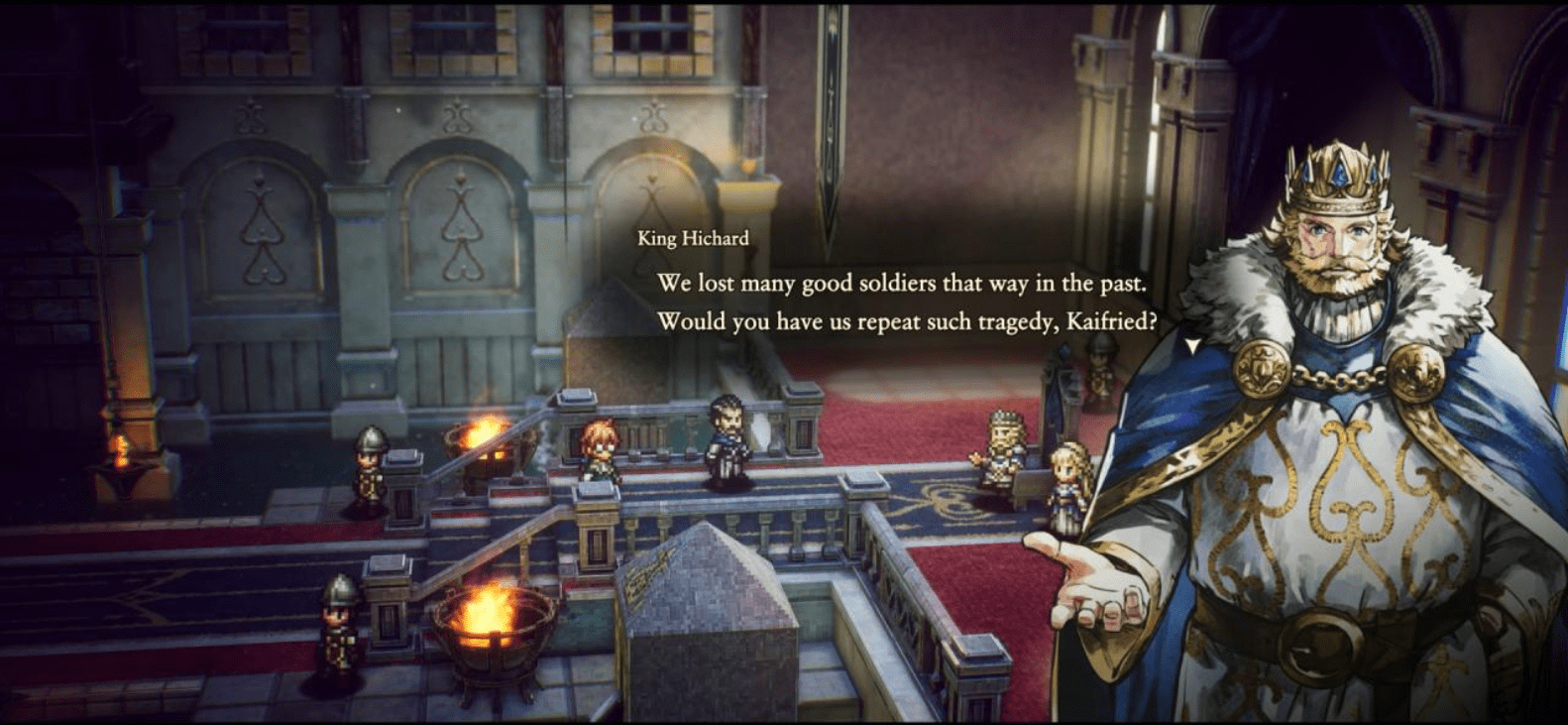
King Hichard sends an adventurer named Elliot, who grew up in Huther’s orphanage, to investigate a newly discovered set of ruins just past the kingdom’s border. Elliot isn’t alone. He’s joined almost immediately by Faie, a fairy that only he can see or hear, and the two of them quickly stumble on something called the Doorway of Time. That discovery is the actual hook of the game. Once Elliot finds it, his simple scouting mission turns into a journey across a thousand years of history, and Princess Heuria keeps in contact with him from the castle using a magical earring he wears throughout the adventure.
I’ll admit the setup reads like a checklist of fantasy tropes when you write it out plainly. A barrier spell, a princess in danger, an orphan hero with a good heart. What saves it, at least early on, is how matter of fact the game is about all this. Nobody treats the premise as groundbreaking, and the dialogue mostly avoids over explaining why a barrier spell or a magic earring exist. That restraint doesn’t last through every scene, which I’ll get into later, but the opening hours handle the premise better than I expected going in.
Four Ages, One Doorway: How the Time Travel Structure Actually Works
The Doorway of Time sends Elliot through four distinct periods of Philabieldia’s history, and the game names them rather than leaving them vague. Working backward from the present, you have the Age of Safekeeping, which is Elliot’s home era and the one under the protection of Huther’s barrier. Before that sits the Age of Reconstruction, a rebuilding period that follows some kind of historical collapse the story slowly fills in. Further back is the Age of Magic, the most prosperous era you’ll visit, centered on the magical nation of Weyzn and its two competing research institutions, Forthewor and Formanit, one chasing pure technological advancement and the other focused on improving daily life. The earliest age, the Age of Budding, takes you back to a point when magic was barely understood and the relationship between people and the land felt closer to myth than civilization.
What I appreciated here, more than the individual settings, is that the four ages aren’t separate maps stitched together. They’re the same physical landscape viewed at different points in its history, so a town you visit in the present might be empty ruins in the Age of Budding, or a thriving capital during the Age of Magic. Watching the same coordinates on the map shift in purpose across a thousand years does more storytelling than most of the actual dialogue manages, and a few of the better side quests lean directly into that idea, letting an action you take in an earlier age echo forward into the present in a way that’s genuinely satisfying to discover on your own rather than have explained to you.
The trade off is that because the four ages share a layout, exploring them back to back can start to feel repetitive once the novelty wears off, particularly in the middle stretch of the game before the story’s pace picks back up. Several reviewers across outlets flagged this same issue, and having played through it myself, I think it’s a fair criticism rather than an exaggerated one. The bones of the world are reused more than the marketing initially suggested.
Combat That Finally Proves HD-2D Can Handle Real Time Action
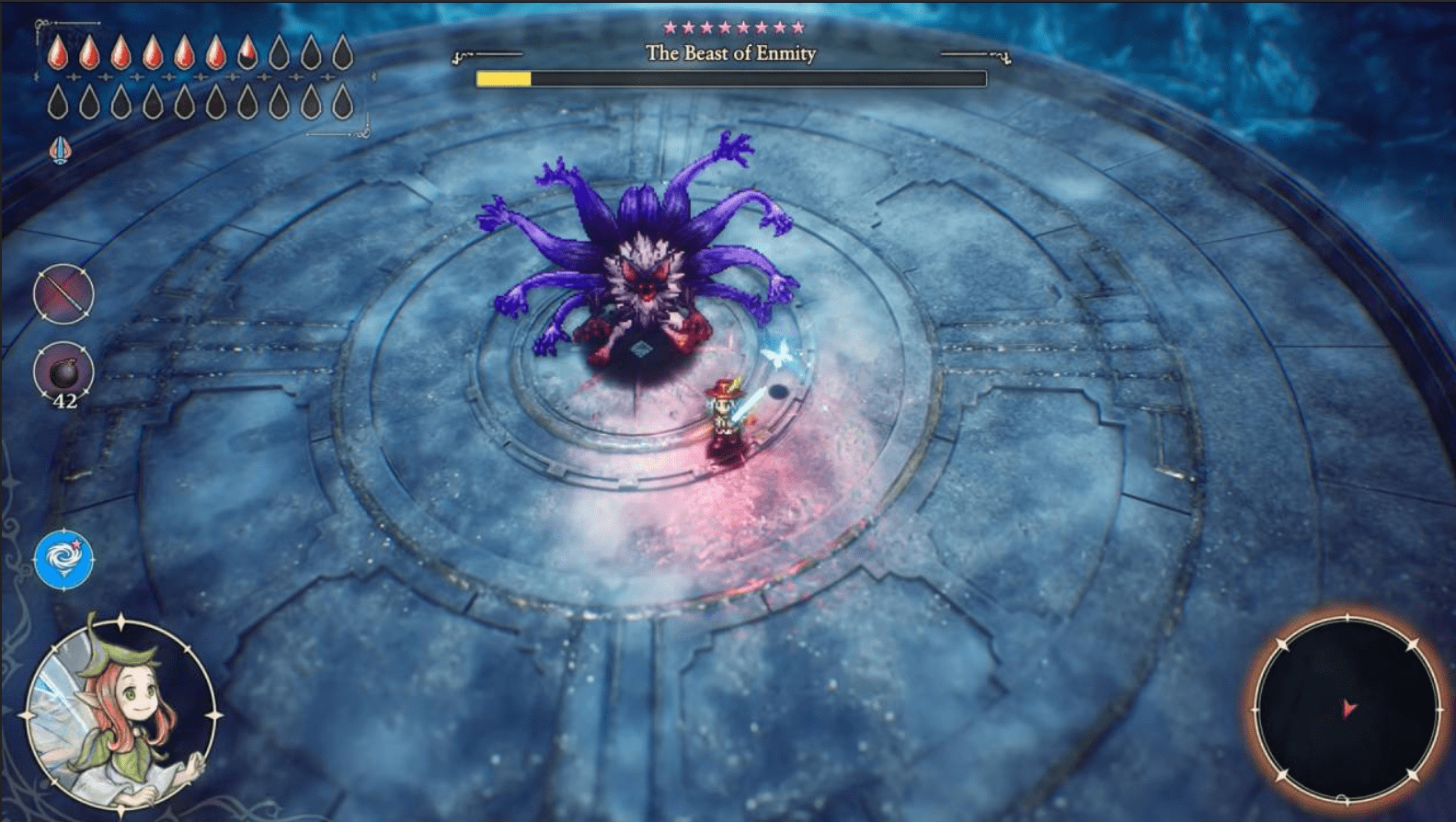
Combat is where this game earns its asking price. Elliot has access to seven weapon types across the full adventure: a sword, a spear, a hammer, a chain and sickle that can hook and pull enemies toward you, a boomerang, a bow, and bombs that double as both an attack and a way to blow open cracked walls hiding loot. You equip two of these at a time, and on a controller they sit on two separate attack buttons so you can swap between a melee option and something with range without pausing or digging through a menu. A quick radial menu lets you change which two weapons are active on the fly, which matters more than it sounds like it should once enemies start mixing ranged casters with front line brawlers.
Every weapon has its own charged attack, triggered by holding the attack button rather than tapping it, and the charge mechanic genuinely changes how each weapon behaves rather than just making it hit harder. The sword fires a shockwave at full charge. The chain and sickle becomes a long range grab that yanks distant enemies into melee range. The hammer’s charged swing can drive stakes into the ground that double as both damage and environmental puzzle tools later on. None of this happens by accident. Each weapon clearly got individual design attention rather than being a recolored version of the others, and that effort shows up in how differently each one solves the same combat encounter.
Defense runs through a stamina powered shield that blocks standard hits and rewards a tightly timed release with a parry, plus a later upgrade that adds a stricter just guard window for players who want the extra challenge. I found myself leaning on the shield far more than I expected going in, mostly because the parry window felt forgiving enough to learn within an hour or two but still demanding enough that landing one consistently against a boss felt earned rather than automatic. A basic jump exists too, mostly used to clear small platforming gaps and shockwave attacks, and a town accessory called the Flutterer’s Cape adds a brief hover after jumping that opens up dungeon layouts considerably once you buy it.
If there’s a weak point in the combat itself, it’s enemy variety in the first stretch of the game. You’ll fight recolored versions of the same handful of beastmen for longer than feels ideal before the roster genuinely expands. Once it does, particularly once stronger variants start mixing elemental attacks and ranged pressure into group fights, the combat opens up considerably, and a built in difficulty slider you can adjust mid run lets you push things harder if the early pacing feels too easy. I tried the harder setting for a stretch and noticed resurrection costs climb steeply and stop resetting at checkpoints, which is a clever way to discourage reckless play without forcing a hard game over.
The Magicite System: Elliot’s Real Leveling Curve
There’s no experience point bar in this game, and that surprised me more than I expected. Instead, every meaningful stat increase comes from items you find while exploring, and the centerpiece of that system is called Magicite. Magicite are socketable effects you slot into your weapons and shield, found as fragments scattered through dungeons, chests, and puzzle shrines, then formed into finished pieces at a quiet, mostly silent merchant who appears across every age. Forming Magicite is a gacha style roll using collected fragments, and the rarer the Magicite you already own, the better your odds become of forming something even rarer next time, which gives you a real incentive to keep fighting and exploring rather than rushing the main story.
The effects themselves range from straightforward stat boosts to genuinely build altering changes. One piece might make your boomerang larger but slower. Another increases sword damage whenever your shield gauge sits full. A different one makes thrown bombs bounce once before detonating, which sounds minor until you realize it lets you clear corners you couldn’t reach before. Because each weapon has its own socket budget, you’re constantly weighing whether to chase raw damage or chase a niche effect that solves a specific kind of fight, and that tension is honestly more engaging than a standard level up screen would have been.
Health works the same way. Rather than gaining max health automatically, you hunt down Shards of Life hidden in optional shrines, and collecting four of them permanently raises your health cap. There are sixty shards total across the full game according to community tracking, which gives completionists a real reason to comb every corner of the map rather than just following the story markers. Faie’s own abilities follow this same item gated logic, unlocked by clearing Shrines of the Mystic scattered through each age rather than appearing automatically as the story progresses.
If theory crafting isn’t your thing, you can let Faie auto select a reasonable Magicite loadout for you, and from what I saw it does a competent job of building something balanced without forcing you into spreadsheet management. I switched between manual and automatic builds throughout my playthrough depending on how much energy I had for optimizing that night, and neither approach left me feeling underpowered against story bosses.
Faie, Local Co-op, and Why the Right Stick Matters
Faie is controlled with the right stick, and learning to use her properly is the single biggest skill jump in this entire game. Left alone, she floats near Elliot and damages anything she bumps into. Take direct control of her, though, and you unlock five distinct abilities as you progress: Sprint, which propels Elliot forward at high speed and doubles as a dodge tool, Warp, which instantly teleports Elliot to Faie’s current position and works as both a traversal shortcut and a last second escape from boss attacks, Ignite, which lights torches, melts ice, and can detonate bombs from a distance, Vacuum, which pulls in nearby enemies, loot, and switches with a small whirlwind, and a duplication ability that creates a controllable copy of Elliot for a short window.
The D-pad issues commands that tell Faie how to behave automatically when you’re not steering her directly, which means you’re effectively managing two characters with one controller during the busiest fights. It took me longer to get comfortable with this than with the weapon swapping, and I’ll be honest that a few early boss fights had me gripping the controller in what one PC outlet accurately described as a double claw grip while trying to dodge with Elliot and reposition Faie at the same time. Once it clicks, though, pulling off a Vacuum into a charged sword swing feels genuinely clever in a way scripted combat rarely manages.
If two character management isn’t appealing solo, a second player can take Faie over entirely in local co-op by connecting a second controller and enabling co-op from Faie’s menu. I tried this with a friend over one evening, and it noticeably changes the rhythm of boss fights, since you suddenly have two full kits of abilities active at once rather than one person juggling both. It’s not flawless. Faie’s abilities run on shared cooldowns regardless of who’s pressing the button, so coordination still matters, but as a safety net for newer players or as a way to play through the story together, it works better than I expected from a studio with no prior co-op games on its resume.
Shrines, Cats, and the Side Content Worth Your Time
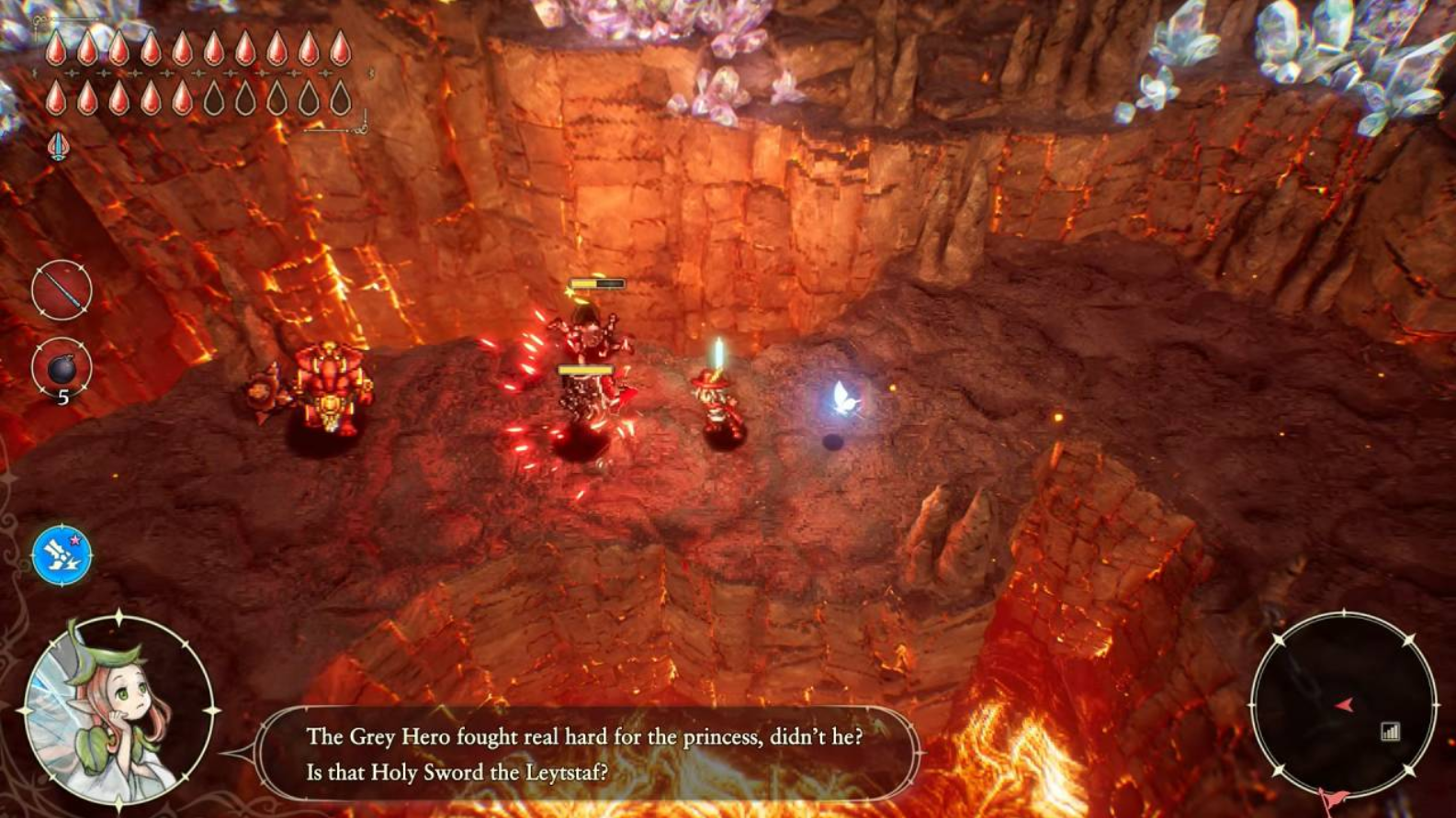
Exploration outside the main story is where this game quietly does some of its best work. Beyond the Shrines of Life and Shrines of the Mystic mentioned earlier, the world is dotted with optional Trials that test Elliot and Faie’s combined ability set against timed challenges, often rewarding currency or rare Magicite for a strong clear. There’s also a genuinely charming cat collecting activity, where stray cats are hidden across every age and reward you for tracking them down, plus Faie’s Magic Lessons, a set of minigames tied to each fairy ability that unlock soundtrack records you can listen back to from the in-game music menu once cleared.
None of this content reinvents the side quest formula. Plenty of it is straightforward fetch quest design dressed up with new dialogue. But a meaningful portion of it does the heavier lifting of fleshing out the supporting cast, giving minor NPCs across different ages a reason to matter beyond handing you a reward, and a few specific quests reward patience by tying directly back into the time travel structure in ways the main story doesn’t always bother to. I’d rather see five strong side quests than fifteen forgettable ones, and this game lands somewhere comfortably in between those two extremes.
The official Xbox announcement page goes into more detail on how exploration and combat were designed to support each other rather than interrupt one another, and it’s worth a look if you want the developer’s own framing of these systems straight from Xbox Wire’s official coverage of the game.
HD-2D Presentation and Sound, Six Years On From Octopath Traveler
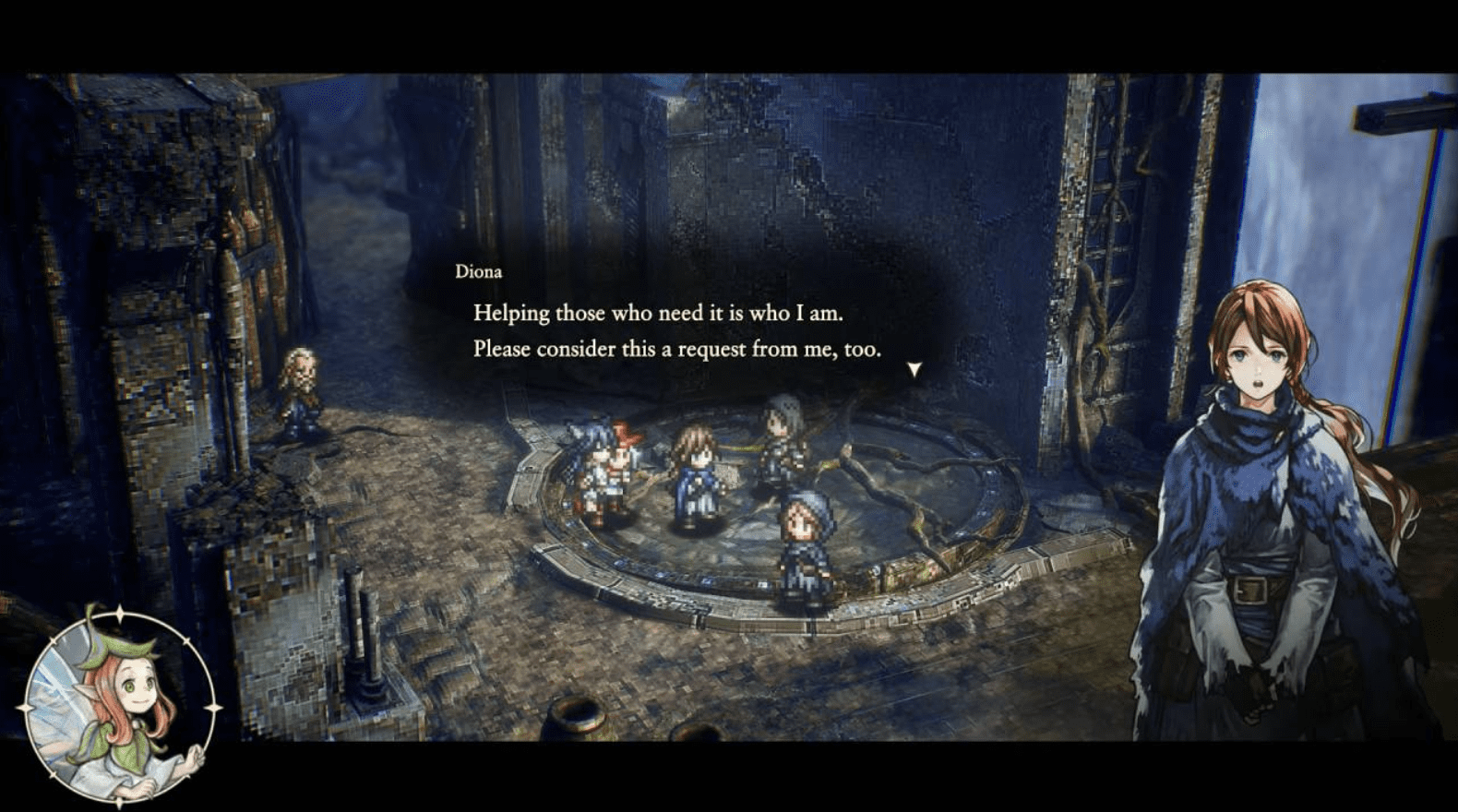
Visually, this is one of the best looking HD-2D games Square Enix has put out, and that’s a genuinely high bar given the strength of Octopath Traveler and Triangle Strategy before it. Pixel art characters move across detailed three dimensional environments with the same tilt shift, diorama like camera the studio has used since 2018, but the difference here is that the camera now has to track continuous real time movement instead of waiting for a turn to end before recalculating shadows and depth sorting. That’s a much harder technical problem than it sounds, and the fact that it holds up at a steady frame rate during chaotic multi enemy fights says a lot about the engineering work Claytechworks put into adapting the pipeline.
Weapon changes show up visually on Elliot’s model the moment you swap loadouts, which is a small touch I didn’t expect from a sprite based game but noticed constantly once I started paying attention to it. Lighting carries a lot of the emotional weight during quieter story scenes too, with the camera leaning on environmental framing rather than long static dialogue boxes whenever the writing allows it room to breathe.
The soundtrack is a full orchestral score that shifts based on context, leaning gentle and a little melancholy during overworld exploration before snapping into something faster and more aggressive the instant combat starts. Sound design in combat specifically deserves credit, since a clean parry produces a distinct, satisfying clang that gives you immediate feedback on timing without needing to watch a meter, and that kind of audio clarity matters more in a fast action game than it ever did in the studio’s turn based work.
Where the Pacing Breaks Down
Now for the part of this review I went back and forth on the most. The combat in this game moves fast. The writing, for long stretches, does not, and the gap between those two speeds is the single biggest issue holding the experience back from greatness. Dungeons frequently pause for dialogue heavy cutscenes that explain plot points the player has often already pieced together from context, and minor quest givers have a habit of walking through their entire personal history before getting to the actual request.
Faie shoulders a fair share of the blame here too. She’s mechanically essential, and I’ve already spent several paragraphs praising what she does in combat and exploration. But her exploration commentary, delivered in a bright, constantly chatty tone, wears thin well before the halfway point of the story, especially since she tends to narrate things the player can already see plainly on screen. Thankfully, the options menu includes a toggle that meaningfully reduces her unprompted chatter during exploration, and I’d recommend flipping that on almost immediately rather than waiting until it bothers you the way it bothered me for the first several hours.
Elliot himself doesn’t get much shading as a character either. He’s earnest almost to a fault, constantly praised by nearly everyone he helps, and the story rarely complicates that good natured surface with any real internal conflict. It’s not bad writing exactly. Several reviewers across other outlets called it painfully adequate, and having played it myself, that phrase lands about right. It’s not offensively written, it’s just frequently more words than the moment needs, and a game built around snappy real time combat suffers more from that kind of bloat than a turn based game ever would, since it keeps yanking you out of the part of the experience that actually works best.
To the game’s credit, the final stretch picks up considerably once the true ending content kicks in, and the causal relationship between the four ages finally starts to feel earned rather than purely cosmetic. It’s a genuinely strong note to end on. I just wish more of the middle hours trusted players to fill in gaps themselves rather than explaining everything twice.
How It Actually Compares to Zelda, Secret of Mana, and Chrono Trigger
The Zelda comparisons write themselves, and the game doesn’t shy away from inviting them. A talking fairy companion, a time traveling narrative, an arsenal that includes a bow, bombs, and a boomerang, and dungeons built around a big key and a boss room all sit close enough to Nintendo’s formula that the resemblance feels intentional rather than incidental. Where it actually separates itself is the Magicite system, which gives Elliot a layer of build customization that traditional Zelda games have never really attempted, leaning the experience closer to an action RPG with real character building underneath the adventure game shell.
The combat’s charge mechanics and weapon synergy owe an obvious debt to Secret of Mana and the broader Mana series, right down to how charged attacks scale with weapon tier rather than character level. And the time travel premise, four distinct historical ages connected by a single doorway, sits closer to Chrono Trigger’s structure than anything Zelda has done, even if the execution here doesn’t reach quite the same heights of distinct, memorable eras that Chrono Trigger managed on much older hardware.
I don’t think that makes this game derivative in a bad sense. Plenty of genuinely great games wear their influences openly, and this one assembles its influences into something that, mechanically at least, feels distinct once you’re a few hours in. The story is where the borrowed structure shows the most, since the premise promises a sweeping historical arc that the actual writing doesn’t always have the patience or restraint to deliver.
Full Controller Button Layout Guide for Xbox and PC
This is the section most people searching for this game actually want, so let’s get into it properly. The layout below reflects the default control scheme as confirmed through hands on previews, developer interviews, and the game’s own control reference screen, which you can pull up at any time from the pause menu. Square Enix built in basic remapping support on every platform, so treat this as your starting point rather than a fixed rulebook if your hands prefer something different.
Xbox Series X|S Controller Layout
| Button | Action |
|---|---|
| Left Stick | Move Elliot |
| Right Stick | Directly steer Faie around the field |
| D-Pad | Cycle and issue Faie’s command abilities: Sprint, Warp, Ignite, Vacuum, and the duplication ability |
| A | Jump (hold a beat longer with the Flutterer’s Cape equipped for a brief hover) |
| B | Shield, hold to block and release with good timing to parry |
| X | Attack with the weapon in slot one, hold for a charged attack |
| Y | Attack with the weapon in slot two, hold for a charged attack |
| Left Bumper (LB) | Open the radial menu to swap which weapons sit in slots one and two |
| Right Bumper (RB) | Activate Faie’s currently selected command ability |
| Left Trigger (LT) | Aim mode for ranged weapons such as the bow and boomerang |
| Right Trigger (RT) | Warp directly to Faie’s position as a quick traversal or escape option |
| View Button | Open the world map |
| Menu Button | Pause menu, including inventory, Magicite forging, and settings |
| L3 / R3 (Stick Clicks) | Not assigned to a core action by default, free for custom remapping |
PC Keyboard and Mouse Layout
| Key | Action |
|---|---|
| W A S D | Move Elliot |
| Mouse Movement | Steer Faie freely, mirroring right stick control on a pad |
| Q / E | Cycle through Faie’s command abilities |
| R | Activate Faie’s currently selected command ability |
| Left Mouse Button | Attack with the weapon in slot one, hold for a charged attack |
| Right Mouse Button | Attack with the weapon in slot two, hold for a charged attack |
| Space Bar | Jump, extended into a hover with the Flutterer’s Cape equipped |
| Left Ctrl | Shield, hold to block and release with good timing to parry |
| F | Warp directly to Faie’s position |
| Tab | Open the radial menu to swap equipped weapons |
| M | Open the world map |
| Esc | Pause menu, inventory, and settings |
Using an Xbox Controller on PC
Native Xbox controllers generally work right out of the box on the PC version with no extra setup needed, and Steam discussions from players during launch week mostly back this up. Third party pads like the 8BitDo Pro 3 also work without much fuss, though they default to displaying Xbox style button prompts on screen with no in game option to swap icon styles yet. If your controller isn’t being recognized at all, the most commonly reported fix among players is checking that Steam Input is enabled for the game, and if problems persist, unplugging the controller, removing it from Windows device settings, and reconnecting it tends to resolve detection issues that a few players ran into during the first days after launch.
Accessibility Options Worth Knowing About
This game ships with a genuinely solid accessibility list that’s easy to miss if you don’t go digging through the settings menu. You can remap controls at a basic level, play through the entire game without ever needing rapid button presses or simultaneous multi button inputs, skip motion controls and touch controls entirely, and turn off controller vibration and adaptive trigger resistance without losing access to anything mechanically. The control reference screen and tutorial information can also be pulled up again at any point if you forget something mid run, which is a small touch I wish more action games bothered to include.
Practical Tips Before You Start Your Own Run
A few things I wish I’d known going in. Form Magicite early and often rather than hoarding fragments, since better odds at rarer pieces come from having more Magicite already formed, and duplicate rolls get converted into shards instead of being wasted outright. Always keep one melee weapon and one ranged option equipped together rather than pairing two of the same range, since most enemy groups mix close range brawlers with something that pressures you from a distance. Buy the Flutterer’s Cape the moment you can afford it. It’s pricey early on, but the hover it grants makes dungeon platforming considerably less frustrating for the rest of the game, and I regretted waiting as long as I did to pick it up.
Treat Faie’s command abilities as puzzle tools first and combat tools second. Ignite does more than just deal fire damage, since it also thaws frozen status effects, burns away tall grass hiding items, and detonates bombs from a safe distance. Vacuum is similarly useful for dragging enemies off ledges entirely rather than fighting them directly, which is often the faster option against groups near cliff edges. And if Magicite optimization isn’t something you enjoy, don’t feel bad about letting Faie auto select a build for you. It’s a legitimate way to play rather than a lesser one.
Persona 4 Revival Release Date Confirmed and Persona 6 Officially Teased at Xbox Games Showcase 2026
Editions, Price, and Whether the Collector’s Set Is Worth It
The standard edition runs 59.99 USD across every platform, with a Digital Deluxe edition at 69.99 USD that adds a handful of cosmetic accessories on top of the base game. Physical collectors have a Collector’s Edition priced at 229.99 USD, which includes a soundtrack set and a diorama style tabletop clock modeled after the in game Doorway of Time, plus a smaller Goods Box option for around 160 USD if you want the physical extras without buying a second copy of the full game. Anyone who preordered also received the Departure Pack, a small accessory and weapon Magicite bundle that gives an early edge without meaningfully changing the pacing of the opening hours.
For full details on what each edition actually includes, Square Enix’s own press materials lay out the weapon and Faie ability information clearly on the official Square Enix press hub for the game, which is worth a look if you’re deciding between editions before launch day pricing changes.
My honest take is that the standard edition is the right call for most players. The Collector’s Edition is a nice physical object if you’re already a fan of the HD-2D lineup, but nothing in the higher tiers changes how the actual game plays.
My Verdict After Finishing It
I came into this expecting a solid but cautious first attempt at a new genre from a studio that’s spent the better part of a decade comfortable inside turn based menus. What I got instead was a combat system confident enough that I kept fighting optional enemies I could have easily run past, simply because landing a charged hammer swing into a parried counterattack felt that satisfying every single time. The Magicite system gives that combat real depth without demanding a spreadsheet, and Faie, frustrating as her exploration chatter can be, adds a layer of two character tactics that most action RPGs in this genre don’t even attempt.
The story is the clear weak point, not because it’s badly written, but because it doesn’t trust its own pacing enough to let silence do any of the work. A premise built around a thousand years of history deserved eras that felt more distinct from one another, and dialogue that respected the player’s ability to connect dots without being told twice. Those issues kept this from reaching the heights of the games it’s clearly inspired by.
Even with that said, I’d still recommend this without much hesitation to anyone who grew up on Zelda, Secret of Mana, or Chrono Trigger and has been waiting for something that captures that specific feeling again. The mechanical foundation here is strong enough that I’m genuinely curious where Team Asano takes a sequel or a follow up project, assuming Square Enix lets them build on this rather than retreating back to turn based combat for the next HD-2D release.
Frequently Asked Questions
Is The Adventures of Elliot: The Millennium Tales multiplayer?
Yes, but only in local co-op. A second player can connect a controller and take direct control of Faie while the first player controls Elliot. There’s no online multiplayer mode at launch.
How long does it take to finish the game?
Reviewers reported finishing a single playthrough anywhere from 16 to 25 hours depending on how much side content they cleared, with the true ending sequence adding several more hours on top for players chasing full completion.
Is this game similar to The Legend of Zelda?
Mechanically, yes, especially in dungeon structure, the fairy companion, and the bow, bomb, and boomerang arsenal. The Magicite build system and the time travel structure pull it closer to an action RPG with Secret of Mana and Chrono Trigger influences layered on top of that Zelda style foundation.
What platforms is the game available on?
Nintendo Switch 2, PlayStation 5, Xbox Series X|S, and PC through both Steam and the Microsoft Store.
Can I use an Xbox controller on the PC version?
Yes, Xbox controllers are recognized natively without extra setup in most cases. Third party controllers generally work too, though some players needed to enable Steam Input or reconnect their device if it wasn’t detected right away.
Does progress from the demo carry over to the full game?
Yes. The Prologue Demo released in May 2026 uses a real save file, and starting the full game on the same platform continues directly from where the demo left off, along with any launch day save bonuses tied to that platform.
Is there a leveling system or experience points?
No traditional experience point system exists. Character growth comes entirely from finding gear, forming Magicite, and collecting Shards of Life through exploration rather than from grinding enemy kills for levels.