
I still remember sitting in a waiting room last year scrolling through preorder pages for the Nintendo Switch 2 and thinking the hype around it felt familiar but somehow different this time. There was a specific kind of confidence in the air from Nintendo fans that you do not always see before a new console launches. People were not just excited. They genuinely believed this system would deliver, and the numbers coming out now prove those feelings were not just enthusiasm talking.
Nintendo Switch 2 has officially become the second fastest selling console in United States history after its first twelve months on store shelves. The system moved 5.9 million units within that first year. That is not a number you casually absorb and move on from. That is a statement about where gaming is right now and about what Nintendo understands about its audience that some of its competitors clearly do not.
Let us get into all of it because there is a lot happening around this platform simultaneously, and each piece of the story connects to the others in ways that matter for anyone who owns the system, plans to buy one, or just follows the industry closely.
How the Nintendo Switch 2 Sales Numbers Actually Stack Up
When a company announces a sales milestone, the raw number often floats by without much context. So let us put 5.9 million units in its first year in proper perspective.
The only console in US history to outsell it during a comparable launch window is the Game Boy Advance, which moved 6.5 million units during its own first year about twenty five years ago. Think about that for a moment. The gaming market in the early 2000s looked nothing like it does today. There was no streaming, no digital storefronts, no mobile gaming pulling billions of casual players away from dedicated hardware. The Game Boy Advance existed in a world where handheld gaming had very little serious competition for attention.
Nintendo Switch 2 achieved its number in 2025 and into 2026, in a market where smartphones offer thousands of free games, where PlayStation and Xbox compete fiercely for living room dominance, and where economic pressure is squeezing consumer spending across most entertainment categories. The fact that Switch 2 even came close to the Game Boy Advance record under those conditions tells you something important about what Nintendo built here.
For comparison, Statista’s gaming hardware revenue data consistently shows that Nintendo operates in a category of its own when it comes to portable or hybrid console sales, and the Switch 2 trajectory confirms that the original Switch’s massive success was not a fluke.
The broader context makes this even more striking. Both Sony and Microsoft have been reporting weaker hardware sales during this same period. PlayStation 5 sales have slowed noticeably as the generation matures and as consumers hold onto their money more carefully. Xbox hardware sales have been a well documented challenge for Microsoft for years now, with the company increasingly leaning into its Game Pass subscription model rather than selling boxes. Meanwhile Nintendo is out here posting numbers that would have been impressive in any era of gaming.
That contrast is not accidental. It reflects a deliberate strategy Nintendo has executed consistently since the original Switch launched in 2017. The company identified that there was a massive group of players who wanted capable gaming hardware they could carry with them. Not a phone. Not a dedicated handheld with a limited library. A real console experience that happened to also work perfectly on a commute or a flight or during lunch. The Switch captured that audience and built a loyalty that carried directly into the Switch 2 launch.
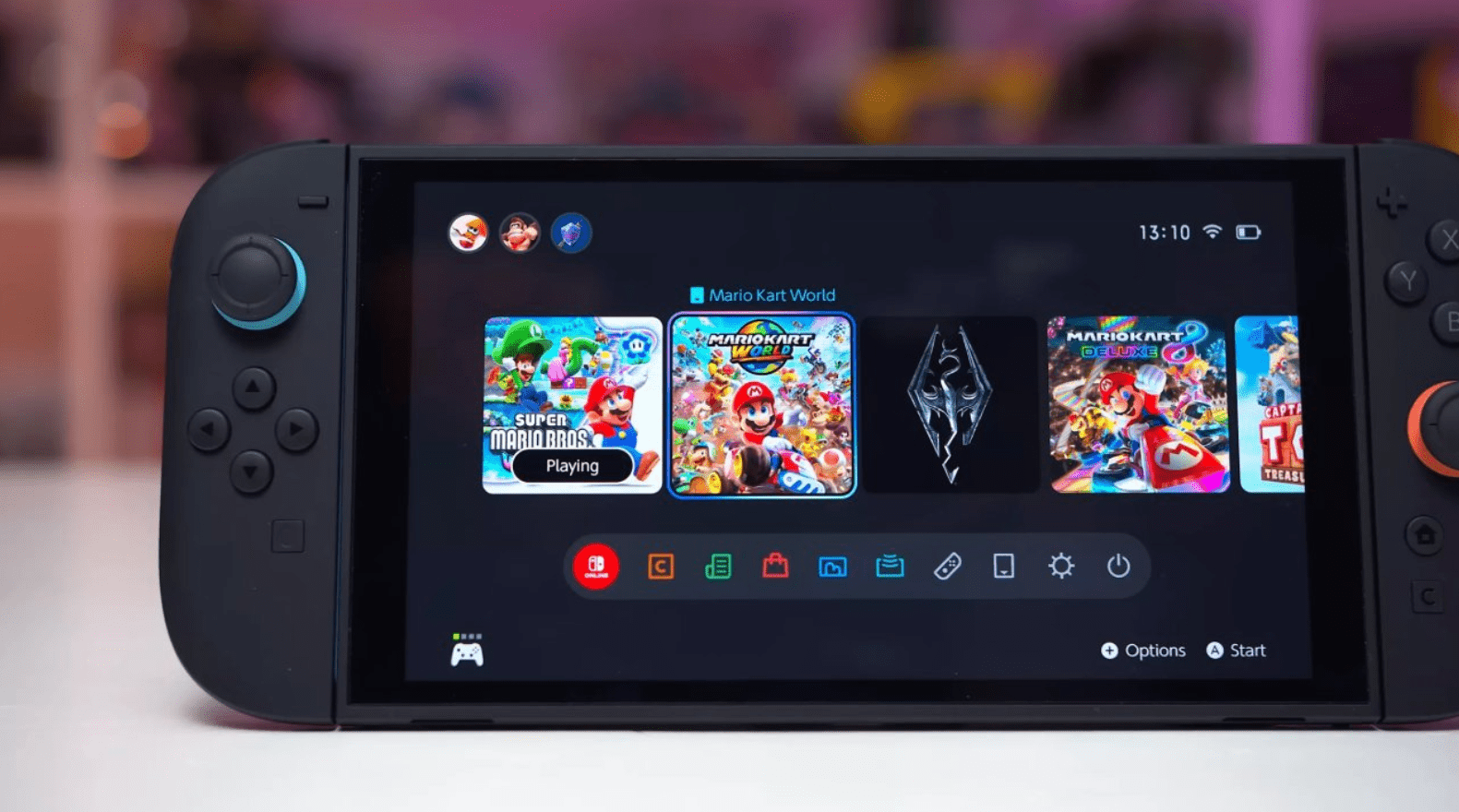
The Nintendo Legacy Library Question That Every Investor Is Asking
Here is something that does not get enough attention in mainstream gaming coverage. The investors asking Nintendo about its classic library are not doing so out of nostalgia. They are asking a business strategy question with real financial implications, and the answer Nintendo gives shapes how valuable the platform becomes over its full life cycle.
During a recent annual investor question and answer session, Nintendo President Shintaro Furukawa was asked directly whether Nintendo DS and Nintendo 3DS titles would eventually reach the Switch 2 as part of its legacy catalog. This came from shareholders, not just fans on forums. That is a meaningful distinction. When investors push for something in a formal setting, they are signaling that they see real revenue on the table that is not being captured yet.
Furukawa’s response was careful. He confirmed the company is actively working on making its large back catalog playable on current hardware where possible, but he would not commit to specific platforms or timelines. If you have followed Nintendo for a long time, that kind of non-answer is actually more encouraging than it might sound. Nintendo rarely promises things publicly before they are ready to deliver. The fact that Furukawa acknowledged the back catalog work at all suggests it is a real priority, not just a theoretical one.
The Nintendo DS and 3DS libraries represent a genuinely enormous collection of games that a lot of Switch 2 owners either grew up with or missed entirely. We are talking about titles like Pokémon Black and White, the original Animal Crossing, the Professor Layton series, Radiant Historia, Ghost Trick, and hundreds of others that have never been available on a modern Nintendo platform. Many of these games fetch wild prices on the second hand market precisely because they are so hard to access legally.
I spent a fair amount of money on a used 3DS a few years back specifically to play some of those titles. The hardware still works fine but it is aging, the screen is showing its years, and the experience of playing on it next to a modern system feels like a noticeable step backward in comfort. If Nintendo brought even a solid selection of those games to Switch 2 with any kind of quality of life improvements, that would make the platform substantially more valuable for a wide range of players, not just those chasing nostalgia.
The business case is obvious. Nintendo Switch Online already monetizes retro content through its subscription tiers. Expanding that to include DS and 3DS titles would give people another strong reason to maintain or upgrade their subscriptions, which is recurring revenue that Nintendo’s finance team absolutely cares about.
There is also a preservation argument worth making. These games will not stay accessible forever if Nintendo does not actively bring them forward. Physical cartridges degrade. Third party emulation exists but sits in a legally grey area. Nintendo bringing these titles officially to Switch 2 would be the right move for players, for history, and for the company’s bottom line all at once.
The Memory Shortage That Could Push Your Next Console Purchase Higher
This is the part of the Nintendo Switch 2 story that affects your wallet most directly, and it is driven by forces that have nothing to do with gaming specifically.
The global memory component market is under severe pressure right now. The explosive growth of artificial intelligence infrastructure has created a situation where data center operators are competing intensely with consumer electronics manufacturers for the same limited supply of memory chips. Building and maintaining the kind of server farms that power large language models and AI image generation requires enormous quantities of high bandwidth memory. That demand did not exist at scale just a few years ago, and the manufacturing capacity to meet it has not caught up.
The result is that memory costs have risen sharply across the tech industry. Gaming hardware is not immune to this. Consoles and game cartridges both rely on memory components, and when those components get more expensive to source, someone ends up paying more. In most cases, that eventually means the consumer.
Furukawa addressed this directly at the same investor meeting, and his honesty here is worth paying attention to. He acknowledged that rising memory prices had a relatively contained impact during the previous fiscal year but that the company is now seeing much stronger effects from the ongoing shortage. He also confirmed that Nintendo has secured enough component supply through partnerships with its long term manufacturing partners to maintain production in the near term.
That second part is genuinely good news for anyone trying to buy a Switch 2 right now. Supply should remain stable for the foreseeable future. But Furukawa also did not rule out a retail price increase within the next year. He chose his words carefully, as Nintendo executives usually do, but reading between the lines of his statement, a price adjustment at some point is a real possibility rather than a remote one.
For context on how significant this memory market disruption is, IDC research on semiconductor market conditions has consistently highlighted AI infrastructure spending as a primary driver of component allocation shifts across the entire industry. This is not a Nintendo specific problem. It is an industry wide reality that every hardware maker is dealing with simultaneously.
What does this mean practically for someone deciding whether to buy a Switch 2 now versus waiting? Honestly, buying sooner rather than later looks like the smarter play if you were already planning to get one. The current price reflects a supply window that Nintendo itself has hinted may not last indefinitely at the same cost. If a price increase does come, anyone who bought at launch pricing will have made a better deal.
Game cartridge pricing could also be affected. The manufacturing cost of physical Switch 2 games already runs higher than other formats because of the flash storage used in the cartridges. If memory costs climb further, publishers may face difficult decisions about whether to release certain games physically at all or whether to raise the price of cartridges across the board. That second factor ties directly into the next part of this story.
Final Fantasy Resonance Hands On Preview: Classic Turn Based Combat Meets the New Vision System
Physical Game Sales Just Did Something Nobody Predicted
This caught a lot of analysts off guard, including people who track the gaming industry full time.
Physical video game spending in the United States rose 3% year on year for the twelve month period ending in May 2026, reaching a total of 1.6 billion dollars. That number becomes genuinely remarkable when you understand what came before it. This is the first year on year increase in physical software sales since 2009. Seventeen years. Digital distribution had been winning that war consistently for nearly two decades, and then something changed.
The something that changed is largely the Nintendo Switch 2, and more specifically the consumer psychology that has built up around digital game ownership over the past several years.
There has been a growing conversation in gaming communities about what digital ownership actually means. When you buy a game digitally, you are purchasing a license, not the game itself. If the publisher pulls the game from the store, or if the storefront itself shuts down, or if the console’s online infrastructure gets retired, that game can become inaccessible. This happened to real people with the PlayStation 3 and PSP stores facing closure threats. It happened to Wii and Wii U digital content. People who paid real money for digital games found themselves in situations where accessing what they bought became complicated or impossible.
That experience has made a meaningful number of players reconsider how they buy games. Physical media gives you something concrete. The game lives on the cartridge. You own it in a way that does not depend on any server staying online or any company maintaining infrastructure. You can lend it to a friend. You can resell it. You can put it on a shelf and pick it up ten years from now and it will work.
I went through this shift personally after losing access to a handful of digital purchases when a platform updated its account policies in a way that complicated things for accounts in certain regions. Nothing dramatic, but enough to make me think twice before defaulting to digital for everything going forward. Apparently a lot of other people had similar moments that pushed them back toward physical media.
The Switch 2 specifically has amplified this trend because Nintendo has a long history of retiring digital storefronts with relatively little fanfare. The Wii Shop Channel closing was handled reasonably well but still left some content inaccessible. The 3DS and Wii U eShops closing more recently was a jarring reminder for many players that Nintendo does not treat digital purchases with the same permanence that buyers often assume at the time of purchase.
Analysts from Circana, formerly NPD Group, who track retail spending in the US gaming market, have noted that the Switch 2 launch drove unusually strong physical attachment rates compared to other recent console launches. Players buying Switch 2 games on cartridge at rates that exceed what you would expect based purely on the install base numbers.
This physical revival creates an interesting dynamic for the industry. Publishers who had been quietly winding down physical production to cut costs may need to revisit those decisions. Retailers who had been reducing shelf space for gaming products have a reason to expand it again. And the ongoing debate about digital versus physical ownership has new data to work with.
It is worth noting that digital sales are still growing overall. Digital did not lose in absolute terms. But the physical market growing year on year for the first time since 2009 is a meaningful signal that consumers are pushing back against the assumption that everything will inevitably move to digital only.
What the Nintendo Switch 2 Game Library Actually Looks Like Right Now
Sales numbers and industry trends matter, but most people buying a console want to know whether there are enough good games to justify the purchase. The Switch 2 library has been building steadily since launch, and there are a few different ways to think about its current state depending on what kind of player you are.
First generation Nintendo exclusives have led the charge in the way you would expect from Nintendo. The company’s internal studios have delivered polished, inventive experiences that showcase what the hardware can do. The jump in visual quality compared to original Switch titles is noticeable without being so extreme that it makes older games look embarrassing in comparison. Nintendo managed the generational transition carefully, ensuring that the library feels fresh without alienating people who loved the previous system.
Third party support has been a more complicated picture. Some publishers have shown genuine enthusiasm for the platform, bringing full versions of titles that earlier Switch hardware could only approximate. Others have waited to see the install base grow before committing significant resources to Switch 2 specific versions. That pattern is normal for any new console launch, and the 5.9 million unit install base figure should be persuasive enough to bring more serious third party investment in the next wave of announcements.
The Nintendo Switch Online library continues to expand with retro content from the NES, Super Nintendo, Nintendo 64, Game Boy, Game Boy Color, Game Boy Advance, and Sega Genesis catalogs. This is a legitimate value add for subscribers that gives Switch 2 owners access to an enormous range of classic gaming history. The ongoing question about DS and 3DS content potentially joining that catalog in the future would make the subscription even more compelling.
For players coming from other platforms or picking up gaming more seriously for the first time, the Switch 2 library as it stands offers a genuinely rich selection. For dedicated Nintendo fans who played through the original Switch library thoroughly, the newness of the exclusive content available right now is thinner, though that picture will change significantly over the next year as more titles release.
The Nintendo Switch 2 Performance Architecture and Why It Matters for Future Games
One of the recurring conversations around the original Switch was whether its hardware would be able to keep pace with the ambitions of game developers over its lifespan. The answer turned out to be mostly yes, but with genuine compromises on certain titles that were more visually demanding.
Switch 2 addresses this with a meaningfully more capable architecture. The DLSS upscaling technology built into the system is a particularly significant addition because it allows games to render at a lower native resolution and then reconstruct a sharper final image in real time. This is the same general approach that has allowed PC gaming to maintain high visual quality even on hardware that is not running the absolute fastest graphics processing available. On a portable device, where thermal limits and battery life constrain raw performance, having intelligent upscaling in the toolset gives developers significantly more flexibility.
The practical result is that Switch 2 can run games that look substantially better than what the raw specification numbers might suggest at first glance. When developers actually optimize for the platform rather than treating it as a secondary port target, the results have been visually impressive. Games built specifically for Switch 2 from the ground up have showcased environments, lighting, and effects that would have been impossible on the original Switch without severe compromises.
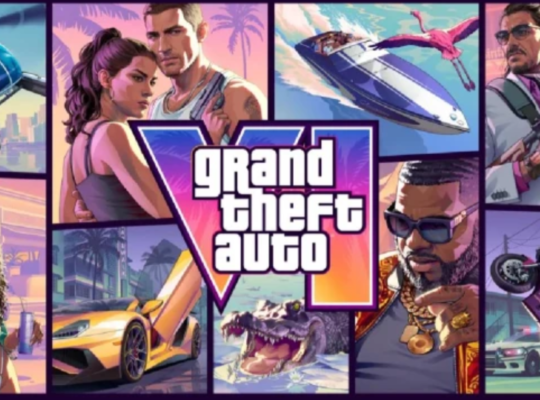
This architecture is also central to why the GTA 6 port rumors have some technical credibility, which brings us to the most discussed rumor in gaming right now.
The GTA 6 Nintendo Switch 2 Rumors and Why They Are More Believable Than You Might Think
Let me be clear upfront. These are still rumors. Nothing has been officially confirmed by either Nintendo or Rockstar Games. But the specific details circulating from industry insiders have enough technical specificity and source credibility that they deserve serious examination rather than reflexive dismissal.
Reports indicate that external development specialists with deep experience in hardware optimization have been brought in to handle the technical work of adapting Grand Theft Auto 6 for Switch 2. This is significant because it suggests, if accurate, that the approach being taken is not a standard internal port job but rather a specialized effort that recognizes the unique challenges of running one of the most graphically demanding games ever made on portable hybrid hardware.
The DLSS upscaling technology in the Switch 2 is reportedly central to the approach. By using intelligent upscaling to produce a sharp final image from a lower resolution render, the teams working on this project have apparently cleared several of the performance barriers that initially made the port seem infeasible. This is the kind of technical detail that adds credibility to the report because it reflects real engineering logic rather than vague optimism.
For context on what the GTA 6 port would mean for the platform, consider that Grand Theft Auto 5 was a massive driver of hardware sales and engagement across every platform it appeared on. Rockstar Games has consistently expanded the reach of its titles to maximize the audience, and the Switch 2’s install base is now substantial enough to make a serious commercial case for the investment. Rockstar and its parent company Take Two Interactive are in the business of selling games to as many players as possible, and 5.9 million potential customers with hardware capable of running an optimized version of their flagship title is a hard argument to ignore.
The launch timeline for such a port, if it exists, would not be immediate. The current reporting suggests it is not a near term release. But development teams working now on overcoming the technical challenges positions a potential announcement for sometime in the next year or two, which would coincide with a period when the Switch 2 install base will be even larger and the commercial case even stronger.
What would GTA 6 on Switch 2 actually mean for players? It would mean carrying around one of the most expansive open world games ever made in your pocket, with the ability to play it on a television when you get home. The Switch 2’s hybrid design makes that specific experience possible in a way that nothing else on the market can offer. You get the full game at home and the full game on the go, without needing two separate versions or two separate purchases. That is a genuinely compelling proposition that the PlayStation and Xbox versions cannot match by definition.
I have personally played several large open world games in handheld mode on original Switch over the years and the experience, while compromised visually, was still genuinely enjoyable. Being able to pick up a session on the train and then immediately continue it on the TV at home is a quality of life feature that sounds like a convenience but becomes a genuinely significant part of how you actually engage with a long game. GTA 6 is going to be the kind of game where having more flexible access to it would matter a lot.
Nintendo’s Competitive Position in the Current Console Market
To understand why the Switch 2’s performance is so significant, you need to look at what is happening across the rest of the console market at the same time.
Sony’s PlayStation 5 is deep into its generation with a library that has expanded substantially since its rocky launch period. But hardware sales have slowed as the initial wave of demand from early adopters and people who finally found stock after the supply shortage era has largely been satisfied. The question of a PlayStation 6 timeline is beginning to enter more regular industry conversation.
Microsoft’s Xbox situation is genuinely complicated. The company has made a series of large acquisitions, including Activision Blizzard, and has invested heavily in its Game Pass subscription service and cloud gaming infrastructure. But Xbox hardware sales have been weak for an extended period. Microsoft itself has shifted its public messaging away from emphasizing console units sold, which tells you something about where that number sits relative to their internal expectations.
PC gaming continues to grow, particularly through Valve’s Steam platform, which has shown remarkably consistent engagement and revenue growth over the past several years. The Steam Deck has also carved out a real niche as a portable PC gaming device, though it occupies a different price and audience segment than the Switch 2.
In this landscape, Nintendo’s decision to go hybrid rather than chasing raw horsepower has once again proven prescient. The company identified that players wanted flexibility and portability as much as they wanted cutting edge graphics, and it built hardware around that insight rather than around benchmark scores. The market has validated that approach in the most concrete terms possible, which is sales numbers.
According to data tracked by GamesRadar and confirmed by multiple industry sources, Nintendo’s market share in the active gaming hardware segment has expanded meaningfully since the Switch 2 launch, while its competitors’ shares have either held steady or contracted slightly depending on the time period measured.
What the Switch 2 Means for Nintendo’s Long Term Strategy
Nintendo has always done things slightly differently from the rest of the gaming industry. That is not just a cultural observation. It is a deliberate strategic reality that the company has leaned into consistently over its history. The Switch 2 is the clearest expression of that strategy succeeding at scale.
The platform’s design philosophy centers on the idea that the best gaming experience is the one you actually have, not the one that looks best on a spec sheet. A game you can play for fifteen minutes on a commute and then continue for two hours on your couch is more valuable to real human life than a game that requires you to be in a specific room in front of a specific screen. That sounds obvious when you say it out loud, but the entire console industry spent years assuming the opposite, that players primarily wanted raw power and were willing to organize their lives around their hardware.
Nintendo’s subscriber numbers for Nintendo Switch Online reflect this. Players who invest in a Switch 2 also invest in the ecosystem around it, which creates recurring revenue that supports the platform over its entire life cycle. The back catalog push that investors are pushing for is a natural extension of that ecosystem thinking. More content means more reasons to stay subscribed, which means more predictable long term revenue.
The physical game sales revival also benefits Nintendo specifically in an interesting way. Nintendo titles hold their physical value better than almost any other publisher’s games. First party Nintendo cartridges rarely see the deep discounts that other publishers use to move volume. The market for Nintendo physical games is more stable, which means retail partners are more willing to maintain dedicated shelf space and Nintendo has more leverage in retail negotiations.
The Economic Context That Makes These Numbers Even More Impressive
Consumer spending on discretionary items has been under pressure for an extended period due to inflation, rising interest rates, and general economic uncertainty affecting household budgets. Entertainment spending is often one of the first categories that contracts when consumers feel financially stressed.
Gaming has historically been more resilient to economic downturns than some other entertainment categories, partly because it offers a lot of entertainment per dollar compared to things like cinema tickets or concerts. A sixty dollar game that provides fifty or a hundred hours of engagement is actually quite good value by any entertainment spending metric. But the premium hardware purchase at the start is still a significant barrier.
The fact that Switch 2 moved 5.9 million units in its first year while this broader economic pressure was present makes the achievement more impressive, not less. These were real consumers making real spending decisions and choosing this platform in large numbers despite financial headwinds.
Industry economists at McKinsey’s Technology, Media and Telecommunications practice have noted in multiple reports that entertainment categories with strong value propositions and passionate audiences tend to outperform broader consumer spending trends during economic uncertainty. Nintendo Switch 2 fits that profile precisely. It has a passionate and loyal audience and offers a value proposition, the hybrid play anywhere experience, that cannot be replicated by cheaper alternatives.
Regional Performance and Why North America Matters Most Right Now
The 5.9 million units figure is specifically a United States number. Looking globally adds additional complexity but also context.
Nintendo’s home market of Japan has embraced the Switch 2 with the enthusiasm you would expect. The platform’s portable capabilities resonate particularly strongly in Japanese gaming culture where playing on the go is a deeply embedded habit shaped by decades of successful portable gaming hardware going back to the original Game Boy.
European performance has been solid across major markets. The United Kingdom, Germany, and France have all shown strong Switch 2 adoption, though European physical market data is tracked differently from the US figures published by Circana.
The US number is significant partly because the American market’s appetite for physical gaming hardware and software is one of the key signals the broader industry watches. The US is the world’s largest single national gaming market by revenue, and strong performance there creates momentum in retail partnerships, publisher attention, and media coverage that amplifies globally.
Nintendo mentioned during the investor session that it is also actively working to maintain support for Switch 1 hardware in specific Asian markets where the original system still has a strong user base and where Switch 2 pricing may be a more significant barrier to adoption. This dual market support approach is another example of Nintendo thinking about its overall ecosystem strategically rather than simply forcing a single transition timeline on all markets simultaneously.
The Long Shadow of the Original Nintendo Switch
No analysis of the Switch 2 is complete without acknowledging how much the original Switch’s legacy shapes the situation.
The original Nintendo Switch sold over 140 million units over its lifespan, making it one of the best selling gaming platforms in history. It built a library of games that includes titles players genuinely love and return to regularly. It created habits and expectations around hybrid gaming that are now deeply embedded in how a generation of players thinks about gaming hardware.
The Switch 2 is not building on a blank slate. It is inheriting an enormous installed base of players who already understood and loved the concept and who were ready to upgrade when Nintendo offered them a genuinely better version of the thing they already valued. That is a fundamentally different and easier launch situation than introducing an entirely new concept to a skeptical market.
This does not diminish the Switch 2’s achievement. Delivering on an established expectation at a high level while also expanding the audience is still a significant accomplishment. But it is worth understanding that Nintendo spent eight years building the foundation that made this launch possible. The 5.9 million unit figure is partly a reward for a decade of consistent strategy execution.
For players who never owned an original Switch, the Switch 2 also offers access to that enormous existing library. Many first generation Switch titles are compatible with the new hardware, giving new buyers an immediately substantial game collection to explore beyond whatever Switch 2 specific titles they pick up at launch. That backward compatibility is another meaningful part of why the value proposition is strong.
Specific Game Franchises That Will Define the Switch 2 Generation
Talking about a Nintendo platform without talking about specific franchises is incomplete. The Switch 2’s future will be defined substantially by which of Nintendo’s core series get major entries during this generation and what form those entries take.
The Legend of Zelda franchise is in an interesting position following the massive success of Breath of the Wild and Tears of the Kingdom on the original Switch. Both games were such landmark achievements that the next mainline entry carries enormous expectations. Whatever direction Nintendo takes Zelda next on Switch 2 will be one of the defining moments of this generation.
Mario Kart remains one of Nintendo’s most commercially reliable properties. The franchise has not seen a proper new mainline entry in years, with Mario Kart 8 Deluxe having served the original Switch for its entire lifespan through DLC expansions. A new Mario Kart built specifically for Switch 2’s capabilities would be a massive system seller with broad appeal beyond Nintendo’s core audience.
Metroid Prime 4 Beyond is confirmed and in development, representing the return of a beloved franchise that went on an extended hiatus. Its eventual release will be a significant moment for players who have been waiting years.
Pokémon continues to be the highest grossing media franchise in the world by many measures, and its games consistently drive hardware sales for Nintendo platforms. The direction of the next major Pokémon title will have a meaningful impact on Switch 2’s trajectory in the years ahead.
Animal Crossing, which became a cultural phenomenon during the pandemic period with New Horizons, will at some point need a new entry. The franchise has a broad casual audience that extends well beyond traditional gaming demographics, making it another potential system seller with unusual reach.
Each of these franchises represents not just individual games but topic clusters of player interest that drive search behavior, community engagement, YouTube viewership, and purchasing decisions. Nintendo’s ability to manage and develop these franchises with care is a core part of why its hardware continues to find audiences even when market conditions are challenging.
What Should You Actually Do With This Information
If you already own a Nintendo Switch 2, the picture here is broadly reassuring. You are on a platform with strong sales momentum, active first and third party support, and a company that is investing seriously in expanding the library through legacy content. The potential price increase in hardware is not your concern since you already made the purchase. The physical game sales trend, if it holds, means that physical copies of Switch 2 games will remain widely available and competitively priced through retail channels.
If you are on the fence about buying one, the window of current pricing may matter to your decision. Furukawa was cautious and diplomatic in his investor statement, but the direction he was pointing toward was clear. Memory costs are affecting the business more than they were a year ago. The company has near term supply secured but is not ruling out retail price adjustments within the next year. If budget is a consideration, buying now rather than after a potential price increase is the straightforward calculation.
If you are a game developer or someone working in the industry, the physical sales revival data is something worth sitting with. The conventional wisdom has been that digital is the future and physical is a declining legacy format. The twelve month data ending May 2026 complicates that narrative. Players are making a statement with their purchasing behavior, and understanding the why behind it, concerns about digital ownership and platform longevity, gives you information about what players actually want from their relationship with software they buy.
The Bigger Picture Behind Everything Happening With Switch 2 Right Now
All of these individual stories, the sales records, the legacy library questions, the memory costs, the physical game revival, and the GTA 6 rumors, are connected by a single thread. The Nintendo Switch 2 is succeeding because it gives players something they genuinely want in a way that nothing else on the market quite matches.
That sounds simple because it is simple. But executing simply stated goals in a competitive market with real economic pressures and legacy expectations is actually very difficult. Nintendo has done it again here.
The memory component situation is a real challenge that will require real solutions. The conversation about legacy libraries is going to continue until Nintendo either delivers or definitively says it will not. The GTA 6 rumors will resolve one way or another over the next year or two. The physical versus digital debate will keep evolving as both sides of that market respond to what players are actually doing with their money.
But beneath all of those specific questions, the foundation is solid. A console that sold 5.9 million units in its first year, revived physical game spending for the first time in seventeen years, and has investors and industry observers talking seriously about landing one of the most anticipated games in history is doing a great many things right. That does not happen by accident and it does not sustain itself without continued smart decisions, but right now the trajectory is about as positive as any gaming platform has shown in recent memory.
I have been following Nintendo platforms for most of my life and there have been down periods where the strategy seemed unclear and the hardware felt like a gamble that might not pay off. The Switch 2 does not feel like that. It feels like a company that knows exactly what it is doing and has a market that is responding enthusiastically to the result. Whether you care about the business side or just want to know where the good games will be over the next several years, both answers currently point in the same direction.
Keep an eye on the next Nintendo Direct for legacy library announcements and the next major gaming event season for any official word on ambitious third party ports. The next twelve months for this platform are going to be interesting to watch.