I booted up Devil May Cry 5 for the first time on a quiet Tuesday night in March 2019 with genuinely low expectations. The gap since Devil May Cry 4 had been long enough that I half-expected a polished but hollow return. By the time the opening cutscene finished and Nero was already mid-air throwing punches at a demon twice his size, I knew Capcom had done something right. Six years on, coming back to Devil May Cry 5 Devil Hunter Edition on PC still triggers that same feeling. This game does not just hold up. It keeps getting better the more time you put into it.
Devil Hunter Edition is the complete package. Everything Capcom released after the original launch in 2019 is collected here in one purchase. If you have not touched this game yet, this is the version to start with. If you played the base game years ago and moved on, there are real reasons to come back.
This review covers everything: the story, all four playable characters in detail, a full controller button layout guide for PC keyboard, PC gamepad, and Xbox, the upgrade system, Bloody Palace, difficulty settings, visuals, audio, and a final honest verdict on whether Devil Hunter Edition deserves your time and money in 2025.
What Devil Hunter Edition Actually Contains
Devil Hunter Edition is not a remaster or a new game. It runs on the same RE Engine build as the original 2019 release. What it bundles together is all the additional content Capcom sold separately or added through patches over the years.
Here is the complete content list:
- The full main campaign across all missions
- Vergil as a fully playable fourth character with his own combat campaign
- The Void training room for free practice with all characters and enemies
- Alternate EX color schemes for Nero, Dante, and V
- Super character forms for Nero, Dante, and Vergil with unlimited Devil Trigger
- Dante’s coat from Devil May Cry 3 as an alternate costume
- Additional Devil Breaker arms for Nero including the Buster Arm and Ragtime
- Three classic music tracks from earlier Devil May Cry games for boss battles
- Original English voice cast option alongside the newer recordings
- Extended cutscene voice options
- Bonus art gallery and supplementary visual content
No new story chapters have been added beyond Vergil’s campaign, which was part of the Special Edition released for PlayStation 5. If you already own that version, Devil Hunter Edition covers the same ground. For everyone else, this is the definitive way to buy the game.
The Story: Three Characters, One City, and a Lot of Family Baggage
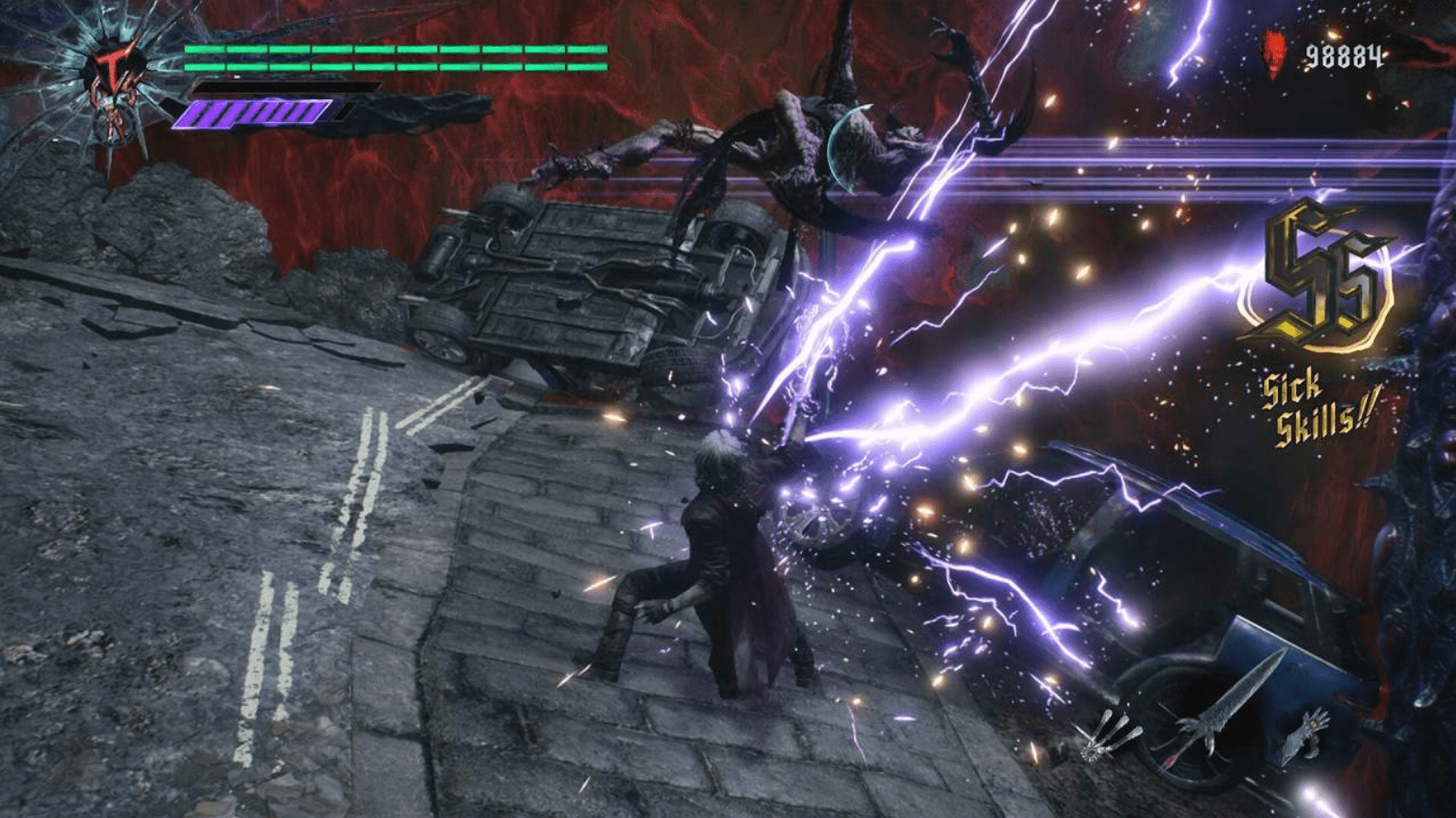
The setting is Red Grave City, a fictional European city that has been torn apart by the sudden appearance of a massive demonic tree called the Qliphoth. It has erupted from beneath the streets and is feeding on human blood to grow large enough to reach the heavens and grant its summoner godlike power. Three people stand in its way for very different reasons.
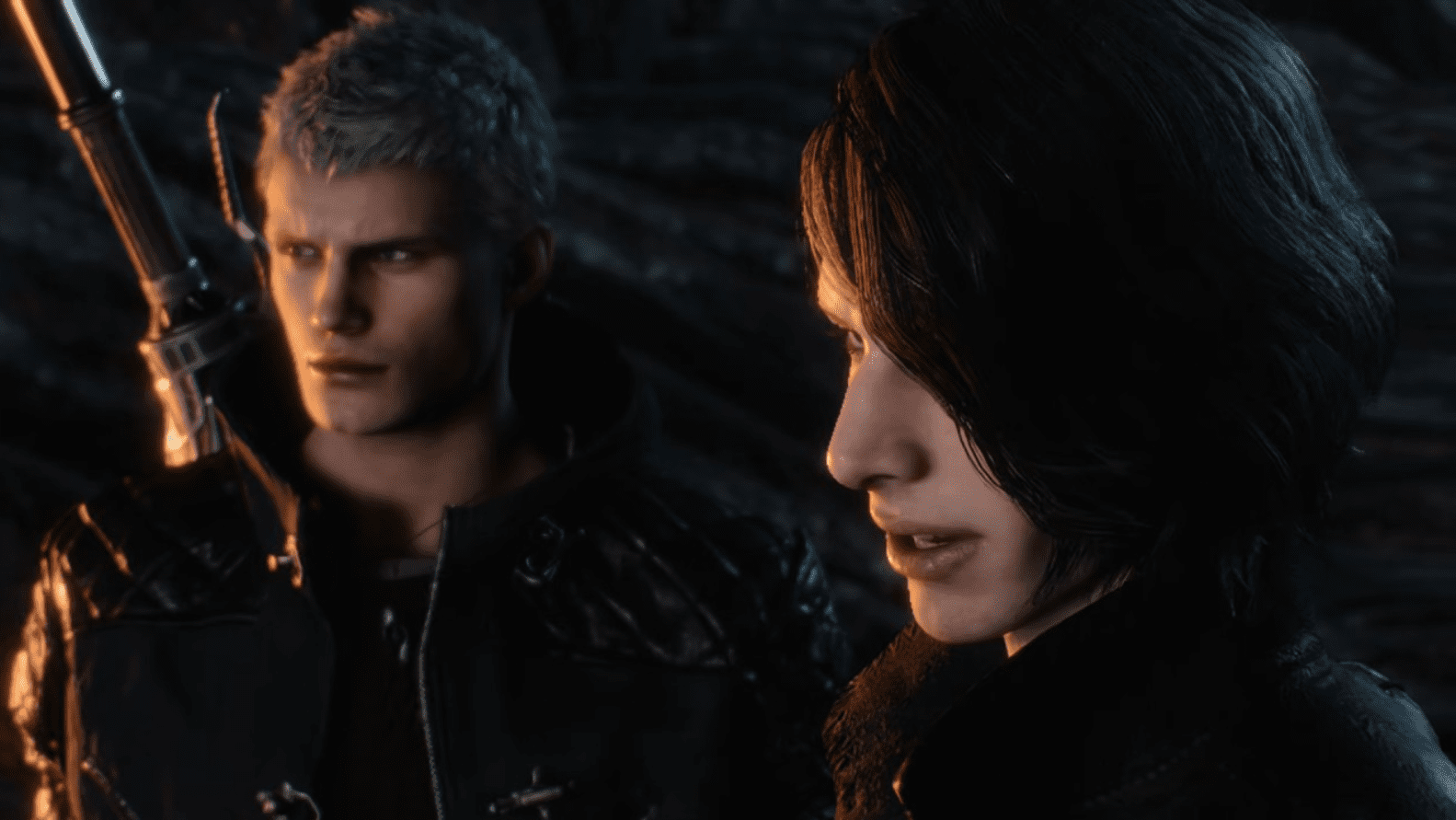
Nero opens the story and carries most of its emotional weight. Right from the first scene, before you have fired a single shot, he loses his Devil Bringer arm, the powerful demonic limb that defined his abilities throughout Devil May Cry 4. A hooded figure tears it off and walks away. That image of Nero kneeling in the street with one arm sets up everything that follows. His mission is personal in a way that goes deeper than just stopping the Qliphoth, and the game earns that personal angle by spending time on who he is and who matters to him.
Dante arrives carrying history. He knows more about what is actually happening in Red Grave City than either of the other characters, and watching him move through the crisis with that older, more settled version of his personality is one of the campaign’s consistent pleasures. He is rougher than he was in Devil May Cry 3, quieter in some ways, but still capable of turning the most absurd situation into something watchable.
V is the question mark. He shows up at the start of the game with no real explanation and a poetic affectation that either works for you or it does not. His actual role in the story is one of the most carefully constructed reveals in the franchise, and if you go in without already knowing how it unfolds, the payoff lands well. Understanding who V really is recontextualizes much of what you watched earlier in the campaign.
The game switches viewpoints across its missions, giving each character stretches of their own story before the threads converge. This structure works better than a single linear story would have because each perspective shows a different piece of the same event. By the time the final act brings all three together, you have a fuller understanding of why each of them ended up in the same place than you would have gotten from any single viewpoint alone.
The narrative does not pretend to be understated. There are giant demons, ancient rivalries, family dynamics played out through sword fights, and at least two moments so over-the-top that you either laugh or put the controller down. Most people laugh. The story knows exactly what kind of universe it is building and never flinches from it.
New players are not completely stranded. A built-in series recap covers the events of previous games. That recap handles the basics well enough to follow the main plot. But the emotional weight behind certain reunions and betrayals depends on knowing these characters from earlier games. If you have any interest in the franchise’s history, playing Devil May Cry 3 before starting DMC5 adds a significant amount to the experience. The official Capcom franchise page has a timeline that helps orient new players before they start.
The Combat System: Style Is the Point
Everything in Devil May Cry 5 exists to serve one goal: making combat feel incredible. Not just functional. Not just fair. Incredible.
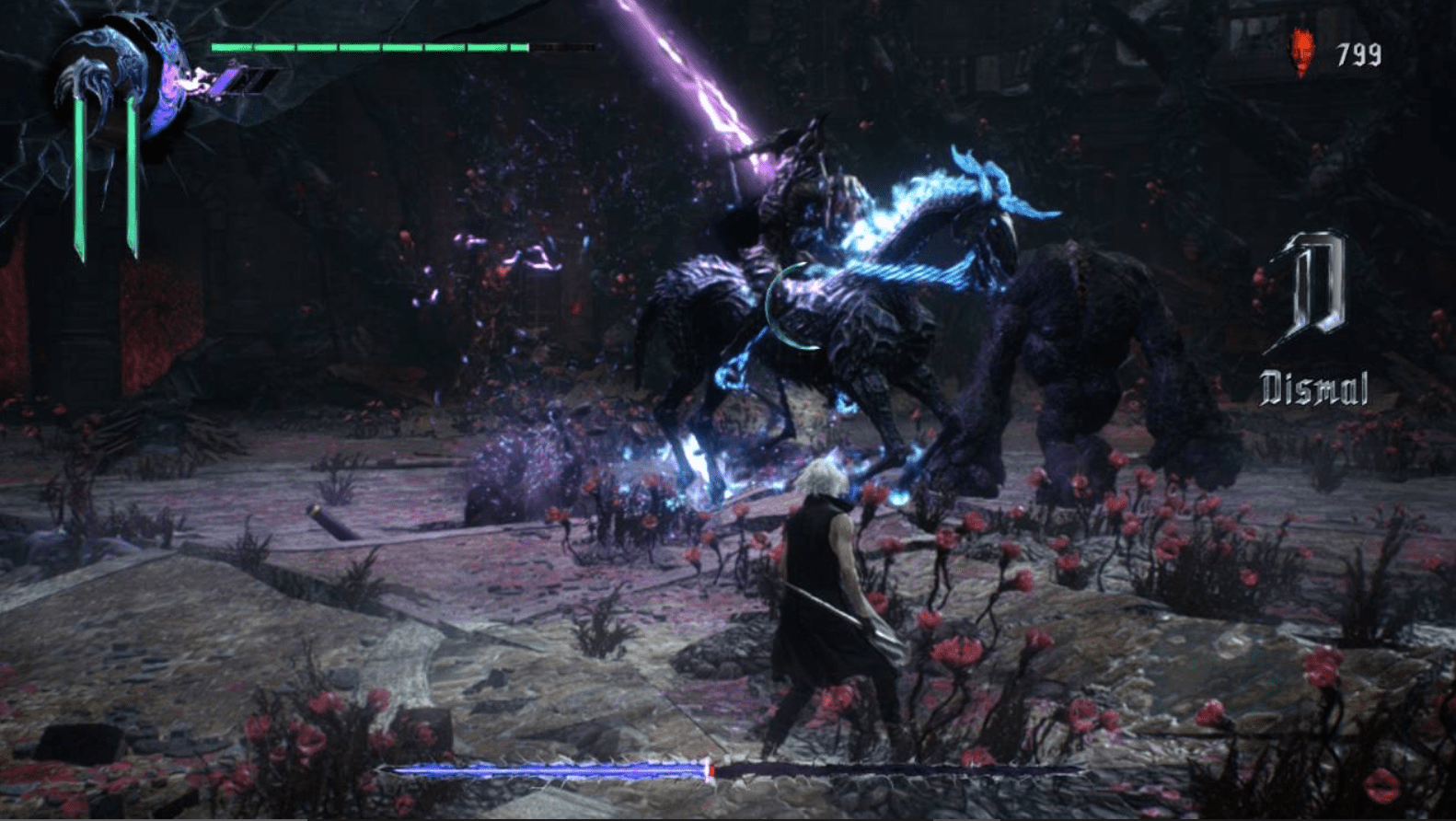
The foundation is the style ranking system. Every fight grades your performance in real time using a letter scale that runs from D at the bottom through C, B, A, S, SS, and SSS at the top. Your rank climbs when you hit enemies with variety, keep combos going, avoid getting hit, and mix up your attacks. It drops when you repeat the same move too many times, get struck by enemies, or stay still too long.
This creates a completely different relationship with combat than most action games build. The goal is not just to win. The goal is to win in a way that looks good. Every fight is a performance you are actively judging yourself on while it is happening.
When I first started playing, I spent most of my time in the C to B range, surviving encounters by mashing and hoping. The moment things genuinely changed for me was during a mid-game mission where I accidentally chained together a Nero aerial combo, switched weapons mid-air, extended the chain with a Devil Breaker, and finished with a charged strike that sent the style meter to SS for the first time. It was not planned. It just happened because I had absorbed enough about how the system worked that my hands started making decisions without me consciously directing them. That is the feeling the game is building toward from the first mission.
Devil May Cry 5 almost never forces improvement on you through hard walls or mandatory tutorials. You can finish the whole campaign on Devil Hunter difficulty with sloppy combat and still have a decent time. But the game is always showing you what a better version of that same fight could look like, and chasing that better version is where most of the game’s actual depth lives.
Playing as Nero: Start Here
Nero is the practical starting point for players new to the series. His toolkit is the most focused of all four characters, which makes it easier to build good habits without getting lost in menus and move lists during your first few hours.
His primary weapon is the Red Queen, a sword with a motorcycle-style engine built into the handle. The Exceed mechanic lets you rev this engine between attacks by hitting the attack button precisely as the yellow indicator flares after each swing. One successful rev adds one charge, up to three stacked charges total. Those charges add fire damage and additional strike force to the next attack. Nailing the timing consistently takes real practice. Once it becomes natural, the payoff in both damage and style is immediate.
His ranged weapon is the Blue Rose, a double-barreled revolver. Standard shots handle interrupts and crowd pressure. Holding the trigger charges a shot that detonates on contact for additional explosion damage. It is not the most versatile gun in the game, but it covers what Nero needs at range.
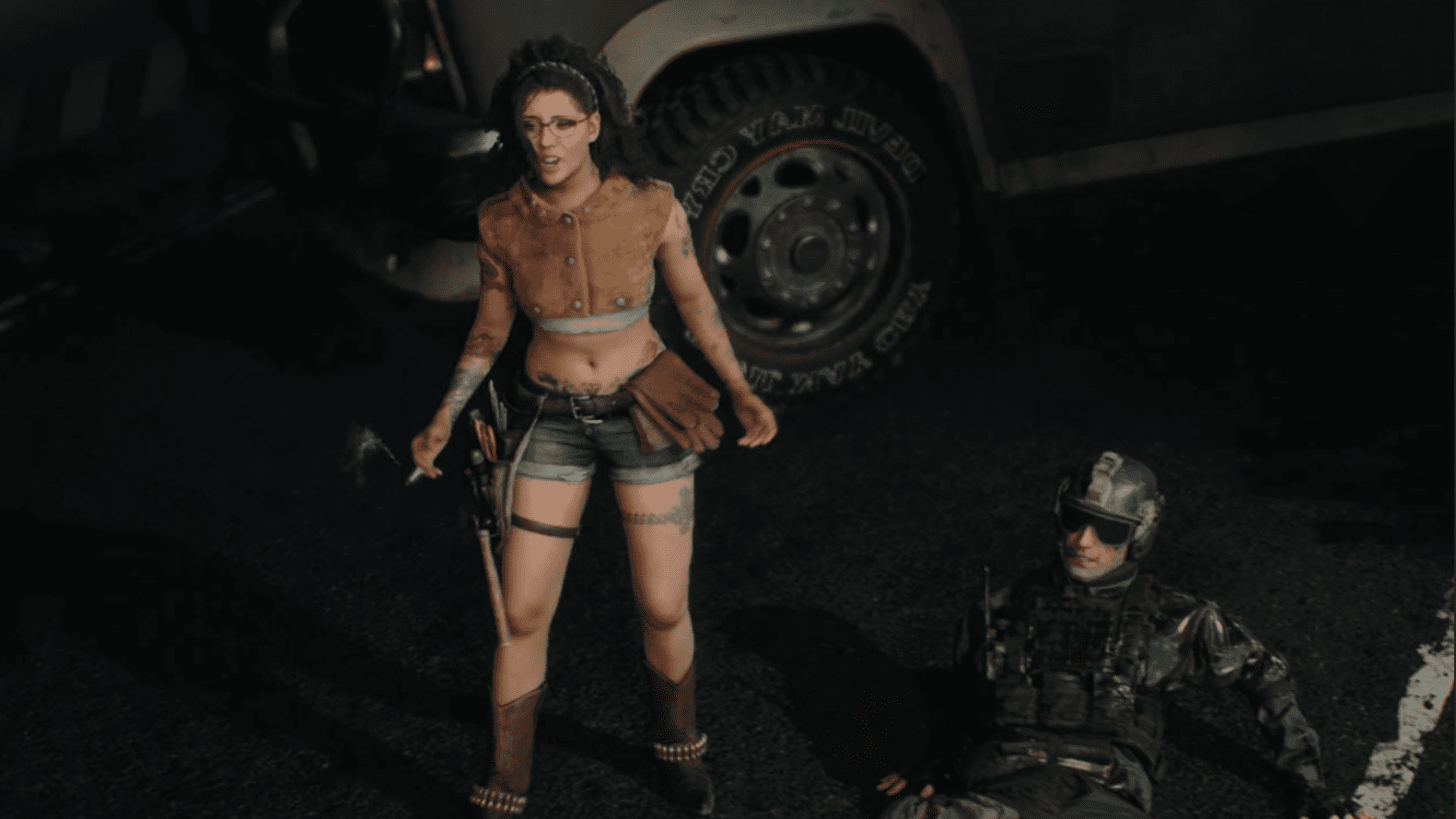
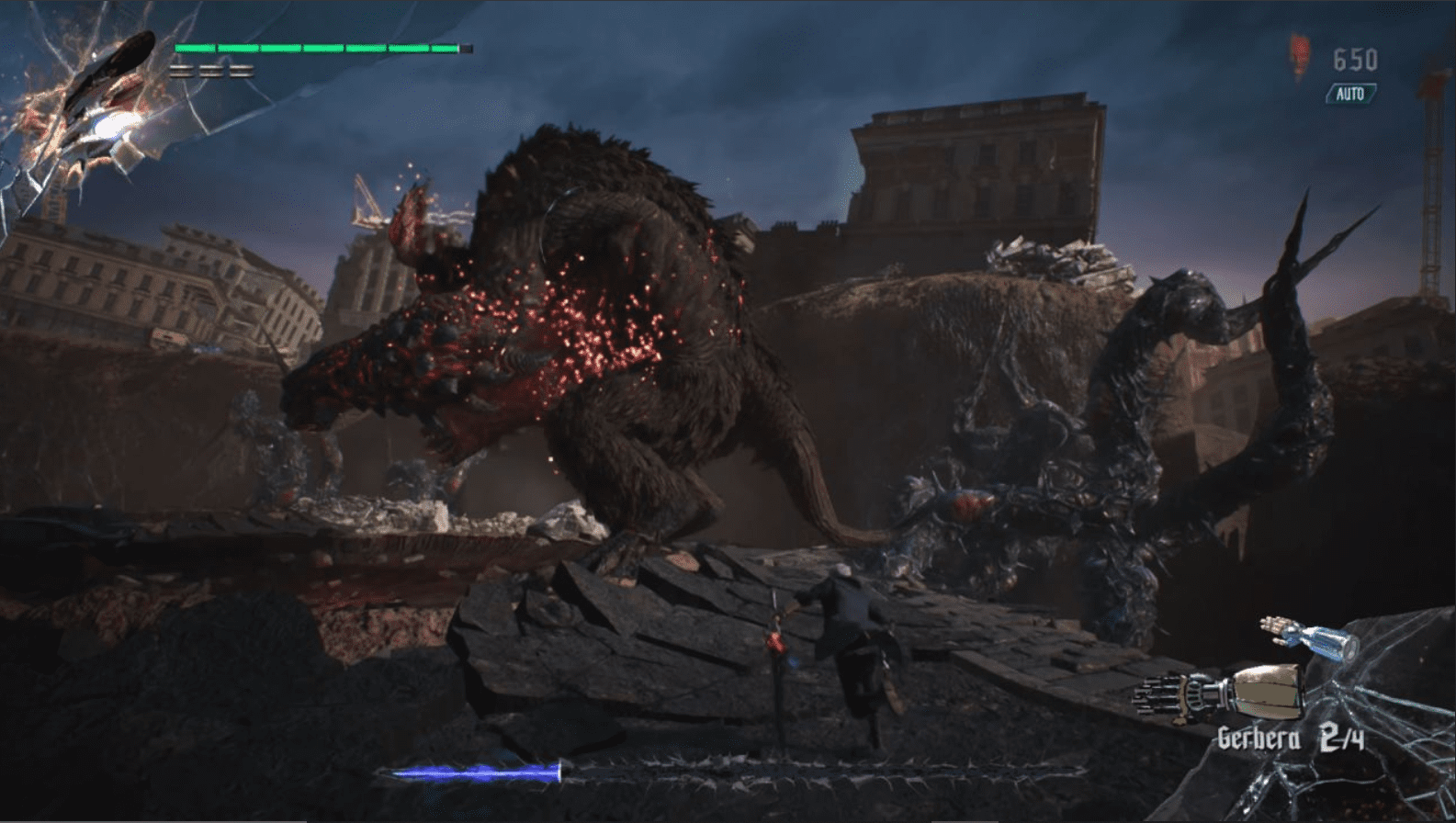
The defining mechanic for DMC5 Nero compared to his Devil May Cry 4 version is the Devil Breaker system. These are mechanical prosthetic arms built by Nico, his traveling mechanic and weaponsmith. Each arm has a standard function activated by pressing the action button and a more powerful burst mode that activates with a longer hold but destroys the arm when fired. You carry multiple arms into missions and can only access them in sequence, so managing which arms you have and when to burn them is part of Nero’s strategic layer.
The Devil Breakers available in Devil Hunter Edition include:
- Overture: The starting arm. Fires an electric discharge. Solid general-purpose tool and reliable for the first several missions.
- Gerbera: Fires a repulsion blast that also functions as a dodge and repositioning tool. One of the most versatile arms in the game once you understand it. The burst mode launches Nero backward with enough force to completely reposition in a large arena.
- Ragtime: Creates a slow-motion field around nearby enemies. This arm completely changes the pace of a fight by giving you free time to set up longer combo strings without incoming attacks interrupting them. Extremely strong in boss fights.
- Punchline: Launches a rocket arm that flies around the arena and deals continuous damage. Useful when dealing with spread-out enemy groups at range.
- Tomboy: Overclocks the arm and sacrifices its grabbing function in exchange for a massive boost to both Red Queen sword damage and Blue Rose bullet damage. Strong against single tough enemies.
- Buster Arm: A large mechanical arm built for raw close-range power. Its burst mode triggers unique grab animations against most bosses, dealing enormous damage in a single activation. One of the most satisfying weapons in the game to use correctly against major enemies.
- Helter Skelter: A drill-based arm. Strong sustained damage against single targets.
- Rawhide: A whip arm that excels at controlling multiple enemies at once. Good for crowd management missions.
Nero also gains access to his Devil Trigger transformation as the campaign progresses. This boosts his speed and damage, provides passive health recovery while active, and summons a spectral projection that mirrors his melee attacks with additional sword strikes. Learning when to activate it rather than saving it passively is one of the first real decision-making habits to develop.
Playing as Dante: The Deep End
Dante is where Devil May Cry 5 opens up into something genuinely complex. His toolkit is enormous, and using all of it effectively is a project that takes more than a single playthrough to approach seriously.
The core of his system is four combat styles that you cycle through in real time using the directional pad. Each style changes what his dodge and action buttons do, meaning one physical button performs completely different moves depending on which style is currently active.
The four styles are:
- Swordmaster: Extends Dante’s melee weapons with additional special attacks. Every weapon he carries gains new moves in this style. Cavaliere, his motorcycle chainsaw weapon, has especially strong Swordmaster moves for clearing multiple enemies quickly.
- Gunslinger: Adds special functions to his entire ranged arsenal. Charges the Coyote-A shotgun for a shockwave, activates the Kalina Ann rocket launcher’s grapple hook, makes the Dr. Faust hat spin and generate Red Orbs from enemy health. Some of the most visually spectacular moves in the game come from Gunslinger combinations.
- Trickster: Focused entirely on movement. Lets Dante dash multiple times in quick succession and adds aerial mobility options. The most approachable style for new Dante players and useful for learning the flow of fights before committing to more complex styles.
- Royal Guard: A risk and reward defensive style. Holding the style button just before an enemy attack lands absorbs the damage into a stored energy gauge rather than letting it through. Release that stored energy with the melee button for a powerful counterattack. The timing window for a successful guard is tight. Mastering Royal Guard raises Dante’s ceiling higher than any other element of his kit but takes genuine focused practice to use effectively under pressure.
Beyond styles, Dante carries multiple melee weapons and multiple ranged weapons at once, cycling between them freely mid-combo. His weapon set expands over the campaign and includes:
- Rebellion (his signature broadsword)
- Ebony and Ivory (twin pistols, always available)
- Coyote-A (short-range shotgun)
- Cavaliere (motorcycle split into two giant saw blades)
- King Cerberus (nunchaku-style weapon with fire, ice, and lightning elemental modes)
- Balrog (boxing gloves and boots that shift between a quick striking mode and a powerful charging mode)
- Dr. Faust (a hat that consumes Red Orbs to deal damage and generate style, rewarding players who build up large Orb reserves)
- Kalina Ann (rocket launcher with a grapple function for air mobility)
- Double Kalina Ann (dual rocket launchers acquired later in the campaign)
Every weapon has its own move set. Swordmaster and Gunslinger add additional moves on top. The mathematical number of possible attack combinations Dante has available in a single fight is genuinely staggering, and the game rewards players who explore that possibility space by creating encounters where specific weapons and style combinations work notably better than others.
His Devil Trigger transforms him into a demonic form that boosts all stats and regenerates health. The Sin Devil Trigger, unlocked later in the campaign, is even more powerful and among the most visually impressive abilities in any action game on the market.
Playing as V: A Different Kind of Fight
V does not attack enemies himself. He commands three demonic familiars and uses them to do all the actual fighting while he moves carefully around the battlefield.
Shadow is a panther made of liquid darkness. She handles close-range combat and can reshape her body into blade and spike configurations for different attack patterns. She attacks autonomously when near enemies but responds to direct player commands for more precise targeting.
Griffon is a sarcastic and frequently complaint-heavy bird familiar who handles ranged lightning attacks and aerial combat. He is the more controllable of the two primary familiars and is easier to direct toward specific targets because of his ranged nature.
Nightmare is a massive stone and shadow golem that requires V to build up enough Devil Trigger energy before summoning. Once active, Nightmare moves through the battlefield and devastates everything in range. V can also jump onto Nightmare and ride him for a period of enhanced power.
V cannot finish enemies off himself through normal damage. Shadow and Griffon must weaken enemies to critical health, at which point the enemy glows red and V can approach and strike with his cane to deliver the killing blow. This finishing strike is mandatory for defeating enemies with V. Familiars cannot make the kill on their own.
This creates a rhythm unlike anything else in the game. V fights are about positioning, familiar management, and moving efficiently between weakened enemies to collect kills before the familiars lose health themselves. Both Shadow and Griffon can be knocked out temporarily if they absorb too much damage, leaving V vulnerable. Managing their health while also directing attacks requires paying attention to multiple things at once in a way that feels genuinely different from Nero or Dante missions.
Some players never click with V. His combat is legitimately more passive than the other characters, and if the appeal of DMC5 for you is direct melee combat expression, his missions can feel like interruptions. What they actually do is break up the campaign rhythm usefully and give the narrative space to develop his story in a way that fighting-focused missions would not support.
His Devil Trigger summons all three familiars in their enhanced states simultaneously. During this period, the battlefield becomes complete, controlled chaos.
Playing as Vergil: Precision Over Everything
Vergil’s campaign comes with Devil Hunter Edition and takes a different approach to storytelling. His missions use streamlined presentation that keeps the focus almost entirely on combat. There is context for what he is doing and why, but the game does not dwell on it. Vergil’s content is for players who want to fight.
His primary weapon is the Yamato, a katana capable of cutting through physical matter and dimensional space simultaneously. The Yamato’s attacks are precise and fast, dealing targeted damage with each clean strike.
His physical combat option is Beowulf, a set of gauntlets and boots that trade the Yamato’s speed for heavier, more devastating blows. Beowulf combos build power through extended sequences and finish with strikes that deal enormous single-target damage.
Mirage Edge is a phantom sword he summons when his other weapons are not active. It functions similarly to Dante’s Rebellion but with slightly different combo timing that rewards players who understand the differences rather than treating it as a straight substitute.
Vergil’s defining mechanic is Concentration. His damage output and attack speed both increase the calmer and more deliberate his movements are. Moving with purpose rather than sprinting builds Concentration stacks. Spending time dashing, running, or moving erratically drops them. A Vergil player who moves carefully between bursts of precise attacks maintains higher Concentration throughout a fight and deals dramatically more damage than one who fights with frantic movement habits.
Summoned Swords are passive weapons Vergil generates automatically that can be directed at enemies, arranged into formations, or detonated for area damage. Managing active Summoned Swords alongside melee combos gives Vergil a multidimensional attack layer that high-level players use to fill gaps between sword strikes with continuous ranged pressure.
His Judgment Cut and Judgment Cut End abilities are among the most satisfying special moves in the game to execute well. Judgment Cut End in particular, used correctly during the right moment in a boss fight, is the kind of move that makes you put the controller down for a second just to appreciate what happened.
Full Controller Button Layout Guide: Xbox and PC
This section covers every default button mapping in detail for Xbox controller play on console and PC, as well as the PC keyboard and mouse layout. If you are new to the series or coming back after a long break, having this reference while you build muscle memory saves real time.
Xbox Controller Full Layout (Default, All Characters)
The Xbox controller is the recommended input method for DMC5 on both console and PC. The game was designed with analog input in mind, and techniques like Exceed timing on Nero and analog lock-on adjustments feel more natural on a gamepad than keyboard.
Left Stick: Move your character in any direction. Light tilt produces a walk. Full tilt produces a run. The angle of the stick during combo inputs changes attack direction and trajectory, which matters for keeping airborne enemies positioned correctly during aerial combos.
Right Stick: Manual camera control. Push in any direction to rotate the camera angle around your character. The camera has automatic adjustment during most combat situations, but manual correction is useful in tight spaces and during boss fights with specific positioning requirements.
Left Stick Click (L3): Toggle lock-on. Pressing this button locks your character’s facing direction and attack orientation onto the nearest enemy within range. Pressing it again releases the lock. Holding L3 while there are multiple enemies cycles the lock target. Lock-on is essential for maintaining combo direction during fights with three or more enemies spread across an arena.
Right Stick Click (R3): Centers the camera directly behind your character. Use this when the automatic camera has drifted during a long fight or when you lose visual track of your character against a busy background.
A Button: Jump. Press once to jump, press again while airborne for a double jump. Some characters have hover behavior when A is held during the airborne state. Dante can perform specific aerial stalls in certain combat states by holding A after a jump.
B Button: Devil Trigger activation. Holds the gauge requirement check. Press when your Devil Trigger meter has enough charge to transform. The transformation timer lasts until the gauge empties. Activating DT mid-combo does not interrupt the combo, which is important for style rank continuity.
X Button: Context-sensitive action. Interacts with Red Orb clusters, large Orb deposits embedded in surfaces, and specific environmental trigger points during missions. Also used for certain upgrade interactions at Nico’s van.
Y Button: Style Action. This button’s function depends entirely on the active character and, for Dante, the active style. For Nero, it activates the current Devil Breaker’s standard function or charges toward its burst mode with a longer hold. For V, it summons Nightmare when the Devil Trigger gauge is sufficient. For Vergil, it activates Summoned Swords special moves.
Right Bumper (RB): Melee attack. The primary attack button for all characters. Tap repeatedly for basic combo strings. Combine with directional input and jump timing for extended aerial and ground combos. Different inputs on RB at different points in a combo chain produce different results, and learning which RB input goes where in a sequence is how combo variety develops.
Left Bumper (LB): Ranged attack. Fires the current equipped ranged weapon for all characters. For Nero, fires the Blue Rose. For Dante, fires the currently selected ranged weapon from his loadout. For V, commands Griffon to attack the locked target.
Right Trigger (RT): Alternate lock-on hold. Works as a soft lock-on that is active only while held rather than toggled. Some players prefer this for temporary targeting during positioning changes without committing to a full toggle.
Left Trigger (LT): Secondary ability input. For Nero, holding LT while pressing RB performs a charged Red Queen strike incorporating the current Exceed level. For Dante, holding LT activates special Swordmaster or Gunslinger weapon ability inputs depending on the active style. For V, holding LT commands Shadow directly.
Directional Pad Up: Cycles to the next Devil Breaker in Nero’s current loadout. For Dante, cycles through available styles moving upward on the style list.
Directional Pad Down: Breaks and discards the current Devil Breaker as Nero, triggering a brief explosion that can damage nearby enemies. Use this intentionally to clear a Breaker you no longer want before accessing a more useful one in the sequence. For Dante, cycles styles downward.
Directional Pad Left: Cycles Dante’s melee weapons to the previous weapon in his loadout sequence. This input works mid-combo without interrupting the current attack string, enabling mid-combo weapon switches that are central to high-level Dante play.
Directional Pad Right: Cycles Dante’s melee weapons to the next weapon in the sequence. Same mid-combo functionality as left.
Start Button (Menu): Opens the pause menu. From here you can review mission stats, adjust audio and display options, view character info, and quit the current mission.
Back Button (View): Opens the in-mission shop. This shop lets you spend Red Orbs on health-restoring items, revive orbs, and other consumables mid-mission without returning to Nico’s van.
Nero Specific Xbox Control Details
Exceed charge timing: After each Red Queen swing, a brief yellow indicator appears at the edge of the screen. Pressing RB precisely during this window charges one Exceed level. Three consecutive successful charges maximum before the next attack fires. The window is tight and varies slightly by attack type. Most players spend their first few hours getting this timing inconsistently and should not worry about perfecting it early.
Snatch (Y near enemy at ground level): Nero’s Devil Breaker grabs an enemy and either pulls them toward him or launches them into the air depending on the distance at the moment of activation. This is the main tool for getting aerial combos started consistently.
Aerial Snatch (Y while airborne near enemy): Grabs a nearby airborne enemy and slams them downward. Useful for repositioning enemies that have drifted too far during aerial sequences.
Devil Breaker Burst (Hold Y then release): Charges the current Devil Breaker’s more powerful second mode and releases it on release of the button. This destroys the arm. Each arm’s burst function is distinct. Overture fires a larger electric blast. Gerbera launches Nero backward with force. Ragtime deploys the slow-motion field. Buster Arm initiates a unique grab finisher on most standard enemies and bosses.
Charged Blue Rose (Hold LB): Charges the Blue Rose for an explosive-tipped shot. The charge time is short. The explosion on contact deals additional area damage and can hit multiple nearby enemies simultaneously.
Dante Specific Xbox Control Details
Weapon cycling mid-combo: Pressing left or right on the directional pad between individual hits in a combo string swaps the active melee weapon without interrupting the combo. A combo can contain hits from three or four different weapons if the cycles are timed between strikes. This is the core mechanic behind Dante’s most impressive combo sequences.
Ranged weapon cycling (LB hold and directional pad): Dante cycles his equipped guns independently from his melee weapons. This means both weapon slots can be changed during a single extended combo.
Trickster Sky Star (Y in Trickster, airborne): Performs a fast dash in the direction of the left stick while in the air. With the upgrade purchased, this can be used a second time before landing. Combined with double jump, this gives Dante significant vertical and horizontal aerial mobility.
Royal Guard absorb (Hold Y in Royal Guard before impact): The timing window is tighter than a standard dodge. A successful absorption stops all damage and the screen flashes briefly to confirm. The stored gauge drains over time and must be released through an RB plus Y input to use the stored energy offensively.
Stinger (Hold RB, no directional input): Dante rushes forward with a fast horizontal thrust. Covers ground quickly and is one of the most reliable combo starters in his kit. Works with Rebellion, Cavaliere, and Mirage Edge.
High Time (Hold up on left stick plus RB): Dante launches himself or the enemy upward. Pressing the input toward an enemy launches the enemy. Pressing without an enemy targeted launches Dante himself into the air. Knowing when to use each version is a key Dante skill.
V Specific Xbox Control Details
Shadow command (Hold LT): Shadow attacks the currently locked-on enemy while LT is held. Shadow acts autonomously without this input but less efficiently. Holding LT for focused attacks makes Shadow significantly more aggressive toward a specific target.
Griffon command (Hold LB): Griffon fires lightning attacks at the locked target while LB is held. Releasing LB returns Griffon to autonomous behavior.
Nightmare summon (Y when DT gauge is sufficient): Nightmare appears and begins attacking autonomously. V can run toward Nightmare and press Y again to climb onto him for a riding state with enhanced abilities.
Finishing strike (RB near enemy with red glow): When Shadow or Griffon has lowered an enemy to critical health, the enemy glows red and V can approach and press RB to strike with his cane and deliver the kill. This step is mandatory. V cannot end a standard fight without performing this closing strike.
PC Keyboard and Mouse Default Layout
Keyboard controls work and can get you through the game, but they have real limitations compared to a gamepad for DMC5 specifically. Analog stick input for precise movement during aerial combos, Exceed timing with gamepad analog triggers, and directional dodge inputs all feel meaningfully better on a controller. If an Xbox, PlayStation, or third-party gamepad is available for your PC setup, using it is the right call. If keyboard is your only option, here is the full default layout.
W key: Move forward.
S key: Move backward.
A key: Move left / strafe left.
D key: Move right / strafe right.
Spacebar: Jump. Press again while airborne for double jump.
J key: Melee attack (equivalent to RB on controller). Primary combo input.
K key: Ranged attack (equivalent to LB on controller).
I key: Style Action and Devil Breaker action (equivalent to Y button).
L key: Devil Trigger activation (equivalent to B button).
U key: Lock-on toggle.
Q key: Cycle melee weapon left (Dante).
E key: Cycle melee weapon right (Dante).
1 key: Cycle ranged weapon to previous (Dante).
2 key: Cycle ranged weapon to next (Dante).
Arrow Up: Next Devil Breaker (Nero) / Style cycle up (Dante).
Arrow Down: Discard Devil Breaker (Nero) / Style cycle down (Dante).
Arrow Left: Cycle melee weapons left (alternative for Dante).
Arrow Right: Cycle melee weapons right (alternative for Dante).
Mouse Movement: Camera control in all directions.
Right Mouse Button: Lock-on. Click to engage, click again to release.
Left Mouse Button: Secondary action input (context varies by character and situation).
Escape or P key: Pause menu.
Tab key: In-mission shop.
F key: Interact with environment objects.
The game supports full key remapping through the options menu, and many PC players who prefer keyboard set up custom bindings that feel more natural for their hand positioning. The defaults above are functional but not necessarily optimal for every player.
Advanced Input Techniques Worth Learning Early
These techniques go beyond the default control reference and represent habits that separate average play from genuinely stylish play. None of them require special hardware. All of them reward practice in the Void training room before applying to real missions.
Instant Air Taunt: Performing a taunt animation while airborne, then immediately canceling into a combo, generates style points quickly without exposing you to ground-level attacks. Skilled players weave these into aerial sequences to maintain or boost rank between hits.
Nero Exceed Stacking: Rather than firing one Exceed charge at a time, practicing the timing to stack all three charges during a short combo string and then landing a fully charged attack deals significantly more damage than the same number of hits without charges. Getting this timing automatic across Red Queen’s different combo strings is one of the best investments of practice time for Nero players.
Dante Mid-Combo Weapon Switch: Pressing the weapon cycle input between individual hits of a combo string without any gap in the attack rhythm is what separates a five-hit combo from a twenty-hit combo using multiple weapons. Start by practicing two-weapon transitions, then add a third once the timing is consistent.
Vergil Concentration Movement: Walk rather than sprint between engagements as Vergil. The instinct when moving across a large arena is to sprint, but walking builds Concentration stacks that sprinting drains. Getting into the habit of walking to your next target position and then engaging with built-up Concentration dramatically changes how his fights feel.
Royal Guard Release Timing: When Royal Guard’s stored gauge is high, releasing it into a crowd of enemies deals area damage proportional to what was stored. Timing the release during an enemy’s recovery animation after their own attack means they cannot dodge out of the way. The damage output from a fully loaded Royal Guard release against a boss is among the highest single-hit numbers in Dante’s entire toolkit.
Red Orbs, Upgrades, and the Progression System
Red Orbs are the game’s currency. You collect them from defeated enemies, breaking environmental objects, finding hidden deposits in levels, completing secret missions, and performing well enough in combat that post-mission bonuses add to your total.
Spending Red Orbs at Nico’s van between missions or at the in-mission shop during play unlocks new abilities for each character. Upgrade trees are separate for every playable character. Spending Orbs on Nero’s abilities does nothing for Dante’s, and vice versa.
For Nero, the highest priority early upgrades are:
Max Act, which automates Exceed charging to some degree and makes keeping the engine revved significantly easier during complex combo sequences. Air Hike, the double jump ability, opens up the entire aerial combat dimension of his kit. Payline and Split add combo extensions that give you more options during airborne sequences. The Buster Arm unlock, if not already included in your Devil Hunter Edition loadout, should also come early because of how dramatically it changes boss fight feel.
For Dante, prioritize mobility first. Trickster’s Sky Star upgrade allows a second mid-air dash and immediately makes him feel far more mobile during fights. After that, one or two Swordmaster upgrades for whatever weapon you use most frequently will add enough combo variety to keep combat feeling fresh through the first half of the campaign. Royal Guard upgrades are worth investing in once you commit to learning the style seriously, but they can wait until your second playthrough if you are not already comfortable with the timing.
For Vergil, Trick Down is the priority teleport move that allows downward repositioning during aerial sequences, which otherwise leave him more exposed than Dante. Beowulf aerial combo upgrades make his air game much stronger early. Additional Summoned Swords passive damage upgrades compound over long fights and are strong investments for Bloody Palace runs.
Secret Missions: Hidden Challenges With Real Rewards
Twelve secret missions are hidden throughout the main campaign. Each one is triggered by finding a glowing sigil somewhere in a mission’s environment and standing in a specific spot relative to it so the symbol lines up and activates. Some are obvious enough that you may stumble across them without looking. Others require deliberate exploration of areas off the main path.
The challenges themselves are short scenarios with specific completion conditions. Some ask you to finish a fight without taking a single hit. Others require reaching an objective within a strict time limit, or defeating enemies using only one specific attack type.
Each completed secret mission rewards a Blue Orb fragment. Collecting four fragments creates one complete Blue Orb, which permanently increases your maximum health. Finding all twelve and completing each challenge adds a meaningful health buffer that makes later difficulty levels more manageable.
A few of the secret missions are genuinely hard and may not be completable on a first attempt without specific upgrades or character knowledge you have not yet developed. Returning to them after upgrading your character is entirely valid. The game does not penalize you for coming back to earlier missions with a more developed build.
Bloody Palace: The Real Endgame Test
Bloody Palace is a 101-floor survival mode that operates independently from the main campaign. Each floor presents a combat encounter that must be cleared before the elevator to the next level opens. The encounters grow progressively more demanding as you climb, and no saving is permitted between floors. A single death ends the run entirely.
The early floors through about 40 are manageable for anyone who has finished the main campaign on Devil Hunter difficulty. The middle floors increase enemy combination difficulty and start introducing elite versions of standard enemies with enhanced health and aggression. From floor 70 upward, Bloody Palace requires a real understanding of your chosen character’s complete toolkit and the ability to execute under sustained pressure.
Floor 101 ends with a boss encounter. The identity of this boss is a genuine motivation to reach it, and clearing Bloody Palace for the first time with any character feels like a meaningful achievement rather than a formality.
Each character has their own independent Bloody Palace completion record. Clearing it with Nero does not count toward Dante’s completion. For players aiming for full character mastery, Bloody Palace adds hundreds of hours of content beyond the main campaign across all four characters.
For players who find the main campaign comfortable on Son of Sparda difficulty or above, Bloody Palace is where sustained challenge lives. The Dual Shockers DMC5 strategy guides have solid floor-by-floor breakdowns if you get stuck in the higher sections.
Difficulty Settings: Which One Is Right for You
Devil May Cry 5 has six difficulty settings, with an additional unlockable mode available after completing the main campaign.
Human difficulty is the lowest setting. Enemy aggression is minimal, on-screen assistance prompts appear regularly, and the game is forgiving enough that basic button input gets you through without learning much. Only recommended for players who have never played an action game and want a completely guided introduction.
Devil Hunter difficulty is the default and intended first-playthrough setting. Enemy behavior is balanced to teach combat gradually without overwhelming beginners. This is where most players will spend their first 15 to 20 hours and where the game’s pacing works best for a narrative-focused experience.
Son of Sparda difficulty unlocks after completing Devil Hunter. Enemy placement in missions changes. New enemy types appear in missions where they were not present before. Enemies that appeared alone on Devil Hunter now appear in groups. This is the first difficulty where the combat system genuinely gets tested and where the differences between a good and a great understanding of each character become obvious.
Dante Must Die difficulty unlocks after Son of Sparda. Enemy aggression increases significantly. Damage output from enemies goes up. Standard enemies can activate their own Devil Trigger transformations, boosting their speed and power temporarily during fights. This difficulty is only recommended after multiple playthroughs on lower settings.
Heaven or Hell difficulty is a special mode where every entity in the game, including your character, dies in one hit. Your attacks kill enemies instantly. Enemy attacks kill you instantly. This creates extremely tense, fast, positioning-focused encounters where the person who lands the first solid hit wins. It sounds simple but becomes genuinely gripping in boss fights.
Hell and Hell difficulty removes the symmetry of Heaven or Hell. Your attacks still kill enemies in one hit, but your character also dies in one hit while enemies retain their normal health totals. The most demanding and punishing setting in the game, requiring essentially perfect avoidance throughout every mission.
Visuals and Performance on Current Hardware
Devil May Cry 5 was built on Capcom’s RE Engine, the same technology foundation behind Resident Evil 2, Resident Evil Village, Monster Hunter Rise, and Dragon’s Dogma 2. Six years after the original release, the game still looks genuinely impressive, which is a strong testament to how well the engine was utilized.
Character models for the main cast are among the most detailed in the genre. The facial animation system received particular attention during development, and expressions during cutscenes carry real nuance. Nero’s frustration during early missions, Dante’s subtle shifts between his performative humor and genuine gravity during more serious moments, and V’s physical frailty communicated through posture and movement all come through clearly.
Combat visual effects remain spectacular and, importantly, readable. When Dante activates Sin Devil Trigger and the screen fills with summoned swords, explosive impacts, and lighting effects, the RE Engine handles all of it without the visual chaos overwhelming your ability to read what is happening. Enemy designs are distinct enough from character visual effects that tracking both simultaneously during dense fights remains possible.
On PC, the game runs at 60 frames per second on mid-range hardware at 1080p without significant optimization effort. Higher-end systems push well beyond that. Higher frame rates genuinely improve input response feel and combo timing precision, which is meaningful for players investing time in high-level play. This is one of the few action games where running at 120 frames per second or above produces a tangible gameplay benefit beyond visual smoothness.
The environment design is stronger in the first half of the campaign than the second. Red Grave City’s surface areas, the underground infrastructure beneath the streets, and the outer sections of the Qliphoth tree each have distinct visual identities. As the campaign moves deeper into the Qliphoth, the organic architecture becomes more abstract and uniform. Some players find the aesthetic interesting as a deliberate design choice reflecting the increasingly alien nature of the setting. Others find the visual similarity across late-game areas makes them harder to distinguish in memory after the fact. Both reactions are valid.
Boss designs across the full campaign are consistently strong. Each major encounter introduces an enemy that looks unlike anything seen before in the game and requires a different approach mechanically. The quality and variety of boss fights in DMC5 is one of the clearest ways the game outpaces most action genre contemporaries.
The Soundtrack: Music That Responds to You
The DMC5 soundtrack has a design feature that most players notice within the first few fights even if they cannot immediately identify what is different. The music responds to your style rank in real time.
At D and C rank, you hear the background instrumentation of each track. Vocal and melody layers begin entering as you climb toward A and S rank. By the time you hit SSS rank and maintain it for several seconds, the complete version of each track plays with every layer audible. Dropping back down strips those layers away again in real time.
This creates a direct feedback loop between performance and how the game sounds. Playing well does not just look better. It sounds better. When your rank drops after a poorly timed input, the music changes along with it. The connection makes the whole experience feel more alive than games with static background music, and it is one of those design decisions that is hard to un-notice once you know it is there.
The individual tracks hold up extremely well. Nero’s combat theme “Devil Trigger” became one of the most recognizable video game compositions of 2019. Dante’s “Crimson Cloud” builds well over extended fights in a way that rewards longer, more complex combat sessions. Vergil’s “Bury the Light” achieved genuine popularity well beyond the game’s audience and remains one of the strongest pieces of music ever produced for the franchise.
Devil Hunter Edition includes three classic tracks from earlier games in the series, selectable as alternate boss battle music. For longtime fans, hearing the Devil May Cry 3 battle theme play over a challenging DMC5 boss fight is a genuinely satisfying use of the content.
Voice acting is strong where it matters most. Dante’s English voice performance captures everything the character needs to be, and his delivery of certain lines in the later missions is some of the best work the character has received across the full series. Supporting cast performances vary. Some feel completely right, and others are a degree more exaggerated than the moments they are performing in require. The alternate voice options included in Devil Hunter Edition let players find the cast combination that works best for their preferences.
How DMC5 Fits Into the Larger Character Action Landscape
Understanding where Devil May Cry 5 sits within the broader action game world helps calibrate expectations and appreciate what it does distinctly.
The Bayonetta series, covered in depth by outlets including Eurogamer, approaches style-based combat through transformation and transformation-linked weapon variety. Bayonetta prioritizes visual spectacle and rhythmic dodge timing over the kind of technical depth DMC5 builds. Both games reward good play generously. Their skill ceilings are different shapes rather than different heights.
Sekiro: Shadows Die Twice from FromSoftware, which Metacritic recorded as one of 2019’s highest-scoring releases alongside DMC5, focuses on posture management and defensive timing in a way that complements DMC5’s offensive expression rather than competing with it. They ask for different core skills.
Metal Gear Rising: Revengeance, recently reissued and finding a new audience, occupies adjacent space with its precision cutting system but has a significantly narrower character toolkit. The depth of its combat system compared to DMC5’s is considerably shallower for players seeking hundreds of hours of mechanical engagement.
DMC5’s specific achievement is occupying the position of most mechanically complex action game available while remaining playable and enjoyable at a surface level. A player who never learns Dante’s Royal Guard or Nero’s full Exceed chain can still finish the game and have a genuinely good time. A player who commits to learning the full system will find content that holds their attention for hundreds of hours. Very few games manage both ends of that range simultaneously.
Practical Tips for Getting More Out of Devil Hunter Edition
These are things that come from real time with the game rather than the tutorial, and they make a meaningful difference on your first or second playthrough.
Spend time in the Void early. This free training room unlocks within the first few missions and gives you a completely risk-free space to practice with any character, test any upgrade, and fight any enemy type without spending Orbs or affecting mission progress. Twenty minutes here learning Dante’s weapon cycles or Nero’s Exceed timing saves hours of frustration later in harder missions.
Manage your Devil Breaker loadout as Nero. Each mission lets you bring in a set of arms from your inventory. Running out of arms during a mission leaves you weaker for the boss at the end. Carry variety and save the stronger arms, particularly Ragtime and Buster Arm, for boss fights rather than burning them on standard enemies in corridors.
Check the Divinity Statue’s enemy entries after encountering new enemy types. These entries describe specific weaknesses and recommended attack approaches for each enemy. Some of the more resistant mid-game enemies that feel unfairly tanky on first contact have specific attack vulnerabilities that make them significantly more manageable once you know what to use against them.
Return to secret missions with better builds. If a secret mission felt impossible on first contact during your playthrough, coming back to it on a second pass with upgraded abilities and a better understanding of the combat system usually changes the experience entirely. None of the twelve missions are meant to be permanently impossible. They just require more development than you may have had when you first found them.
On higher difficulties, prioritize learning enemy recovery windows. Every enemy in the game has moments after their attacks when they are briefly unable to defend or counter. Identifying these windows and building your combo structure around them, rather than just attacking whenever possible, is the difference between a D-rank fight and an S-rank fight against the same enemy type.
What the Series Needs to Do Next
This is where I will share something competitors rarely discuss: what DMC5 reveals about where the franchise needs to grow.
Devil May Cry 5 solved almost everything fans criticized about Devil May Cry 4. The level design no longer asks you to backtrack through completed sections. The three playable characters are genuinely distinct rather than feeling like variations on the same template. The story gives Nero enough room to be a real character rather than a vessel for Dante’s techniques.
What it does not fully solve is the environmental variety problem. The Qliphoth as a location is conceptually interesting but visually limiting. A demonic organic tree has a finite number of ways it can look across 20 missions, and the game reaches the edges of that visual vocabulary before the campaign ends. A future entry that either solves this with more varied settings or invests in making a single setting feel more alive throughout would address the one genuine pacing weakness DMC5 carries.
The other area where growth is possible is V-style gameplay. The familiar-command approach is worth keeping in the franchise. It just needs a few more mechanical layers to give it the depth that Nero and Dante’s kits offer. V as he exists in DMC5 is a good first implementation of an interesting idea. A second attempt at that concept with more development time behind it could be something exceptional.
Final Verdict
Devil May Cry 5 Devil Hunter Edition is the best version of one of the best action games made in the last decade. The combat system has genuine depth that players are still discovering and optimizing years after release. All four playable characters are mechanically distinct in ways that make the game feel meaningfully different depending on who you pick. The production quality across every area of the game remains high. And the complete content included in Devil Hunter Edition gives new players everything they need while giving returning players the challenge of Vergil’s precise, demanding combat focus.
Real criticisms exist. The campaign’s second half loses some environmental variety. A few enemy types get repeated past the point where they stay interesting. V’s gameplay will not appeal to every player. And the story’s biggest moments depend on familiarity with a franchise history that spans over two decades.
None of those criticisms are serious enough to change the recommendation. Very few action games build a system that rewards improvement this directly and makes that improvement this satisfying to feel. The gap between your first hour and your fiftieth is enormous in terms of what you understand and what you can execute, and crossing that gap through practice rather than grinding is exactly what separates genuinely great games from ones that just entertain you for a weekend.
If you have not played Devil May Cry 5, start here. If you played it years ago and moved on, there are good reasons to come back. Either way, Devil Hunter Edition is the version to own.
Score: 9 out of 10
Reviewed on PC and Xbox Series X. Total play time across all four characters, multiple difficulty settings including Dante Must Die, and multiple Bloody Palace runs was approximately 85 hours. Devil Hunter Edition copy purchased at retail.