I will be honest with you. When I first saw the Walmart listing for Gears of War: E-Day on PlayStation 5, my first reaction was not surprise. It was more like a quiet nod, the kind you give when something you half-expected finally shows up. At this point, Microsoft has moved enough of its catalog onto PlayStation that another franchise making the jump feels less like a bombshell and more like a pattern completing itself.
But then I kept thinking about it. And the more I thought, the more I realized this is not really a story about one game or one retailer listing. This is a story about what Xbox is, what it is becoming, and whether the idea of an “Xbox exclusive” will mean anything at all five years from now.
Let me walk you through everything, including the controller layout for PC and Xbox so you know exactly what to expect when E-Day drops, and the broader picture of where Microsoft’s gaming division is heading.
The Walmart Listing That Sparked Everything
Retailer listings are not always gospel. Mistakes happen. Placeholders get published before they should. A store can accidentally list a game for a platform that was never officially confirmed. But Walmart has a specific reputation in gaming circles that makes its leaks harder to dismiss.
Walmart Canada’s infamous 2018 leak revealed a wave of unannounced titles before E3 that year, including games that were later confirmed at major press events. That leak turned out to be largely accurate. So when a Walmart listing surfaces showing Gears of War: E-Day for PlayStation 5, the gaming community has a reason to take it more seriously than a random third-party retailer mistake.
As of now, Microsoft and The Coalition have not officially confirmed a PS5 version of E-Day. But the listing exists, people noticed it, and the conversation it triggered is the one we actually need to have.
Why This Feels Different From Earlier Xbox Ports
When Microsoft started bringing games like Hi-Fi Rush, Pentiment, and Sea of Thieves to PlayStation, the reaction from Xbox fans was mixed. Some said those were smaller games or older titles, so the move made sense. The logic was that Microsoft was expanding its reach with games that had already reached their Xbox and PC audience.
Gears of War is not in that category. Gears is one of the three or four franchises that built the Xbox brand from the ground up. Alongside Halo and Forza, Gears of War helped define what it meant to own a Microsoft console during the Xbox 360 era. The chainsaw bayonet, the Locust Horde, the whole aesthetic of that franchise is deeply tied to the Xbox identity in a way that most people do not associate with Sea of Thieves.
If E-Day launches on PS5, it is not just another port. It is a signal. It tells players and the wider industry that almost nothing in Microsoft’s catalog is off the table for multiplatform release. That is a significant shift in how Xbox operates, and it raises real questions about what the Xbox console hardware is actually for at this point.
The Case for Going Multiplatform
I want to be fair to both sides here, so let me start with the argument that makes the most immediate sense: money and reach.
The PlayStation 5 has a massive installed base. Putting Gears of War: E-Day on that platform means reaching tens of millions of players who would otherwise never play it. From a pure business standpoint, that is straightforward. More copies sold, more Game Pass subscriptions potentially earned, more awareness for the franchise as a whole.
There is also a community argument. Gears has always had a strong multiplayer component. Horde mode, versus matches, co-op campaign. A larger player pool across multiple platforms makes matchmaking faster and healthier. It keeps servers populated longer. It gives The Coalition a better foundation for long-term content support.
And there is the franchise health argument. Some studios and some publishers have found that going multiplatform actually reinvigorated franchises that were starting to feel stale or niche. Bringing a game to a new audience can introduce it to people who become lifelong fans. That is good for the IP, good for the studio, and good for future projects.
The Case for Staying Exclusive
The counterargument is older but still carries weight. Console exclusives exist for a reason. They give players a reason to choose one ecosystem over another. If every major game is available everywhere, the choice of which hardware to buy comes down to controller feel, UI preferences, and brand loyalty, none of which is a strong enough reason for most people to pick a specific box.
Microsoft has spent years and billions building an Xbox ecosystem. Xbox Game Pass, Xbox hardware, Xbox Live, all of it requires a reason to exist. Exclusives have historically been one of the primary reasons people invest in a specific platform. If Gears, Halo, Fable, and Forza are all on PlayStation, the honest question becomes: why buy an Xbox?
The people making this argument are not necessarily anti-consumer. Many of them genuinely believe that console competition drives innovation. When PlayStation and Xbox are each trying to outdo the other with exclusives, both platforms get better. Both companies invest more. Players on both sides win in the long run, even if it feels restrictive in the short term.
I think there is something to this. The era when Xbox and PlayStation were in a serious exclusives war produced some of the best games of the last two decades. That competition had consequences.
Microsoft’s Lineup Right Now Is Genuinely Exceptional
Here is something that does not get said enough: Microsoft’s upcoming slate is one of the strongest it has had in years. You have Gears of War: E-Day from The Coalition. You have Fable from Playground Games, currently targeting 2027. You have Halo Campaign Evolved. There is strong speculation around a Forza Horizon 6 announcement. On top of that, you have more niche but promising projects like Clockwork Revolution from InXile.
This is actually a meaningful moment for Microsoft. These are not filler titles. These are legacy franchises with enormous brand recognition, made by studios that have had extended development time. If Microsoft wanted to use this lineup as a statement of exclusivity, this would be the time to do it. Announce that these games are Xbox and PC only, make a real commitment, and use that commitment to drive hardware and Game Pass adoption.
The window for that kind of move is narrowing. Once E-Day is announced for PS5 officially, or once Fable is confirmed multiplatform, you cannot take that back. The signal has been sent. So whatever Microsoft is going to do, they probably need to do it soon.
Bethesda Is the Wildcard Nobody Talks About Enough
When Microsoft acquired Bethesda in 2021, many people assumed The Elder Scrolls 6 would be a permanent Xbox and PC exclusive. Then Starfield came out, performed well on those platforms but skipped PlayStation, and the conversation got complicated.
The Elder Scrolls 6 is still years away. Fallout, as a franchise, got a massive boost from the Amazon TV series and is more culturally relevant than it has been in a long time. If Microsoft chooses to keep these games exclusive when they eventually release, they could be among the strongest system sellers the Xbox ecosystem has ever had.
But if Bethesda games also go multiplatform, then Xbox’s content advantage essentially disappears. Every major franchise becomes available to PlayStation owners, and Microsoft’s platform becomes increasingly hard to distinguish from a PC storefront that also happens to sell hardware.
I do not think Microsoft has fully figured out what it wants Bethesda to be in the context of its wider platform strategy. That ambiguity is part of what makes the current moment so interesting and honestly a little tense for people who follow this space closely.
What Project Helix Could Change
There has been ongoing speculation about something internally called Project Helix at Microsoft, which reportedly aims to merge console and PC functionality in ways that could open Xbox’s ecosystem to multiple storefronts. If players can buy Xbox games through Steam, Epic, or other storefronts on a unified device, the lines between console, PC, and even the Xbox brand itself start to blur.
For consumers, that sounds great on paper. More flexibility, more ways to access games, fewer walls between platforms. But for Microsoft as a platform business, it creates real tension. The Xbox store’s revenue model depends on players buying within that ecosystem. If competing storefronts take a cut of sales that would otherwise go to Microsoft, the economics of running first-party studios gets harder to justify.
This is the kind of long-term structural issue that does not make headlines the same way a Walmart listing does, but it matters just as much. Maybe more.
Sony’s Strategy as a Point of Comparison
It is worth looking at how PlayStation handles this differently. Sony’s biggest first-party exclusives, God of War, Spider-Man, Horizon, Demon’s Souls, are primarily single-player experiences. They do not depend on maintaining active multiplayer populations. Sony can afford to keep them PlayStation-only for a year or two, then port them to PC at a premium price, and the model works.
Microsoft’s biggest franchises are different. Halo has multiplayer at its core. Gears of War has co-op and versus modes that need players. Forza Horizon is a living service with seasonal content and community events. These games benefit from large, active player bases in a way that God of War simply does not need to.
That structural difference actually gives Microsoft a reasonable argument for going multiplatform. It is not just about money. It is about keeping these games alive and healthy over time. A Gears of War Horde mode with 10 million potential players across two platforms is a better experience than the same mode with 4 million players on one platform.
But that argument only goes so far before it starts sounding like a rationalization for a strategy that is fundamentally about revenue over platform identity.
What PlayStation Players Actually Want
Let me be straightforward about this. If you own a PlayStation 5 and have never had an Xbox, the prospect of playing Gears of War: E-Day, Halo Campaign Evolved, and Fable on your existing hardware is genuinely exciting. These are well-made games from experienced studios. They represent a different style of gaming than what PlayStation’s first-party lineup typically offers.
Gears in particular fills a niche that PlayStation does not really have covered. A third-person cover shooter with heavy narrative weight and a deeply developed world is not something Sony’s current lineup provides in the same way. For PlayStation players who want variety, E-Day landing on PS5 would be a genuine addition to their library.
I understand that perspective completely. And I do not think wanting to play a good game on the console you already own is a bad thing. But I also think it is worth understanding what the tradeoff is on a systemic level, even if it does not change your personal preference.
The Studios Behind These Games and Their Development Timelines
One thing that often gets left out of this conversation is how long these studios take between releases. The Coalition, which developed Gears 5 and is now making E-Day, does not put out a new game every eighteen months. Playground Games, despite handling Forza Horizon, has been working on Fable for several years. 343 Industries, now restructured, has been rebuilding toward Halo Campaign Evolved.
When these studios release a game, the next one might be four or five years away. By the time it arrives, the market could look completely different. Xbox hardware could have evolved. PlayStation could be on a different generation. Game Pass could have changed its model. Streaming could be more mainstream.
This is why some analysts argue that exclusivity commitments made today could be outdated by the time the next game from the same studio arrives. The gaming industry in 2028 or 2029 may operate under conditions we cannot fully anticipate right now. Microsoft might be smarter to stay flexible rather than make promises that box them in.
Full Gears of War: E-Day Controller Layout Guide for Xbox and PC
Since E-Day is coming and many players want to know exactly how to play it when it drops, here is a complete breakdown of the expected controller layout based on the Gears of War franchise’s established controls, which The Coalition has maintained with consistency across Gears 4 and Gears 5. These carry over into E-Day with refinements.
Xbox Controller Layout (Standard Configuration)
Left Stick: Move your character. Push forward to walk, push fully to run. In cover, use the left stick to lean out left or right.
Right Stick: Control the camera and aim direction. In over-the-shoulder aim mode, this becomes your precision aim. Clicking the right stick activates Roadie Run, the franchise’s signature sprint with the low-to-the-ground camera movement.
A Button: This is your most used button. It handles rolling, taking cover, vaulting over objects, and canceling certain animations. Tapping A near cover snaps you to it. Pressing A away from cover initiates a roll dodge.
B Button: Executes melee attacks. A single press gives you a standard melee strike. Holding B charges into a chainsaw execution when your Lancer is equipped. In close-quarters situations, B can be the difference between surviving and getting downed.
X Button: Reloads your active weapon. The Active Reload mechanic, a Gears series staple, requires pressing X a second time when the reload indicator hits the marked zone. Nail it and you get a faster reload plus boosted damage. Miss it and your reload slows down as a penalty.
Y Button: Switches between your primary and secondary weapon. In E-Day’s setting, you will likely be swapping between the iconic Lancer assault rifle and a sidearm frequently.
Left Bumper (LB): Brings up your weapon wheel for switching between all carried weapons. Hold LB to keep the wheel open, use the left stick to highlight your choice, then release to equip.
Right Bumper (RB): Throws a grenade. The type of grenade depends on what you are currently carrying. Planting grenades on surfaces or tagging enemies requires holding RB and aiming before release.
Left Trigger (LT): Aims down sights in over-the-shoulder mode, giving you more precise aiming at the cost of mobility. While in cover, pressing LT makes your character blind fire from behind their cover position.
Right Trigger (RT): Fires your currently equipped weapon. Holding RT fires continuously for automatic weapons. For semi-automatic weapons, each press fires one round.
D-Pad Up: Uses a healing item or calls a medic action when available. In co-op, this can also trigger specific squad commands.
D-Pad Down: Brings up emotes or taunts in multiplayer modes.
D-Pad Left and Right: Quick-cycle between grenades or secondary equipment without opening the full weapon wheel.
Start Button (Menu): Opens the pause menu, mission objectives, and settings.
View Button (Back): Opens the scoreboard in multiplayer or the map in campaign.
Left Stick Click (LS): Activates Roadie Run. Holding LS while pressing forward will trigger the sprint with the camera dropping low to the character’s back.
Right Stick Click (RS): Toggles between standard camera and precision aim in some configurations. Can also be used for melee finishers in certain contexts depending on button layout settings.
PC Keyboard and Mouse Layout (Default Configuration)
WASD: Standard movement. W moves forward, S moves backward, A and D strafe left and right.
Left Shift: Roadie Run. Hold Shift while pressing W to enter the Gears-style sprint.
Spacebar: Multi-function key. Tap it near cover to snap into cover. Tap it in open space to roll dodge. While in cover, Spacebar vaults over low obstacles or swaps to the other side of cover.
F: Melee attack. Tap F for a standard melee strike. Hold F to initiate chainsaw execution with the Lancer equipped.
R: Reload. The Active Reload window works the same way on PC. Press R to start the reload, press R again to hit the sweet spot on the indicator for the bonus effect.
Q: Brings up the weapon wheel. Hold Q and move your mouse to highlight and select a weapon.
G: Throw grenade. Hold G and aim before releasing for planted or tagged grenade options.
E: Context-sensitive interaction. Picks up weapons, activates objects, revives downed teammates in co-op.
Left Mouse Button: Fire primary weapon.
Right Mouse Button: Aim down sights. This tightens your accuracy significantly and slows movement while active.
Middle Mouse Button or Mouse Wheel Click: Melee in some configurations, or weapon swap depending on your custom keybind setup.
Mouse Wheel Up/Down: Scroll through weapons or switch grenade types quickly.
1, 2, 3 Keys: Quick-equip primary weapon, secondary weapon, and grenade respectively.
Tab: Opens map or scoreboard depending on game mode.
Escape: Pause menu and settings access.
C: Crouch or cover-lean in some PC configurations. The Coalition typically allows full keybind remapping, so this may vary.
V: Voice chat toggle in multiplayer modes when using a microphone.
Accessibility and Custom Configurations
The Coalition has steadily expanded accessibility options across the Gears series. E-Day is expected to include options for button remapping on both Xbox and PC, aim assist intensity sliders, auto-cover options that reduce the need for precise timing, and visual aids including high-contrast modes and colorblind filters.
For players with motor accessibility needs, the Active Reload system can typically be set to automatic in accessibility settings, removing the timing-based press. The chainsaw melee can also be adjusted so that it requires a single tap rather than a sustained hold, which helps players who find prolonged button presses difficult.
Microsoft has made accessibility a stated priority across Xbox Game Studios titles. Based on what The Coalition built into Gears 5, E-Day should continue and expand on those options. Xbox’s official accessibility page outlines the full scope of what the platform supports across its titles.
The Lancer Is Still the Heart of Gears Combat
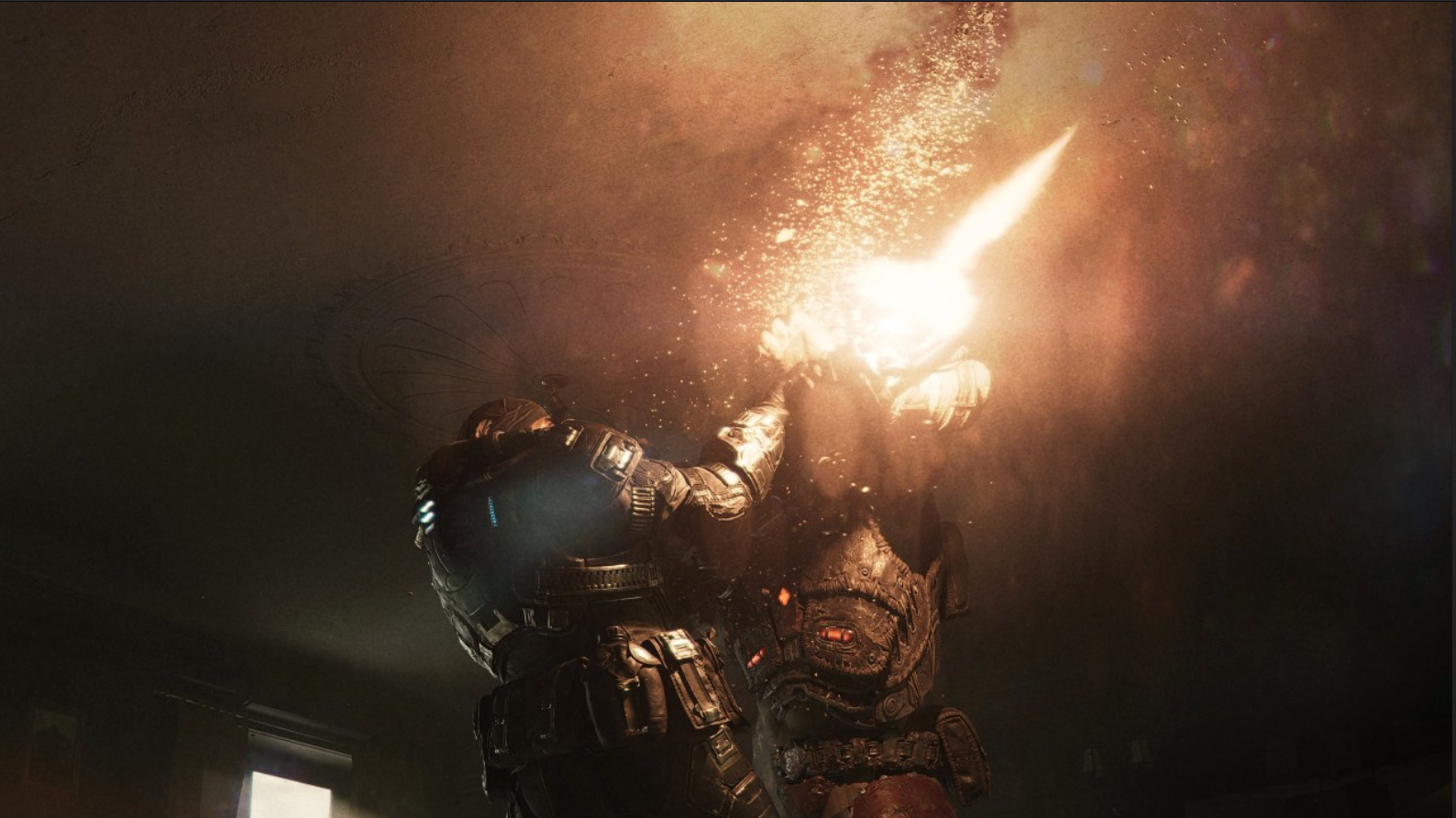
No controller guide for a Gears game is complete without talking about the Lancer. The Lancer assault rifle with its integrated chainsaw bayonet is one of the most iconic weapon designs in gaming history. In E-Day, you are getting that weapon at what is presumably its earliest canonical appearance, during the emergence of the Locust on Emergence Day itself.
Using the Lancer well means understanding when to fire from cover and when to close the distance for a melee finish. On Xbox, the combination of RT for sustained fire and B for melee gives you a natural rhythm once you develop muscle memory for it. On PC, left mouse for fire and F for melee achieves the same result, though some players find the transition between the two slightly less fluid without a controller’s analog triggers.
The Active Reload mechanic, which has been in every Gears game since the original, rewards timing and attentiveness. Getting the perfect reload gives your Lancer a brief but meaningful damage boost that can shorten fights noticeably. In harder difficulty modes, where enemies soak more damage, landing perfect reloads consistently is a genuine skill that separates good players from great ones.
Gears of War: E-Day’s Setting and What We Know About the Story
E-Day takes place during Emergence Day, the single most catastrophic event in the Gears of War universe. This is the day the Locust Horde burst through the surface of Sera and began wiping out humanity. The original trilogy and its sequels treat E-Day as the defining tragedy that shaped every character, every scar, every choice in the series.
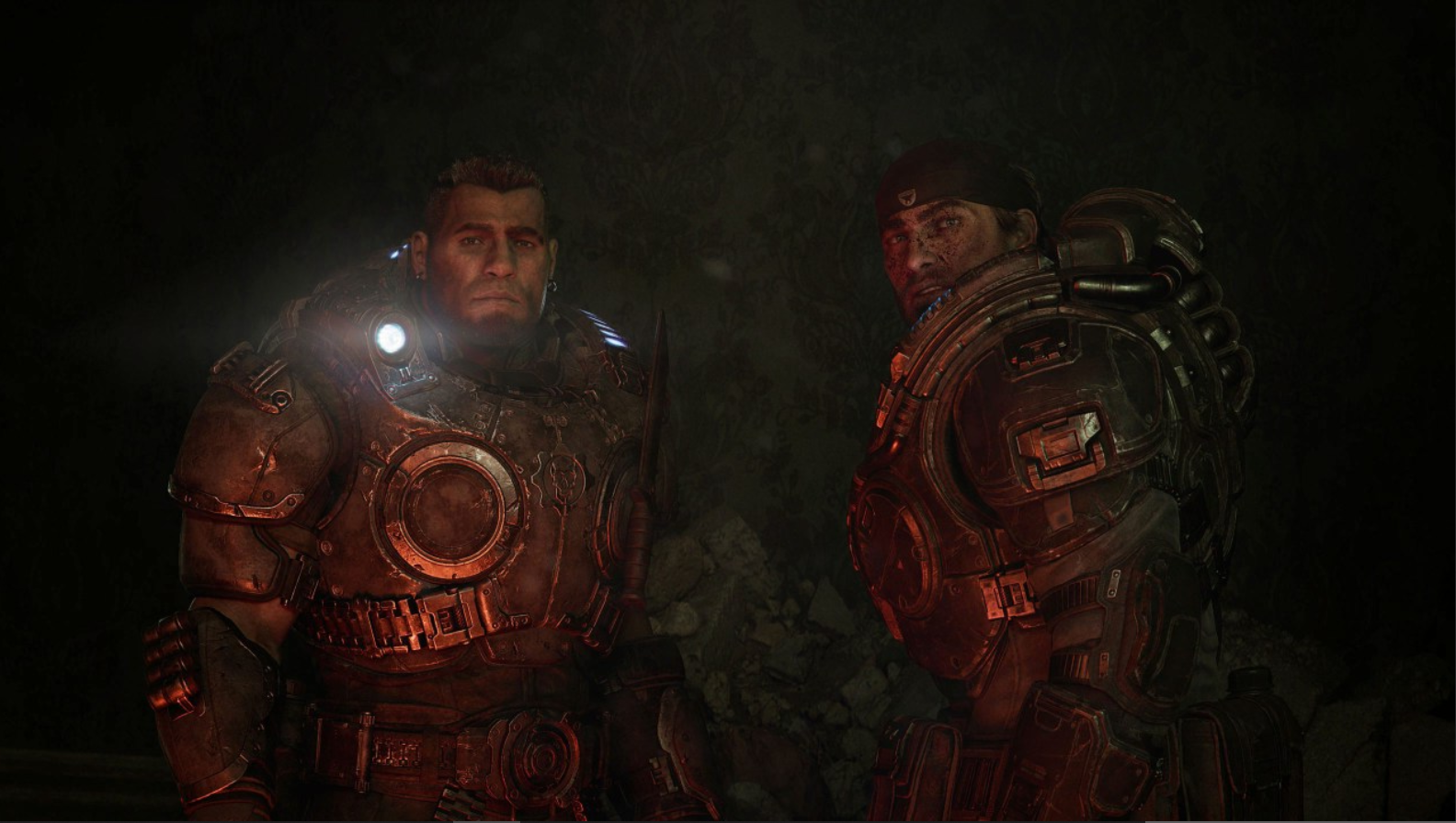
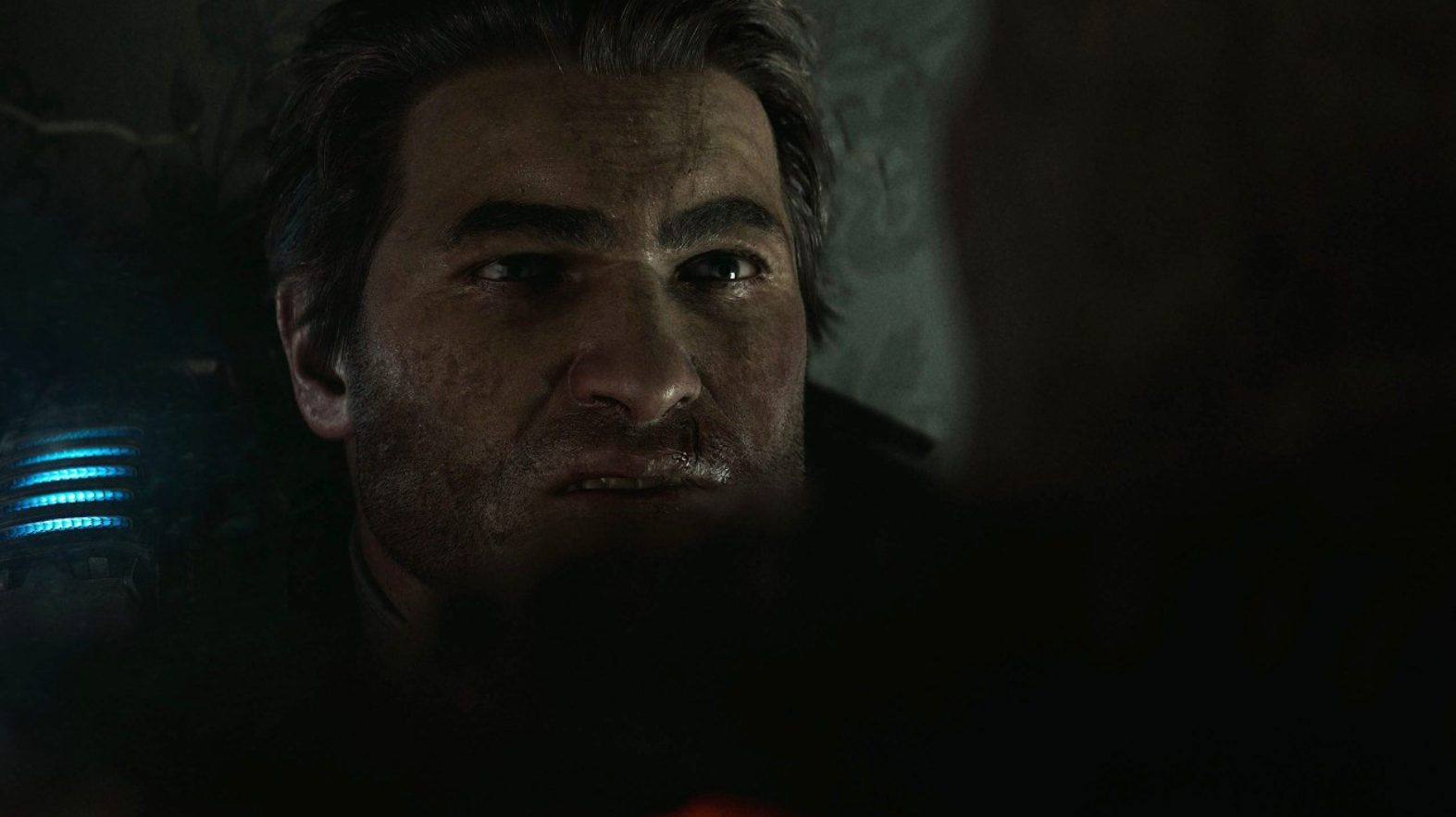
A younger Marcus Fenix and Dom Santiago are confirmed as the central characters. This is before the trauma that defined them in the original trilogy. Before Marcus’s imprisonment, before Dom’s loss, before the world was already broken. The Coalition is essentially telling the origin story of the most important day in the Gears universe.
That setting carries enormous potential. It means the world still has things to lose. Cities are still standing. People still have hope. Then the Locust come and everything changes. If The Coalition handles this with the weight it deserves, E-Day could be the most emotionally affecting Gears game ever made.
For players new to the franchise, E-Day is also a logical entry point. You do not need to know the full history of the war to understand a story about the first day it began.
How E-Day Fits Into the Broader Gears Timeline
The Gears of War franchise timeline, for anyone not already deep into the lore, spans across the original trilogy (Gears 1 through 3), the prequel Gears of War: Judgment, Gears 4, and Gears 5. E-Day is set before all of them, right at the moment humanity first encountered the Locust.
This means we will likely see locations and people at a point before the war fully consumed them. Jacinto, the COG’s last major city, may still be a functioning place rather than the embattled fortress it becomes in the original trilogy. Characters who survive the war may appear young and intact. Characters who die on E-Day itself will show up for the first time in the series chronologically.
The Coalition has access to a rich canvas here. The Gears lore has established what happened during E-Day at a broad level, but the specifics of what Marcus and Dom experienced in those first hours have never been shown in detail. That gap in the story is exactly what E-Day is designed to fill.
What the Next Xbox Showcase Should Tell Us
The upcoming Xbox showcase is where most of these questions should get answers, or at least clearer signals. If Microsoft confirms E-Day for PlayStation 5 at the showcase, the exclusivity conversation effectively ends for this particular game. The debate shifts to what comes next, whether Halo Campaign Evolved gets a PS5 release, whether Fable follows the same path.
If Microsoft stays quiet about a PS5 version of E-Day during the showcase and only confirms Xbox and PC, that itself is a statement. It would suggest the company is at least considering using E-Day as a system seller, even if only temporarily.
The middle path, which Microsoft has sometimes taken with other titles, would be a timed exclusive announcement. Xbox and PC first, with a PlayStation version confirmed for a later date. That approach lets Microsoft capture early sales from its existing audience while leaving the door open for a broader release.
None of those outcomes would be surprising. All of them have meaningful implications.
The Broader Question About Xbox Hardware’s Purpose
This is the question I keep coming back to. If Microsoft’s biggest games are available on PlayStation, and Microsoft’s Game Pass is available on PC and mobile, what exactly is the Xbox console for?
The answer Microsoft has given so far is a combination of things: Game Pass value, hardware design and feel, cross-platform save states, and the overall Xbox ecosystem. Those are real features. But they are not the same as having games you cannot play anywhere else.
Xbox has historically sold itself on a combination of hardware capability and exclusive content. The hardware side has been competitive, sometimes leading the generation in raw power. But if the exclusive content pillar is gone or significantly weakened, Xbox becomes a premium PC alternative rather than a distinct gaming platform.
That might be fine for Microsoft as a business if Game Pass revenue and PC sales compensate for hardware losses. But it changes what Xbox is in a fundamental way. It stops being a console in the traditional sense and becomes something closer to a gaming brand that exists across multiple devices and storefronts.
Some people think that is the future of gaming regardless. Others think it represents a retreat. Both perspectives have merit depending on what you value in a gaming ecosystem.
What Clockwork Revolution and New IPs Mean for This Conversation
One point that does not get enough attention is the role of new intellectual properties in Microsoft’s long-term strategy. Clockwork Revolution from InXile Entertainment has generated real interest. It is a first-person RPG with a steampunk aesthetic and a time-manipulation mechanic, and it looks genuinely ambitious.
But Clockwork Revolution does not carry the same cultural weight as Halo or Gears of War. If Microsoft is counting on new IPs to drive Xbox hardware adoption, those games have to break through in a market where it is already very difficult for a new franchise to reach mainstream recognition quickly.
Building a new IP into a system-seller is a long process. It takes one successful game, then a second, then a third, before a franchise develops the kind of loyalty that actually influences hardware purchases. Microsoft used to do this well. Gears of War was a new IP in 2006 and became a system-defining franchise within a few years. But the market is different now. Player attention is more fragmented. Competition is more intense.
Relying on new IPs to carry Xbox exclusivity would be a gamble. It might pay off over a generation, but it is not a sure thing. That is why the decisions Microsoft makes with its existing legacy franchises in the next two years matter so much.
What History Tells Us About Exclusivity Reversals
It is worth looking at how other publishers have handled similar situations. Sega went from first-party hardware maker to third-party developer and found a strong identity as a publisher of interesting, often quirky games. That transition took years and was painful, but Sega games are still beloved today.
On the reverse side, companies that tried to walk back multiplatform releases to reclaim exclusivity have generally failed or created significant community backlash. Once players on a platform expect a game to be available to them, removing that expectation is very difficult without damaging trust.
Microsoft is navigating this carefully. The company has not made sweeping exclusivity promises it would have to break. It has kept its options open by confirming games for Xbox and PC while leaving PlayStation status ambiguous until closer to release.
That flexibility is smart short-term strategy. Whether it translates into a coherent long-term identity for Xbox is a different question.
The Fan Perspective Across Both Camps
Talking to people who care deeply about this, which I have done through various community spaces and gaming discussions over the past few months, a few things stand out.
Xbox fans who want exclusivity back are not primarily motivated by wanting to keep games away from PlayStation owners. Most of them understand that more players enjoying a game is generally a good thing. What they want is a reason for their ecosystem to feel special. They want the feeling that owning an Xbox or subscribing to Game Pass gets them something meaningful. When flagship franchises go multiplatform, that feeling erodes.
PlayStation fans who want Xbox games are largely motivated by straightforward desire for good games. They have a PlayStation. They do not want to buy a second console. They like Gears of War or they are curious about it. Putting it on their platform is a simple win from where they sit.
Both of those perspectives are honest and fair. The tension between them is not a moral issue. It is a business and ecosystem design issue that Microsoft has to resolve.
Looking Ahead to 2027 and 2028
Fable is targeting 2027. Whatever comes after Halo Campaign Evolved will likely be several years away. The next Forza Horizon is unannounced. Bethesda’s major projects are well beyond current confirmed release windows.
By 2028, the gaming landscape could look substantially different. A new PlayStation generation may have begun. Xbox’s next hardware iteration could be in the market. Streaming and cloud gaming could be more central to how people access games. Game Pass could have grown significantly or could be restructuring its model.
Microsoft’s decisions about exclusivity in 2025 and 2026 will shape what the company looks like in that future environment. If they commit to exclusivity now and it pays off in hardware sales and ecosystem growth, they go into the next hardware generation with momentum. If they go fully multiplatform and it grows Game Pass into a dominant service, they may not need traditional hardware sales to justify the investment.
The third option, staying ambiguous and deciding case by case, is the least satisfying strategically but may be the most realistic given how fast the market changes.
Official Resources Worth Knowing
If you want to follow this story as it develops, there are a few places worth bookmarking. Xbox Wire is where Microsoft makes official announcements about its games and platforms. The Coalition’s official site covers E-Day development updates directly from the studio. For platform-level policy and accessibility information, Xbox Game Studios keeps a current list of first-party projects. And IGN and GamesRadar have both covered the exclusivity debate extensively with interviews from developers and industry analysts.
A Walmart listing for a game that has not been officially confirmed on a platform is not the end of the story. It is the beginning of a question. The question is not really whether Gears of War: E-Day will come to PlayStation 5. At this point, it probably will at some stage. The real question is what that means for everything that comes after.
Microsoft is at a genuine crossroads. The company has the games, the studios, and the financial runway to take almost any direction it wants. It can recommit to exclusivity and make a real push to rebuild the Xbox ecosystem as a must-own platform. It can go fully multiplatform and transform Xbox into a publishing label that releases great games everywhere. Or it can keep navigating game by game, franchise by franchise, without drawing a clear line.
Each of those paths has costs and benefits. None of them is obviously wrong. But all of them require a clear vision of what Xbox is supposed to be, which is something the company has not fully communicated to its audience.
Gears of War: E-Day, whatever platforms it ultimately launches on, is one of the most anticipated games in Microsoft’s recent history. The Coalition has earned the trust of the fanbase. The setting is rich with story potential. The gameplay foundation is one of the best in the cover shooter genre.
Whether you play it on Xbox, PC, or PlayStation, the most important thing is that it is a great game. Everything else is business. Important business, with real implications for the future of gaming. But business nonetheless.
The controllers are ready. The Lancer is loaded. Emergence Day is coming.